

Paver Walkway Installation in Chicago: Built for Clay Soil, Frost Heave, and Long-Term Use
3D Brick Paving Co. designs and installs brick paver sidewalks, front entry walks, garden paths, stoop approaches, and natural stone walkways across the Chicago suburbs. Since 1972, the D’Aiello family has built hardscape systems for homes that face Great Lakes weather, clay-heavy soils, winter heave, summer heat, and repeated moisture movement.
A walkway should do more than connect the driveway to the front door. It should drain cleanly, sit on a compacted base that resists settlement, match the architecture of the home, and be repairable without saw-cut patches or mismatched concrete slabs.
That’s why 3D Brick Paving Co. builds articulated paver systems instead of relying on rigid slab logic. Every walkway gets planned around subgrade behavior, base depth, water movement, material selection, and the visual rhythm of the property.
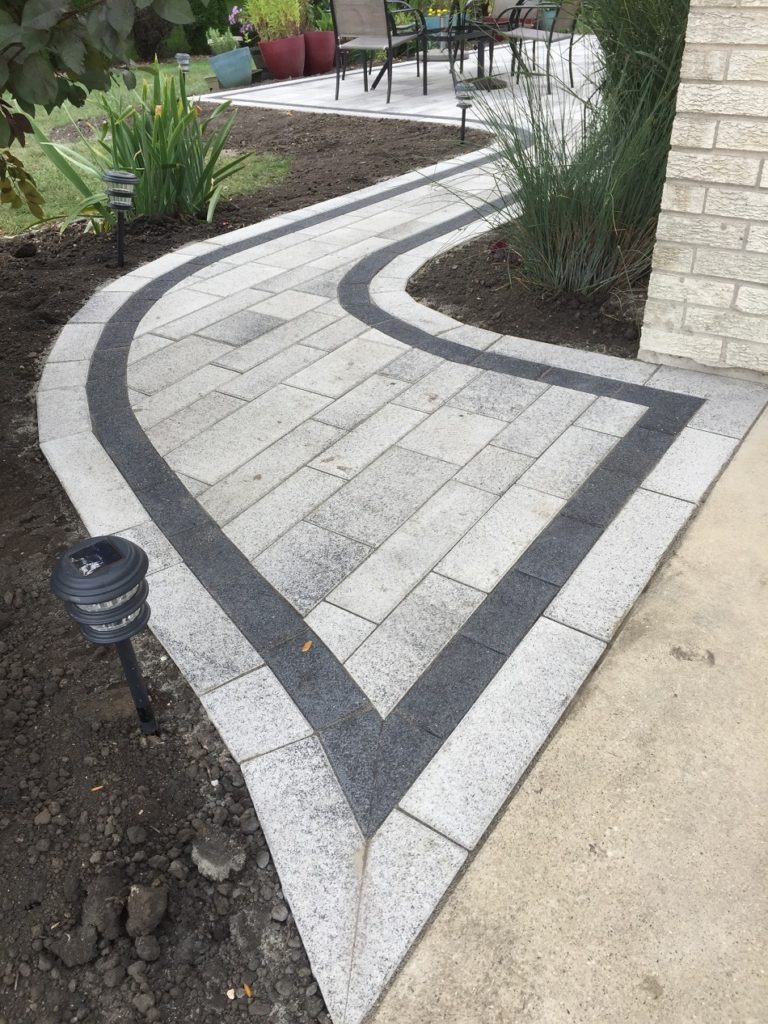
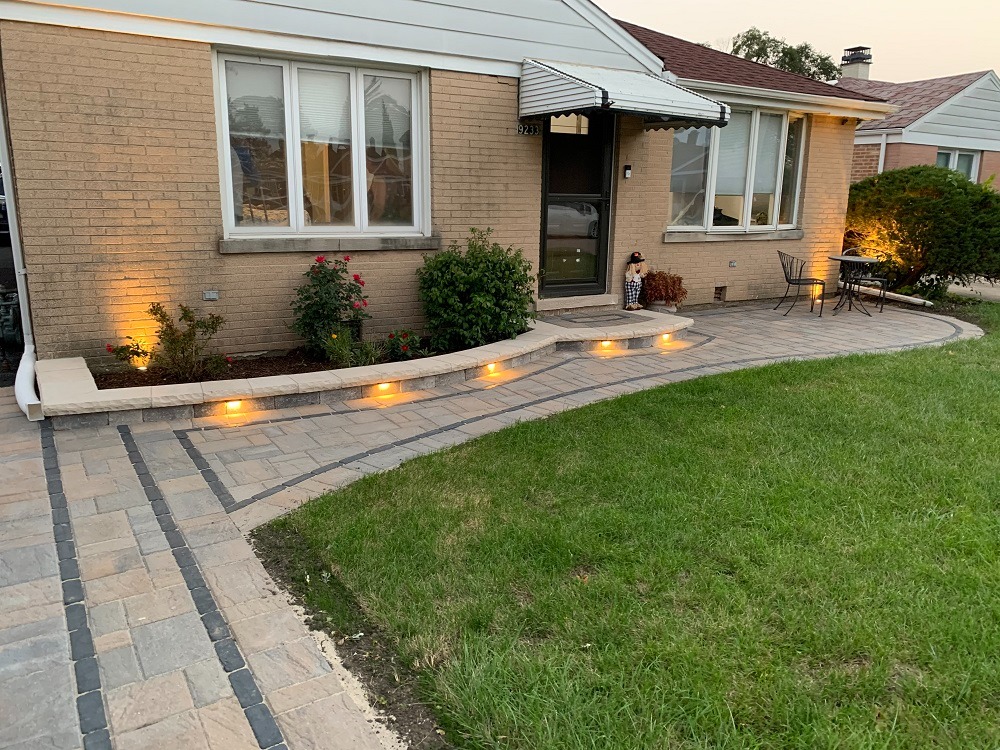
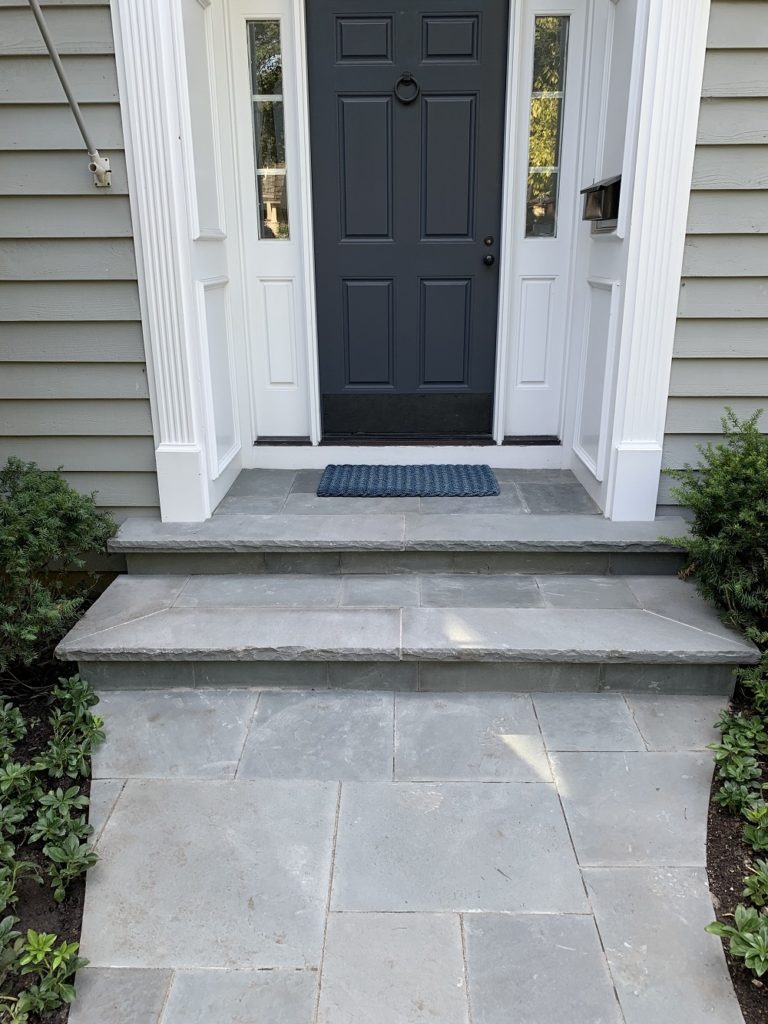
Raised Paver Steps Need Foundation Protection
The most expensive walkway failures happen where the hardscape touches the house.
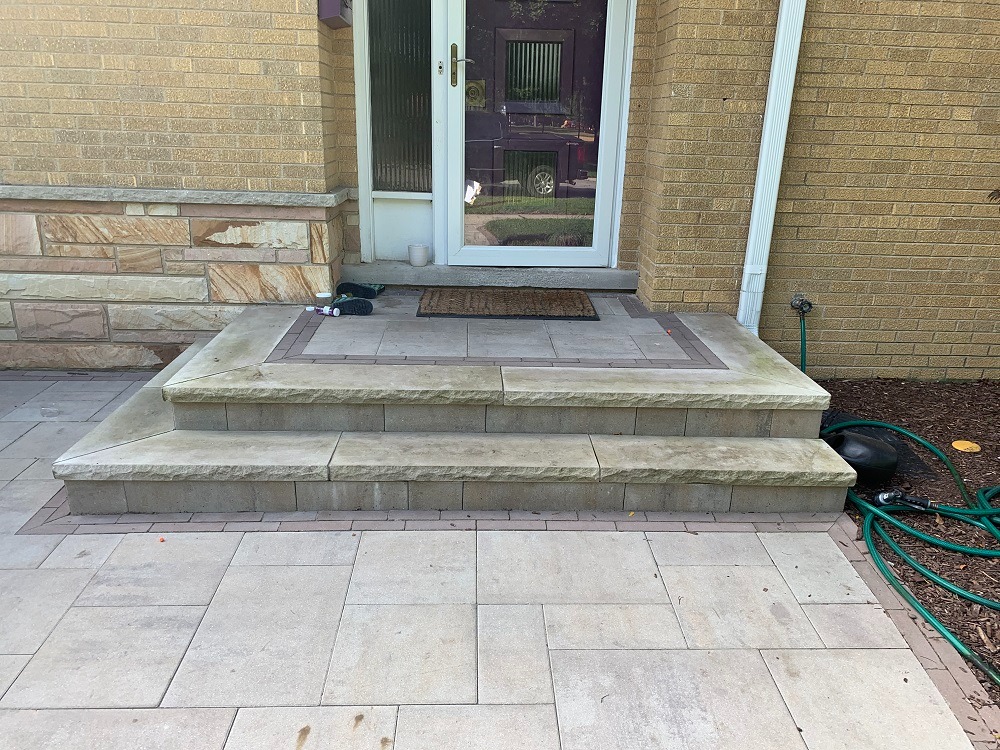
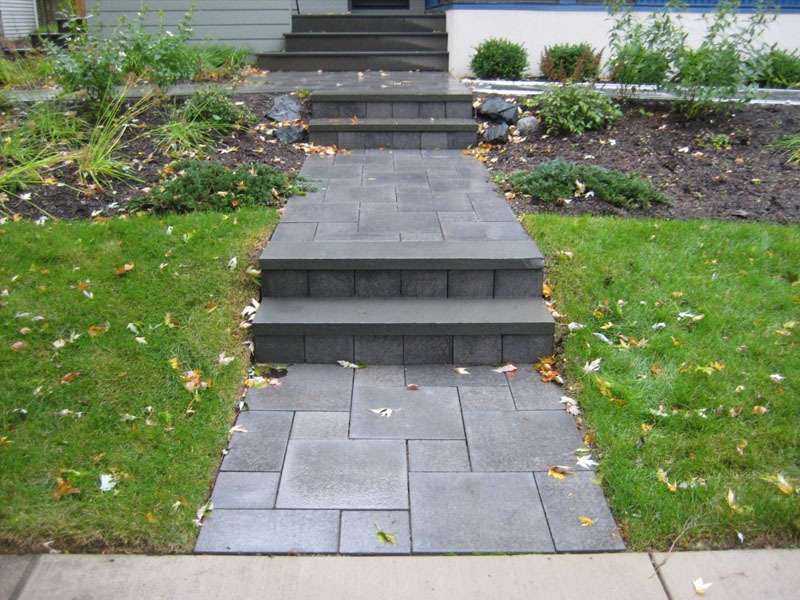
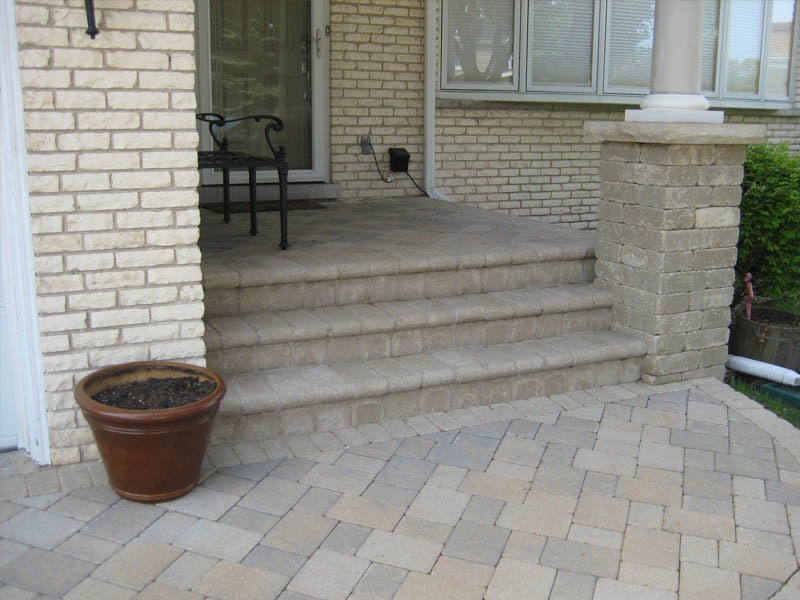
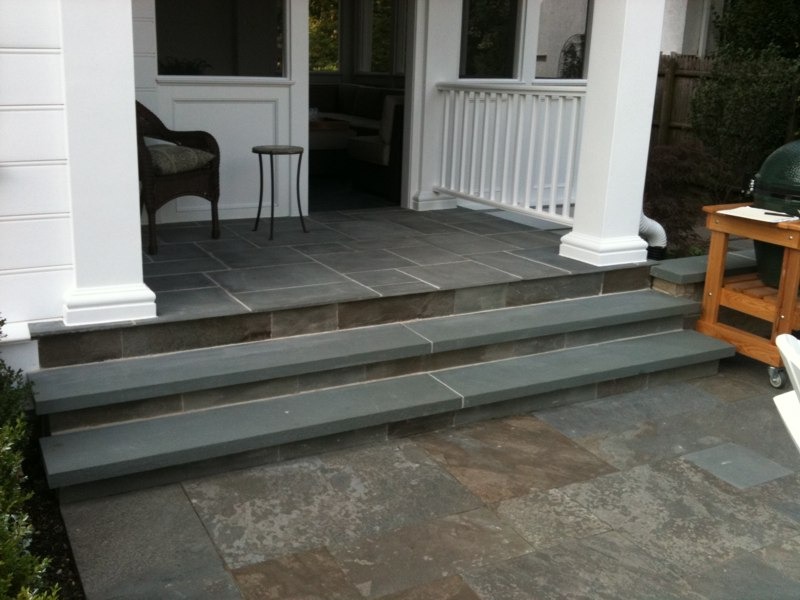
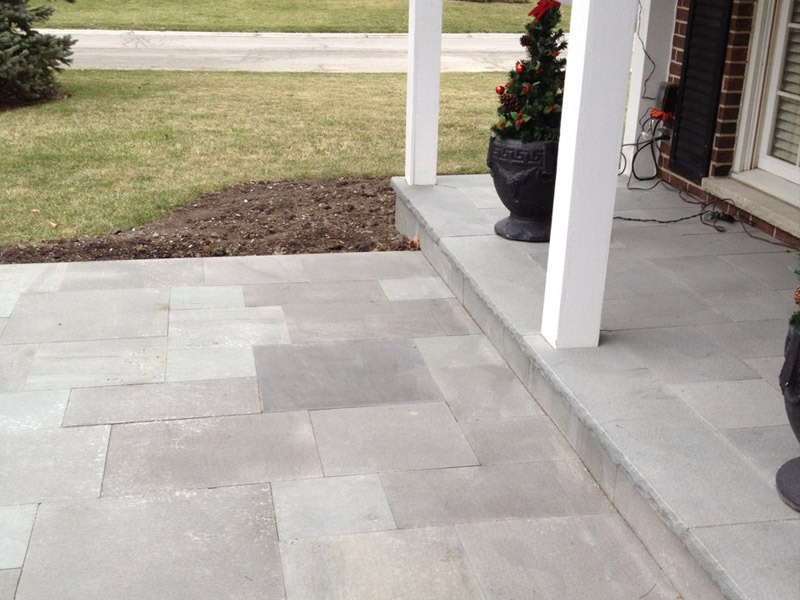
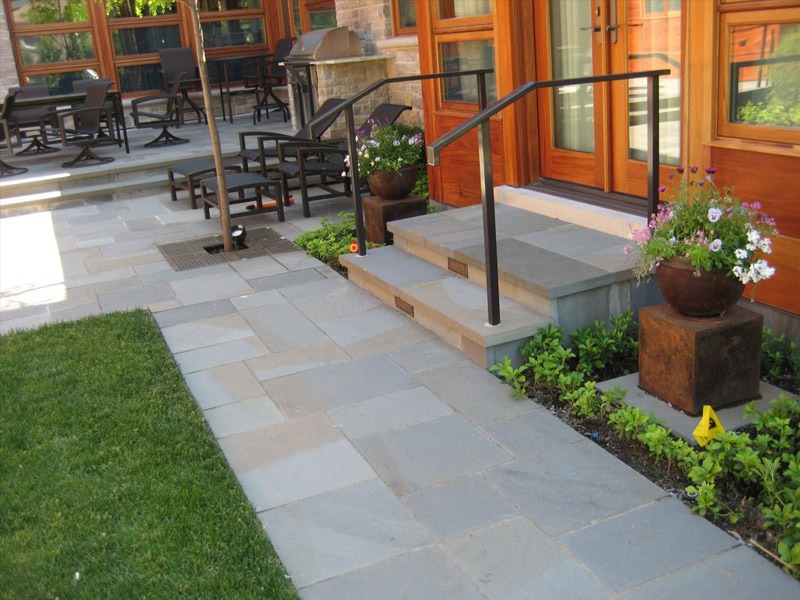
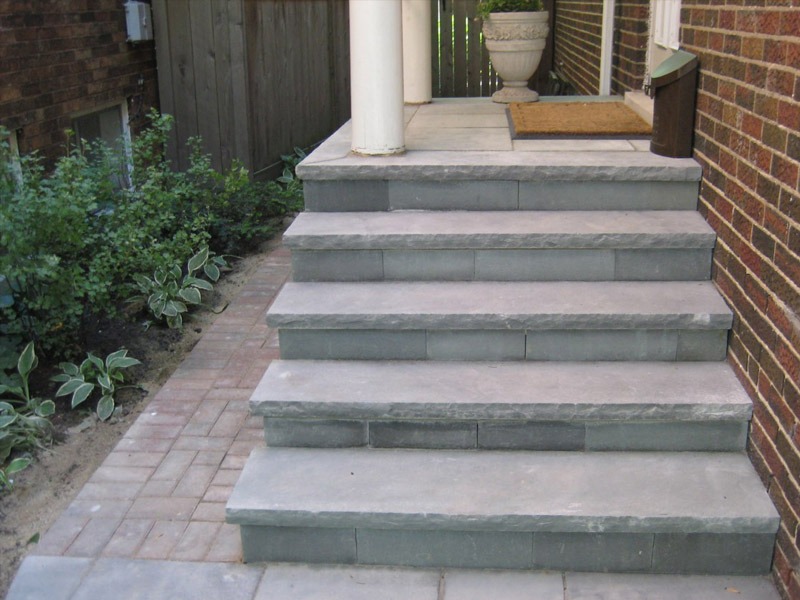
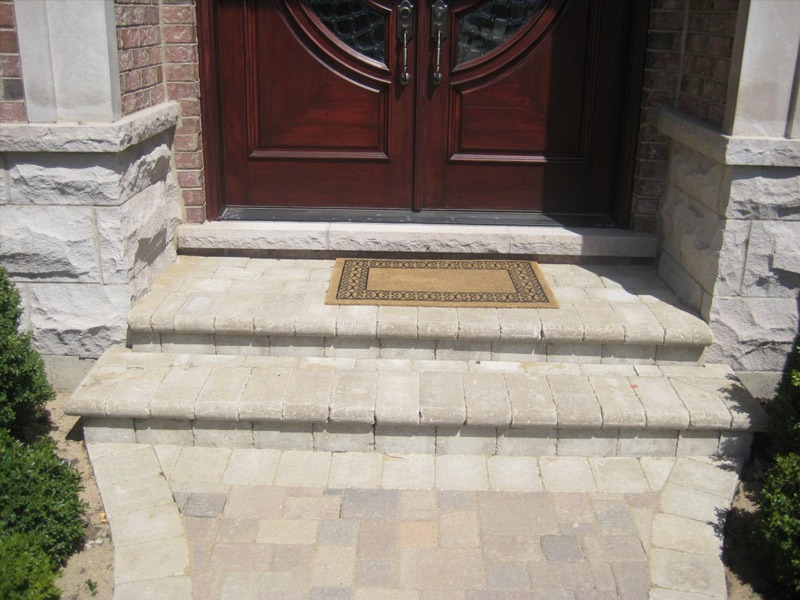
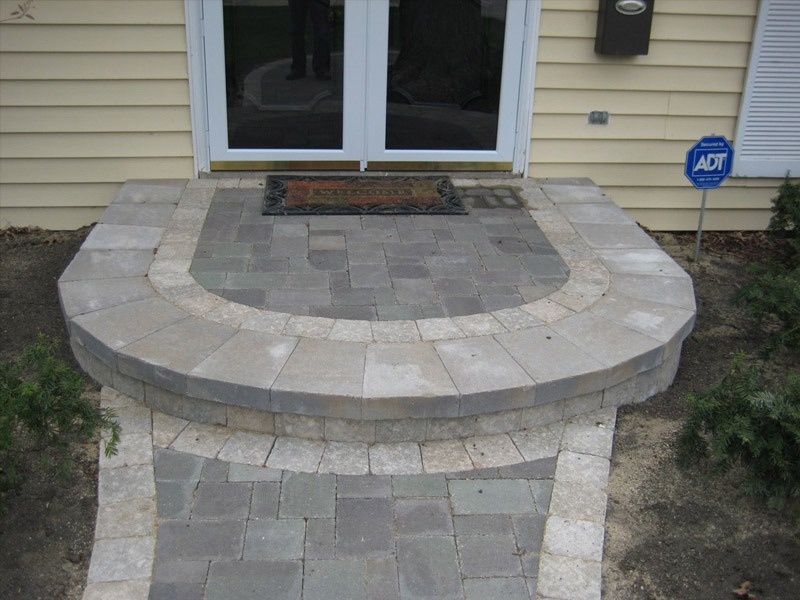
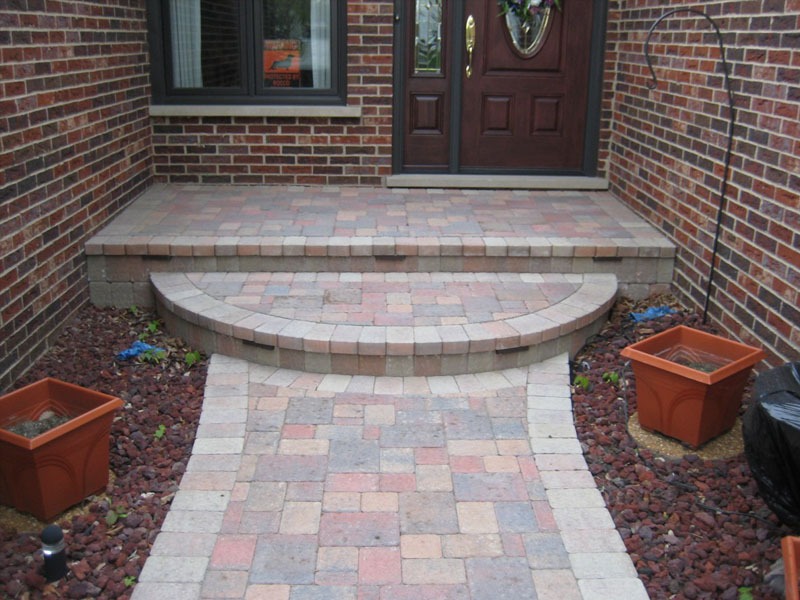
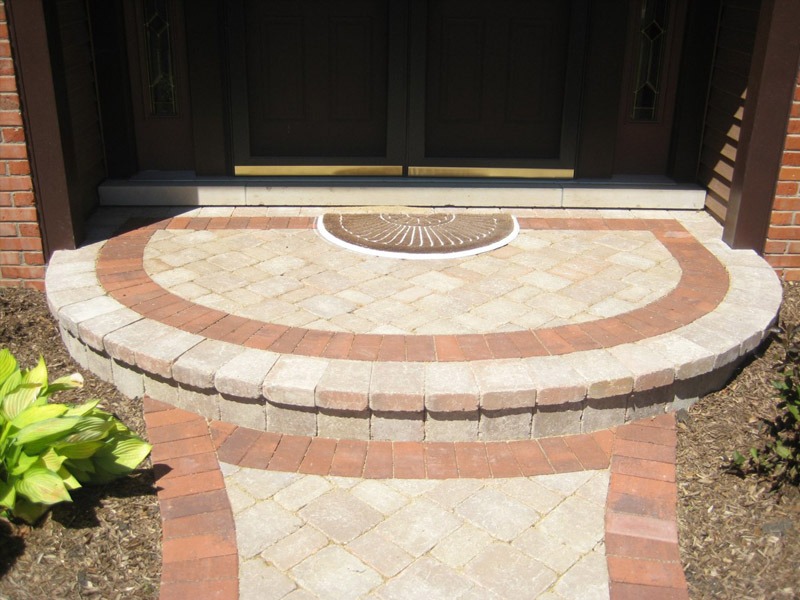
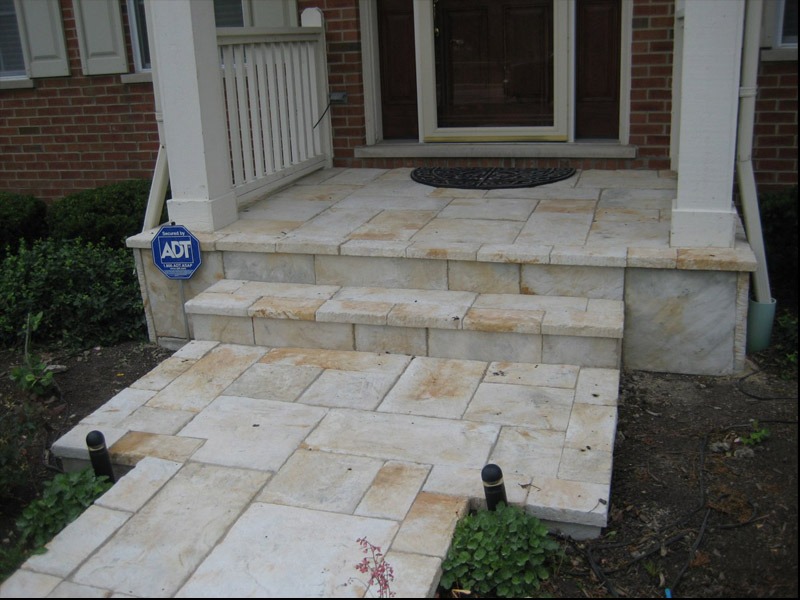
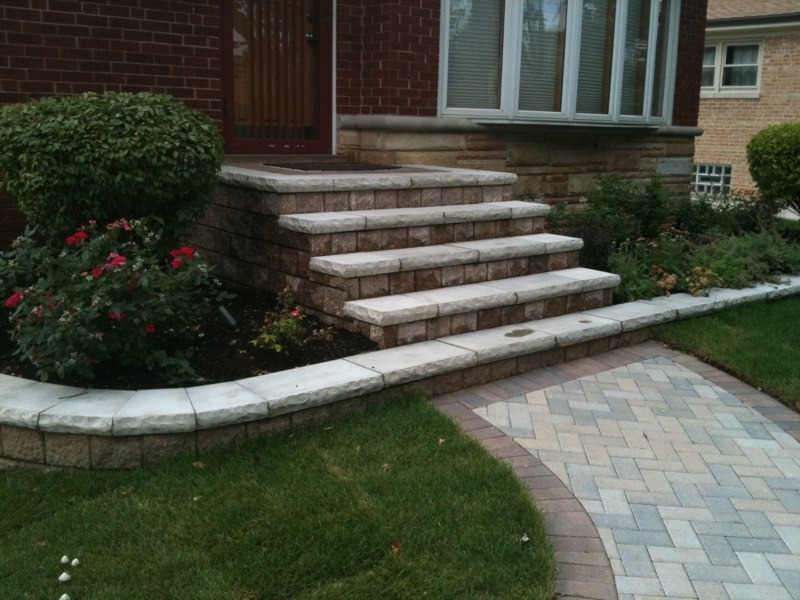
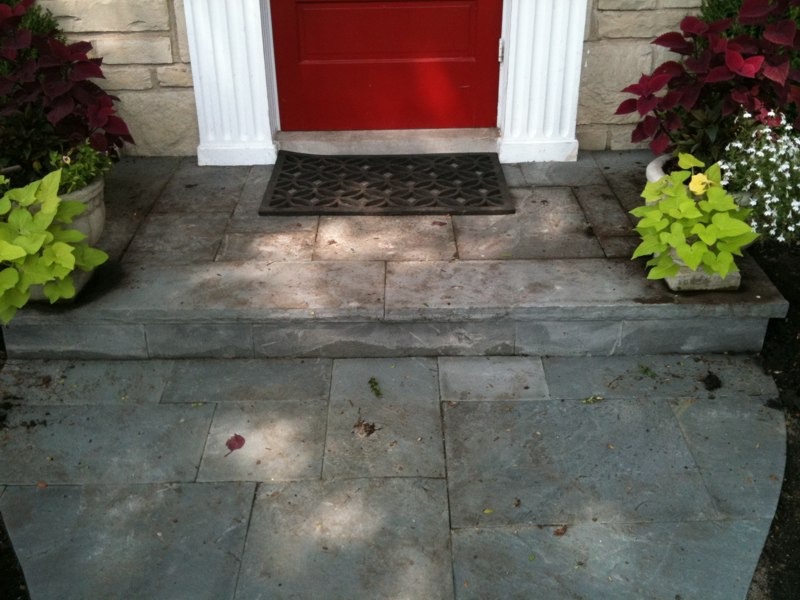
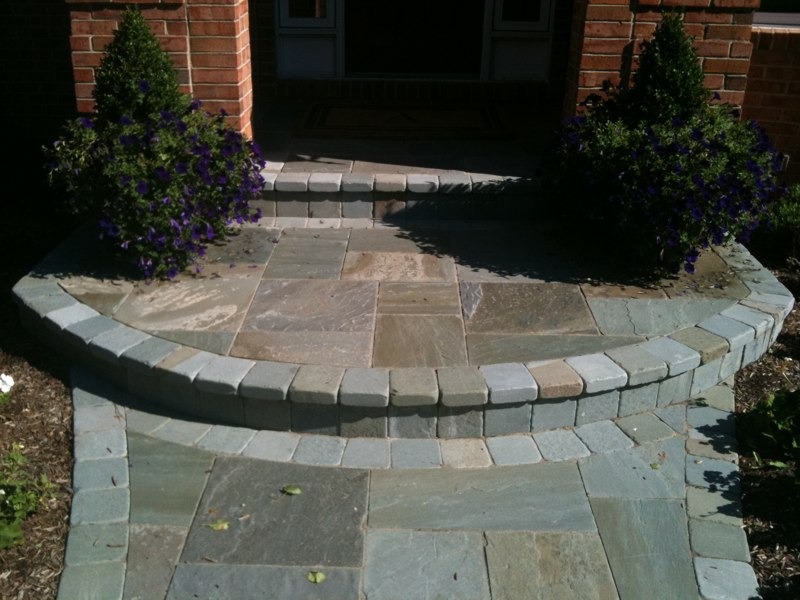
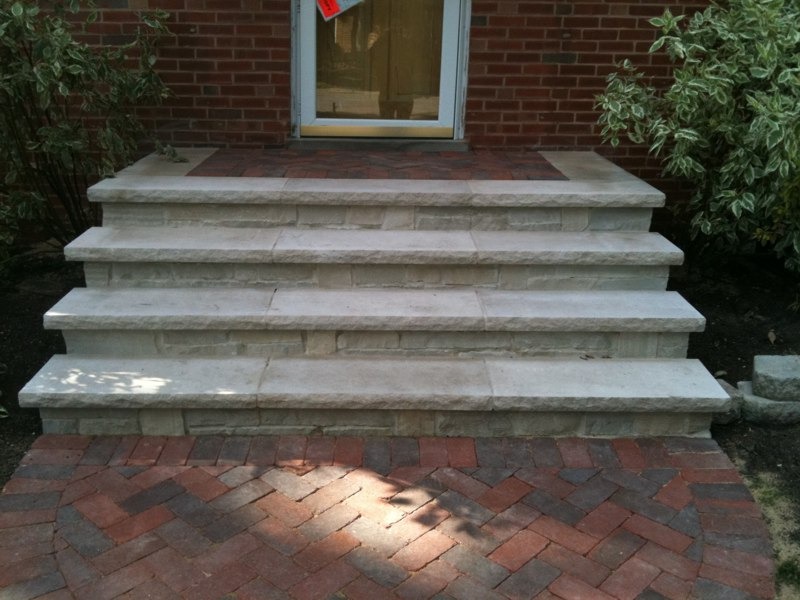
Raised paver steps, stoop overlays, and entry landings can place saturated base material near brick, siding, wood framing, or foundation walls. Without a capillary break, moisture can move from the base aggregate into porous brick. In winter, that trapped moisture freezes. Expansion pressure can spall brick faces, crumble mortar, and damage the foundation edge.
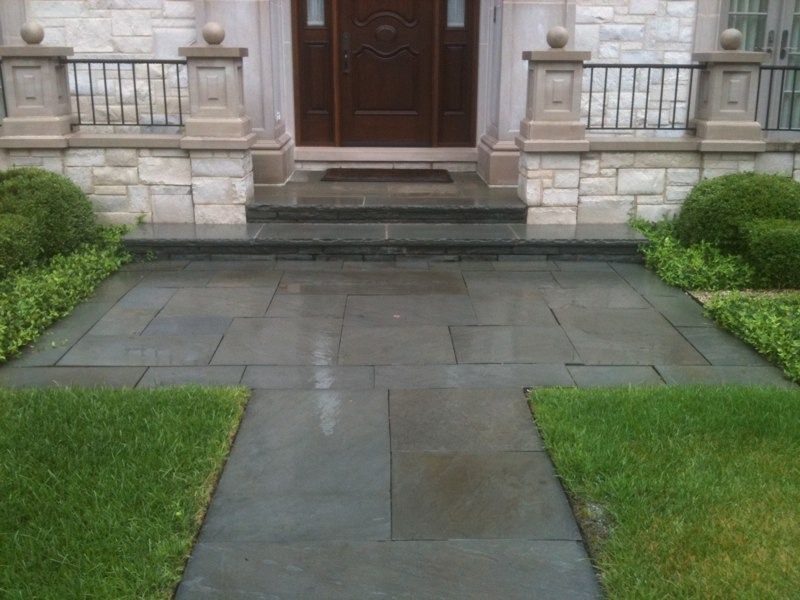
A properly detailed step system needs a moisture barrier where the paver structure meets the home: a self-adhering rubberized asphalt membrane flashing on structural surfaces that contact the paving base. That membrane separates the wet hardscape assembly from the residential masonry.
This is the kind of detail homeowners rarely see written into a proposal, but it decides whether an entry walk ages cleanly or starts pushing water into the house.
The Great Lakes Subgrade Challenge
Chicago-area walkways fail from below first.
Native clay-rich soils across Cook County, DuPage County, and Lake County retain water. During winter, that water expands as it freezes. During thaw periods, the soil relaxes and shifts again. This repeated movement places vertical pressure on sidewalks, front walks, stoops, and entry paths.
A poured concrete sidewalk acts as one rigid slab, depending on bending stiffness to span the soil beneath it. That works until the subgrade moves unevenly. Once one section rises, drops, or loses support, the slab starts carrying tensile stress. Concrete handles compression well, but tensile stress creates cracks. Control joints can guide where cracking happens, but they can’t remove the underlying soil movement causing it.
Asphalt reacts differently. It flexes under load, but its binder changes with temperature: summer heat softens it, winter cold makes it brittle. Over time, surface oxidation, cracking, rutting, and patching turn a walkway into a maintenance cycle instead of a fixed installation.
Interlocking concrete and clay pavers work as an articulated pavement. Individual units sit over bedding sand and a compacted aggregate base. Sand-filled joints transfer load across adjacent pavers, so the system can move slightly without cracking across the whole surface. For pedestrian walkways, a properly prepared 4-to-6-inch compacted aggregate base gives the paver field the support it needs, without the heavier 10-to-12-inch base usually reserved for driveway loads.
| Pavement Type | Structural Behavior | Common Chicago-Area Failure | Repair Outcome |
|---|---|---|---|
| Poured Concrete | Rigid slab bending | Random cracking, frost heave, visible slab displacement | Full section removal and repour |
| Asphalt | Temperature-sensitive flex | Thermal cracking, softening, rutting, patch scars | Patching or overlay |
| Interlocking Pavers | Articulated load transfer | Local settlement if base fail |
Chicago-area walkways fail from below first.
Native clay-rich soils across Cook County, DuPage County, and Lake County retain water. During winter, that water expands as it freezes. During thaw periods, the soil relaxes and shifts again. This repeated movement places vertical pressure on sidewalks, front walks, stoops, and entry paths.
A poured concrete sidewalk acts as one rigid slab, depending on bending stiffness to span the soil beneath it. That works until the subgrade moves unevenly. Once one section rises, drops, or loses support, the slab starts carrying tensile stress. Concrete handles compression well, but tensile stress creates cracks. Control joints can guide where cracking happens, but they can’t remove the underlying soil movement causing it.
Asphalt reacts differently. It flexes under load, but its binder changes with temperature: summer heat softens it, winter cold makes it brittle. Over time, surface oxidation, cracking, rutting, and patching turn a walkway into a maintenance cycle instead of a fixed installation.
Interlocking concrete and clay pavers work as an articulated pavement. Individual units sit over bedding sand and a compacted aggregate base. Sand-filled joints transfer load across adjacent pavers, so the system can move slightly without cracking across the whole surface. For pedestrian walkways, a properly prepared 4-to-6-inch compacted aggregate base gives the paver field the support it needs, without the heavier 10-to-12-inch base usually reserved for driveway loads.
Pavement Type Structural Behavior Common Chicago-Area Failure Repair Outcome |
Pavement Type Structural Behavior Common Chicago-Area Failure Repair Outcome |
Pavement Type Structural Behavior Common Chicago-Area Failure Repair Outcome |
Material Selection by Home Type
Different homes need different paver materials. A Lake Forest estate entry path, a Wilmette brick Colonial, and an Arlington Heights ranch don’t need the same surface language.
| Material | Best Fit | Technical Profile | Design Character |
|---|---|---|---|
| Manufactured Concrete Pavers | Modern walkways, wide design selection, precise patterns | Dry-cast units, compressive strength of at least 8,000 psi, tight dimensional tolerance around 1.5 mm | Clean geometry, many shapes, colors, textures, and border options |
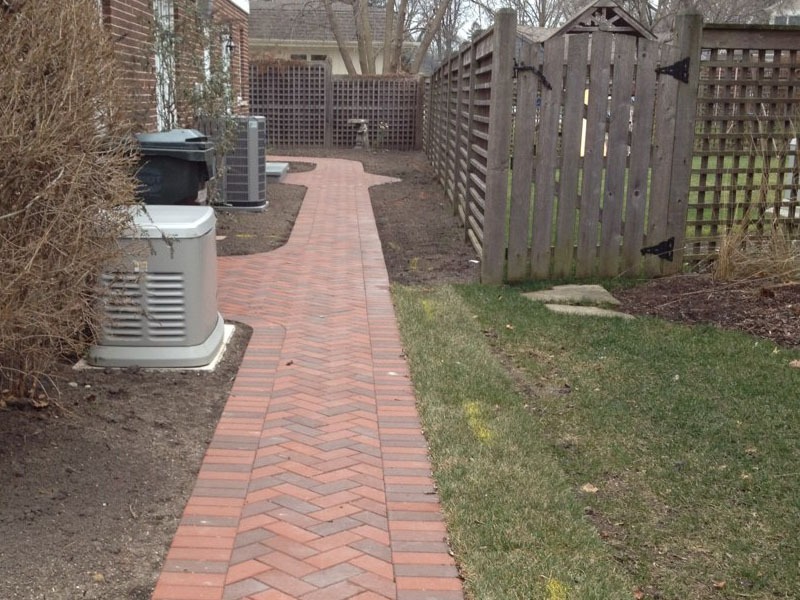
| Kiln-Fired Clay Brick Pavers | Historic homes, brick architecture, traditional front walks | Fired above 2,000°F, vitrified clay body, compressive strength of at least 10,000 psi | Color runs through the unit, natural mineral tones, long color retention |
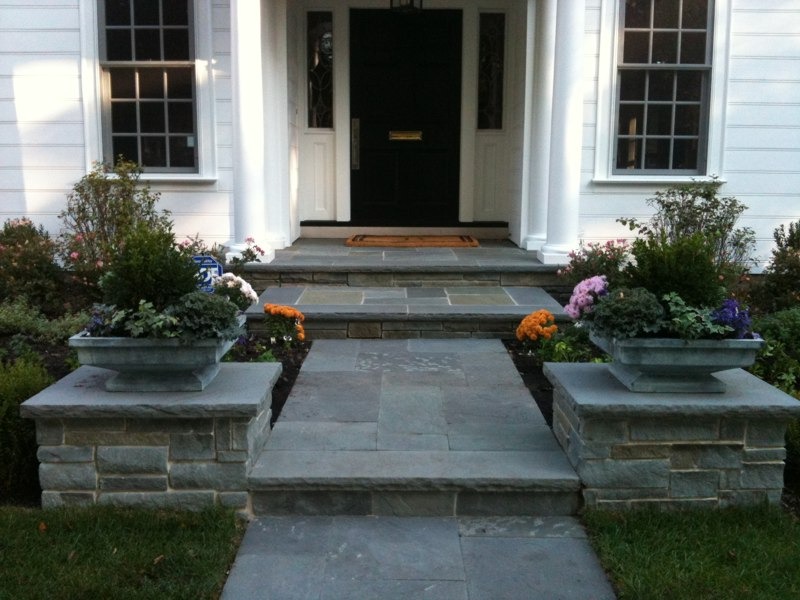
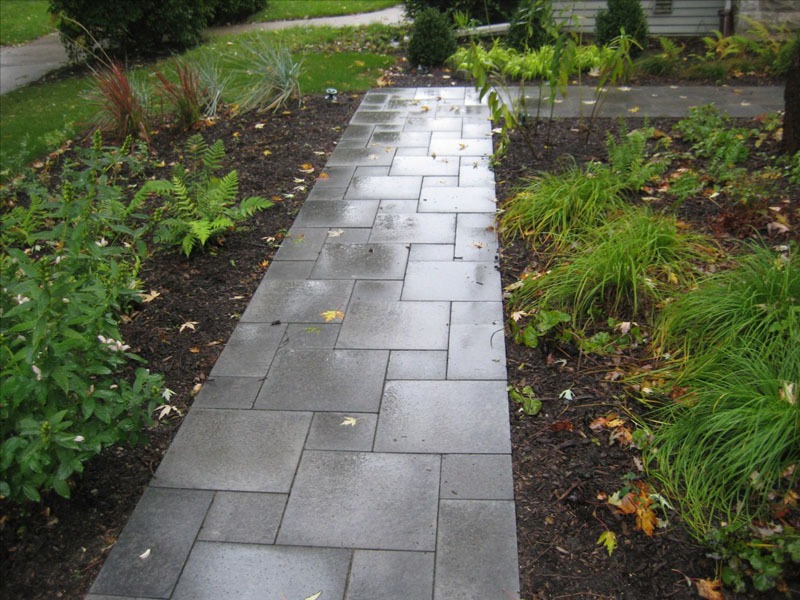
| Quarried Natural Stone | North Shore entries, garden paths, luxury walkways | Bluestone, granite, flagstone, slate, variable thickness and sorting needs | Natural surface variation, high-end texture, each piece looks distinct |
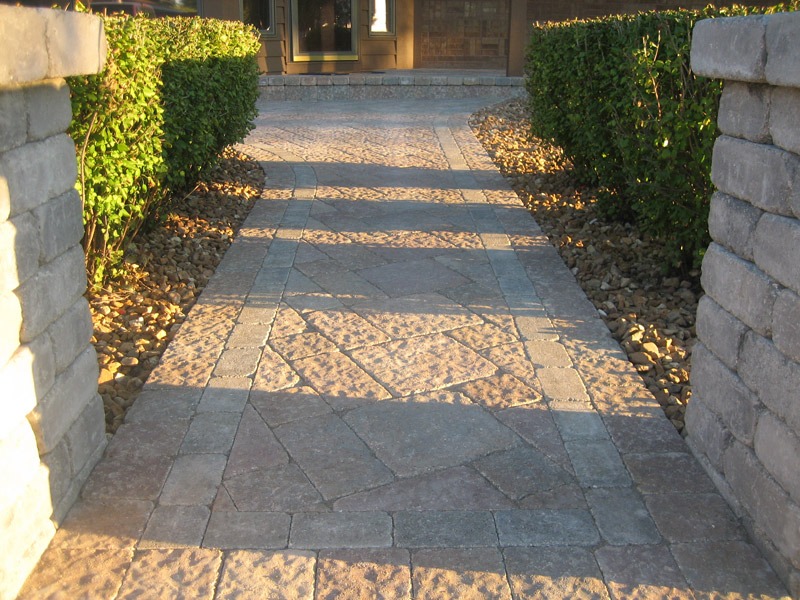
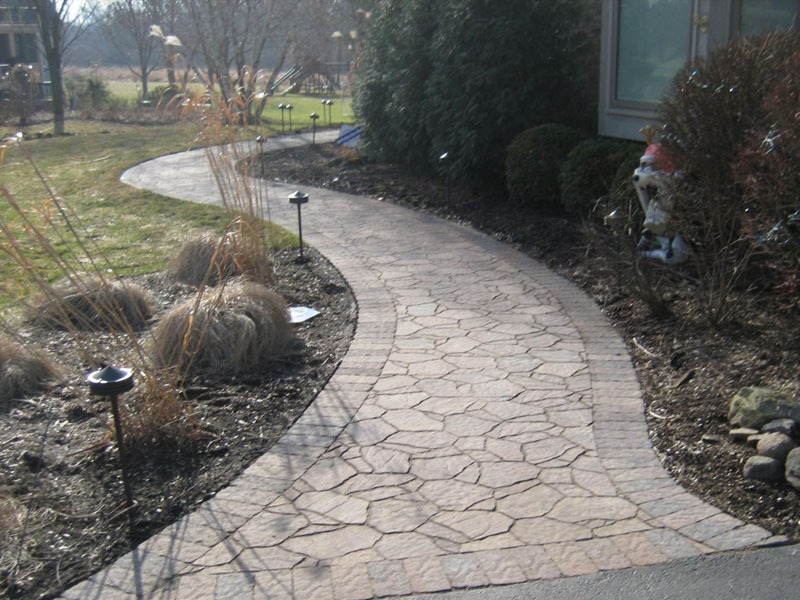
Concrete pavers give homeowners the widest design range, working well for geometric layouts, blended color fields, and modern front entries. Their pigments can fade under UV exposure over time, so periodic sealing may help preserve the surface appearance.
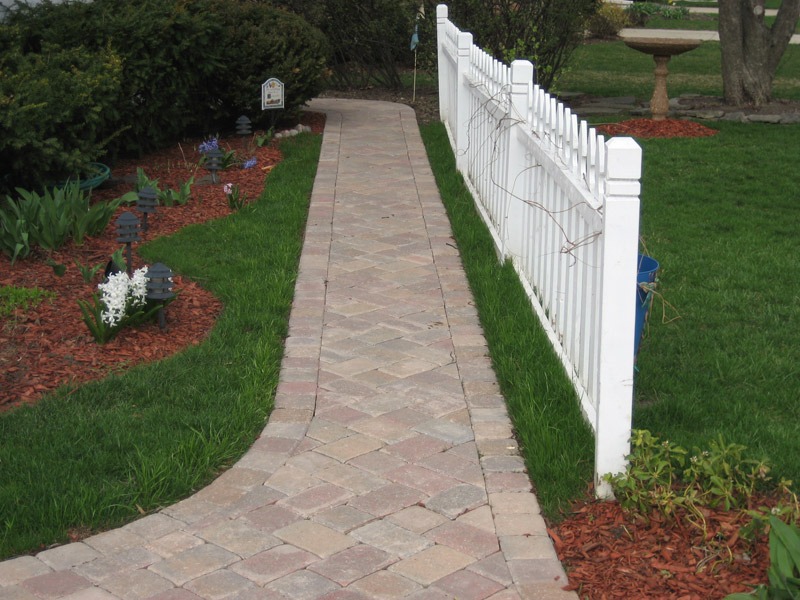
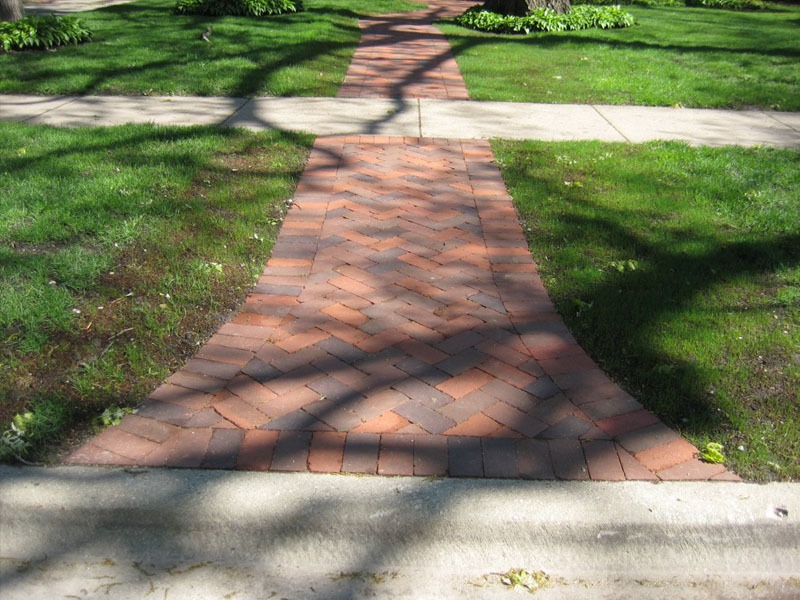
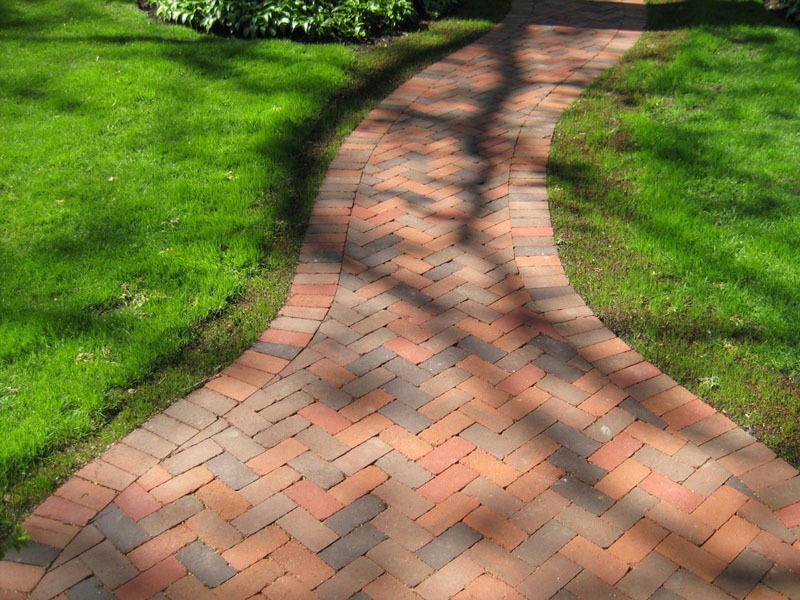
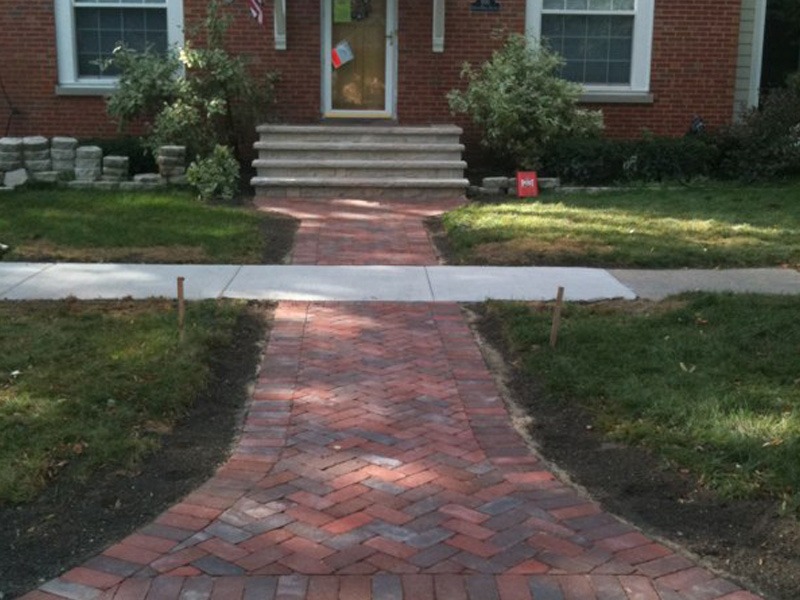
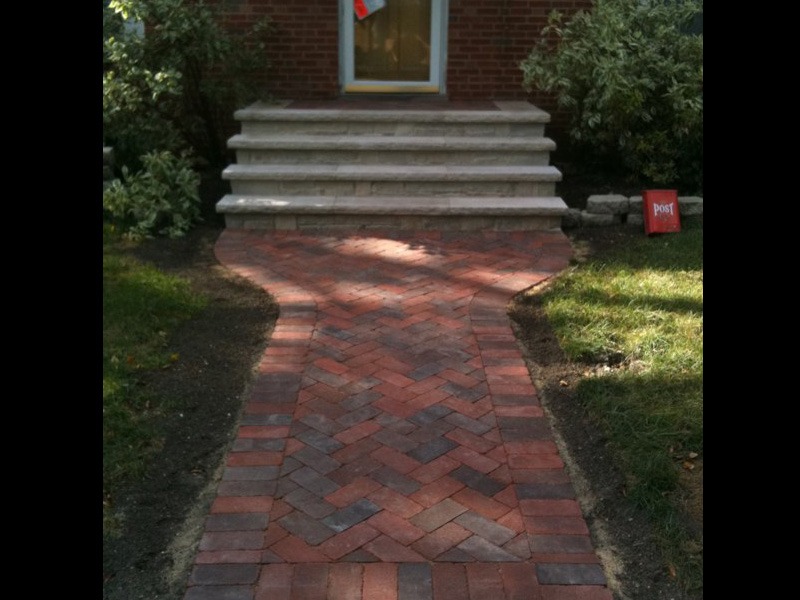
Clay brick pavers carry their color through the unit, since the color comes from the clay body and kiln firing rather than a surface coating. They pair well with older brick homes in Winnetka, Wilmette, Kenilworth, Glencoe, Park Ridge, and Evanston. Their formats run more traditional, but that restraint often suits the architecture.
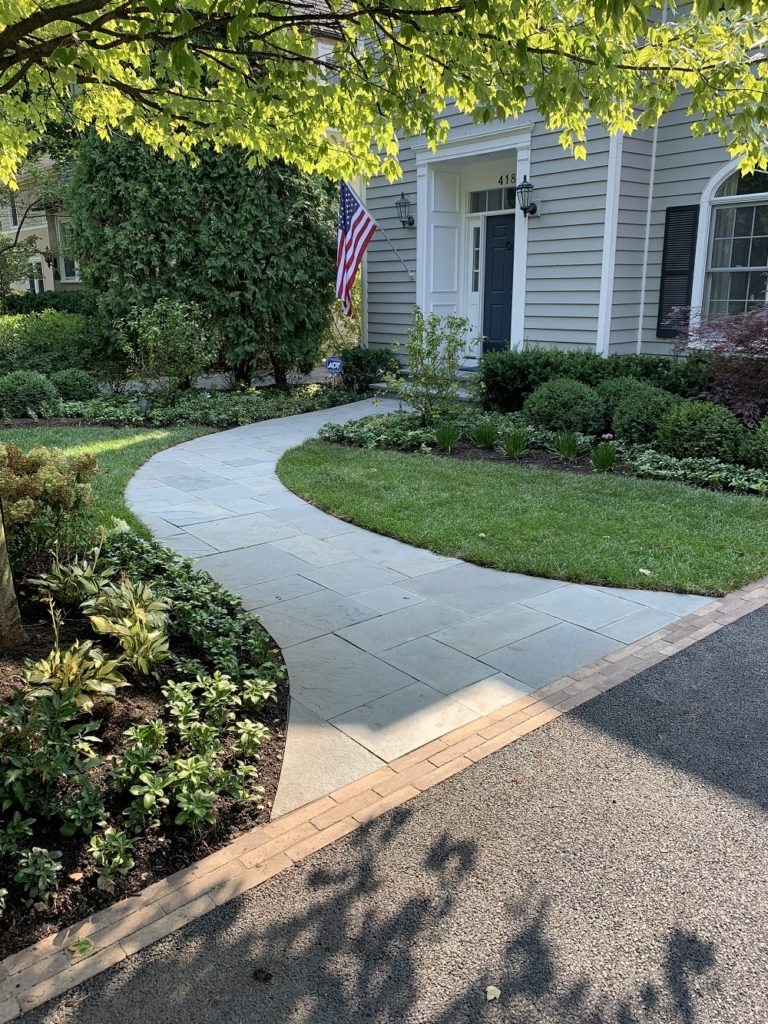
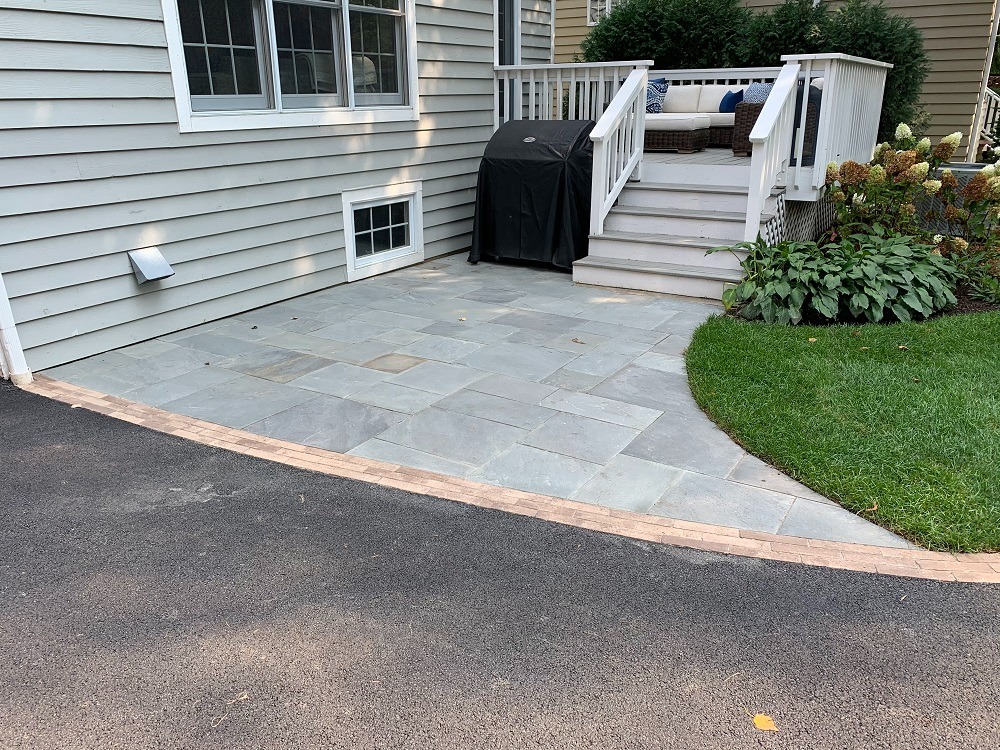
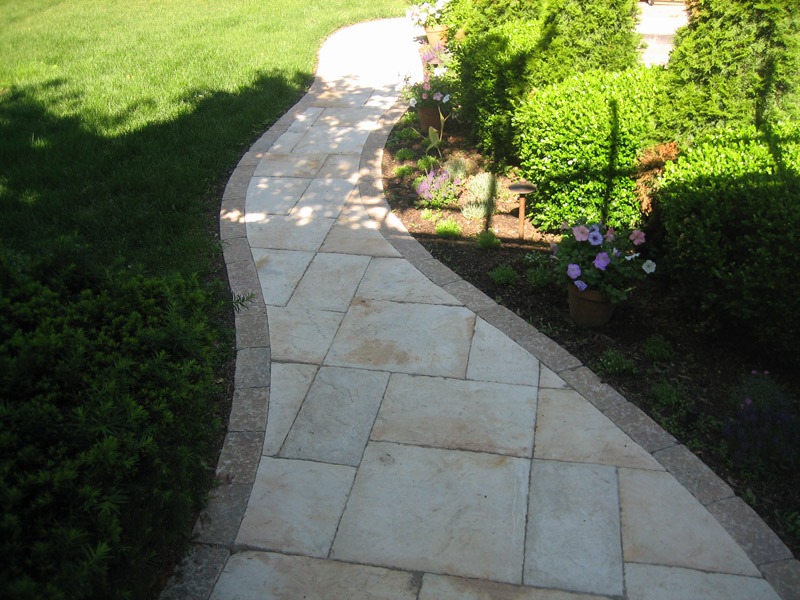
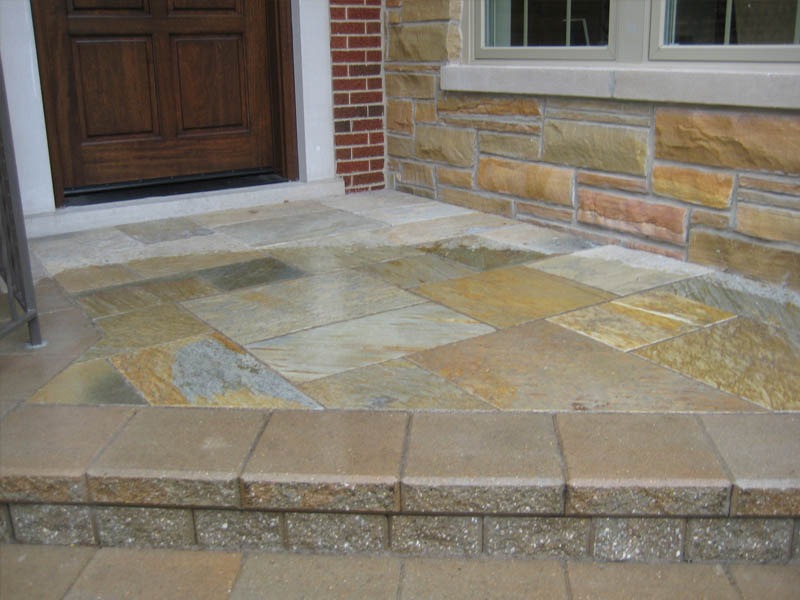
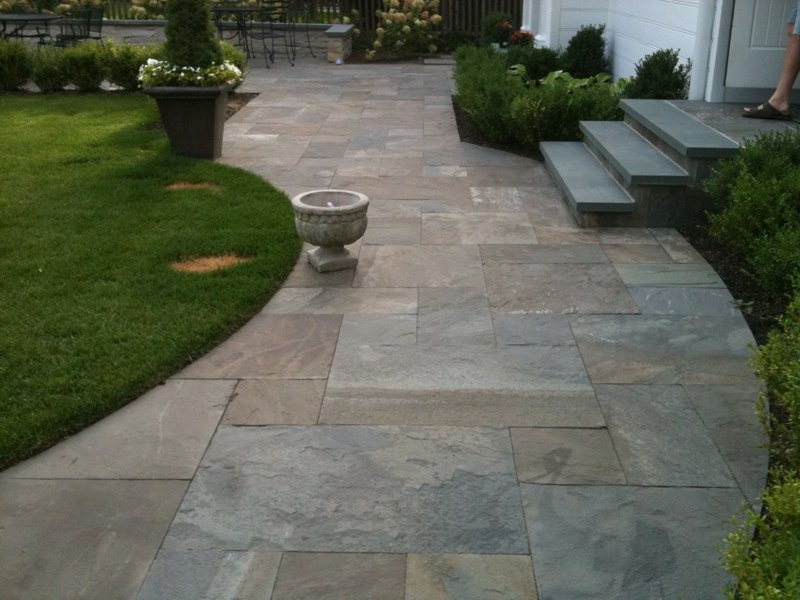
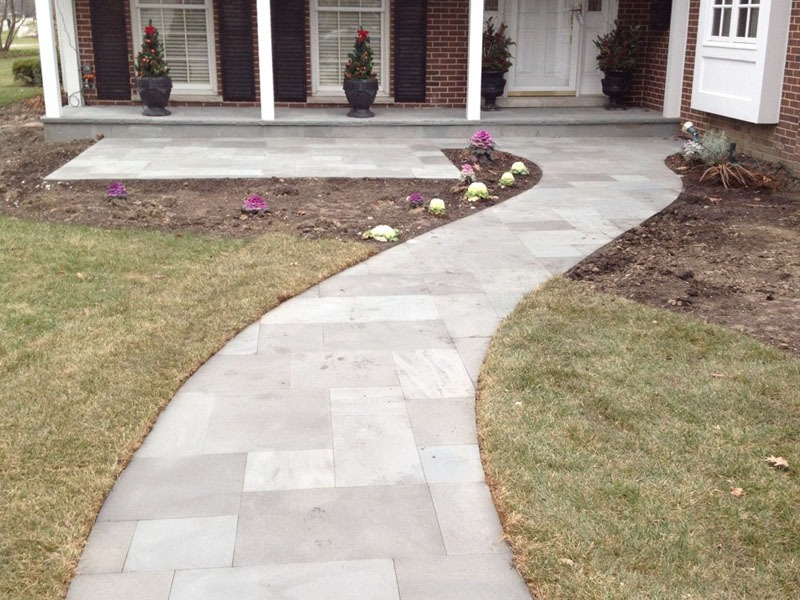
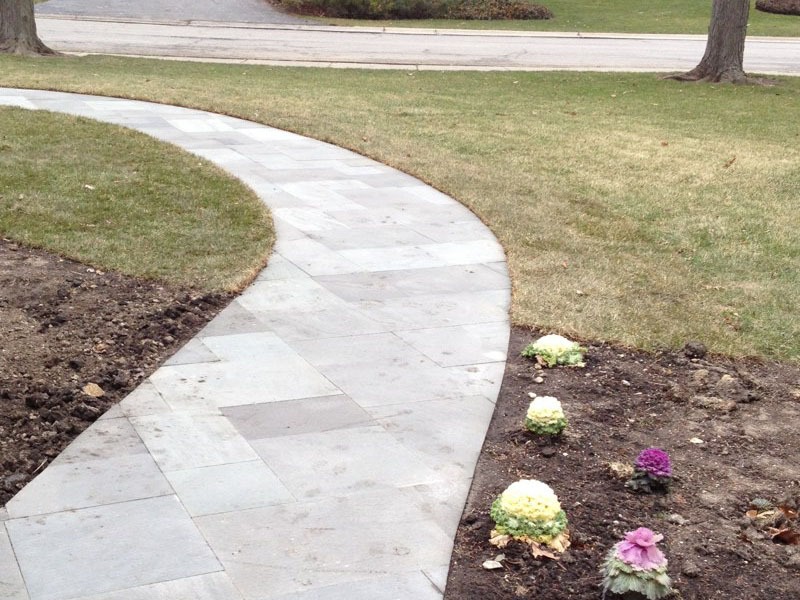
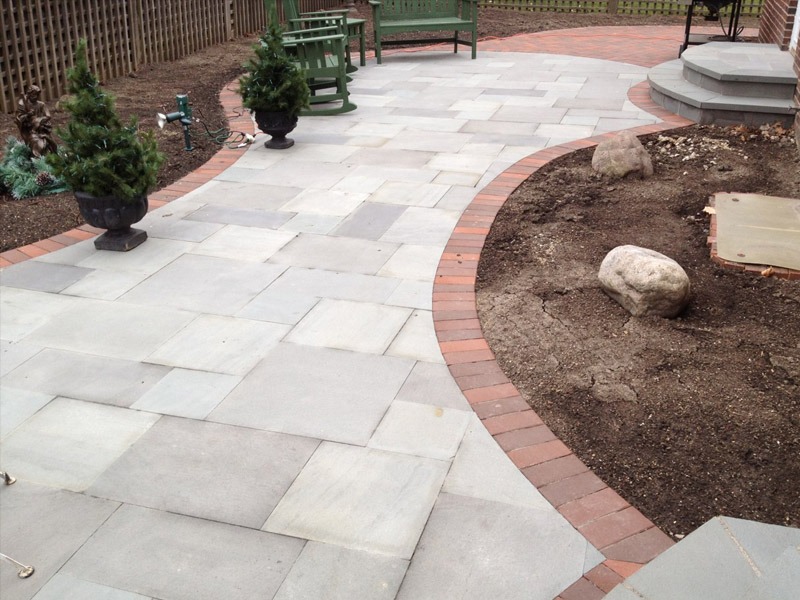
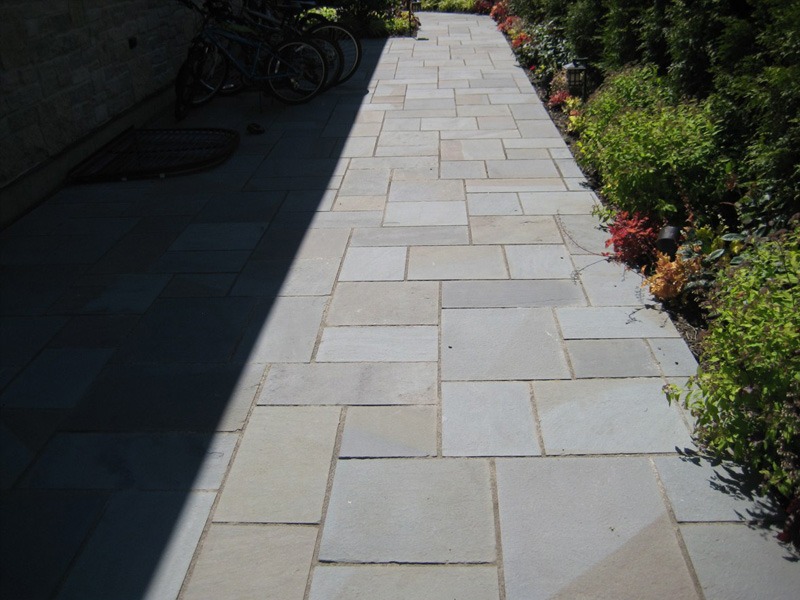
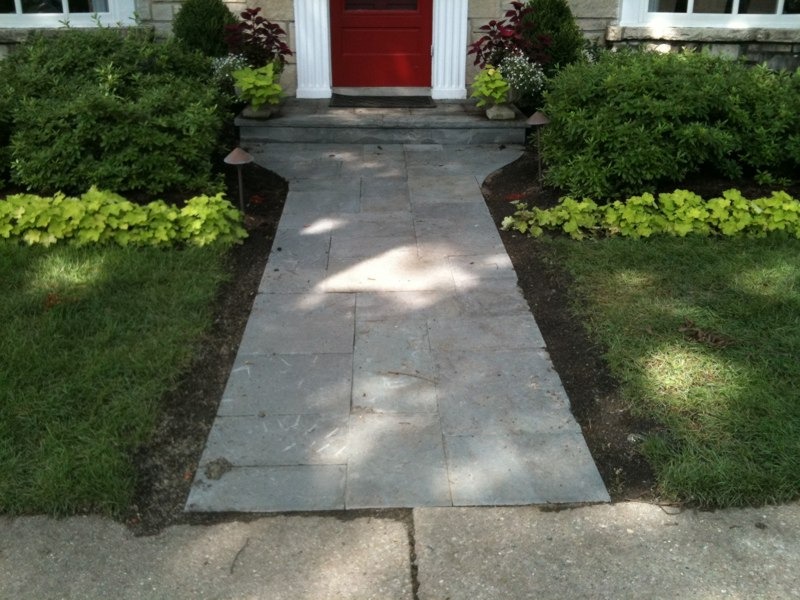
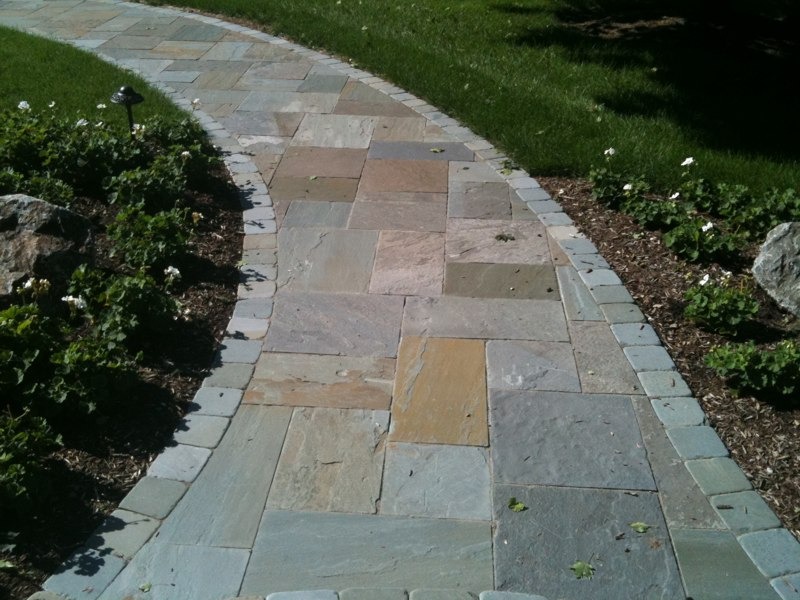
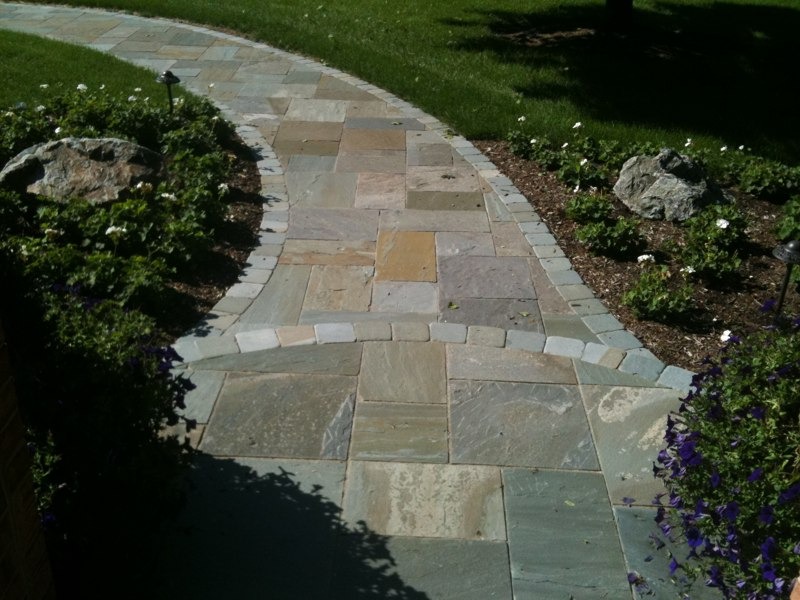
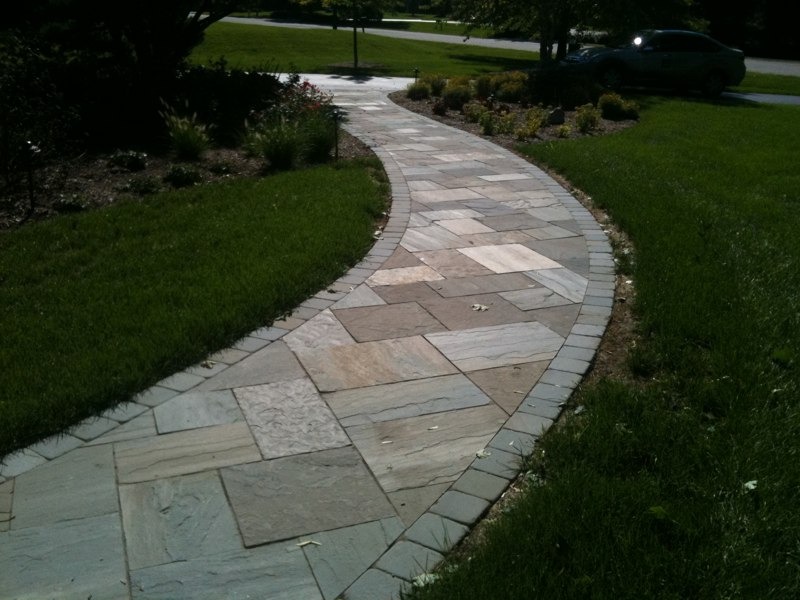
Natural stone brings the most organic finish. Bluestone, granite, and flagstone can create a walkway that feels less manufactured and more architectural. The tradeoff is labor: stone varies in thickness, edge, and surface texture, so it needs skilled sorting and setting.
Different homes need different paver materials. A Lake Forest estate entry path, a Wilmette brick Colonial, and an Arlington Heights ranch don’t need the same surface language.
Material Best Fit Technical Profile Design Character |
Material Best Fit Technical Profile Design Character |
Material Best Fit Technical Profile Design Character |
Concrete pavers give homeowners the widest design range, working well for geometric layouts, blended color fields, and modern front entries. Their pigments can fade under UV exposure over time, so periodic sealing may help preserve the surface appearance.
Clay brick pavers carry their color through the unit, since the color comes from the clay body and kiln firing rather than a surface coating. They pair well with older brick homes in Winnetka, Wilmette, Kenilworth, Glencoe, Park Ridge, and Evanston. Their formats run more traditional, but that restraint often suits the architecture.
Natural stone brings the most organic finish. Bluestone, granite, and flagstone can create a walkway that feels less manufactured and more architectural. The tradeoff is labor: stone varies in thickness, edge, and surface texture, so it needs skilled sorting and setting.
Walkway Design Across Cook, DuPage, and Lake County
3D Brick Paving Co. is based at 1000 Lee Street in Des Plaines and serves a wide suburban footprint, including Arlington Heights, Barrington, Buffalo Grove, Deerfield, Elmhurst, Evanston, Glencoe, Glenview, Highland Park, Kenilworth, Lake Forest, Long Grove, Morton Grove, Niles, Northbrook, Palatine, Park Ridge, Schaumburg, Wilmette, and Winnetka.
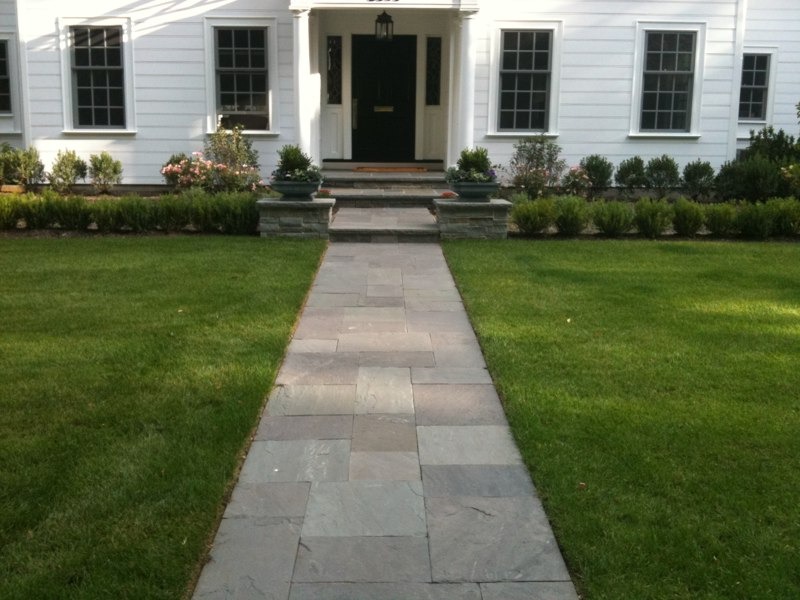
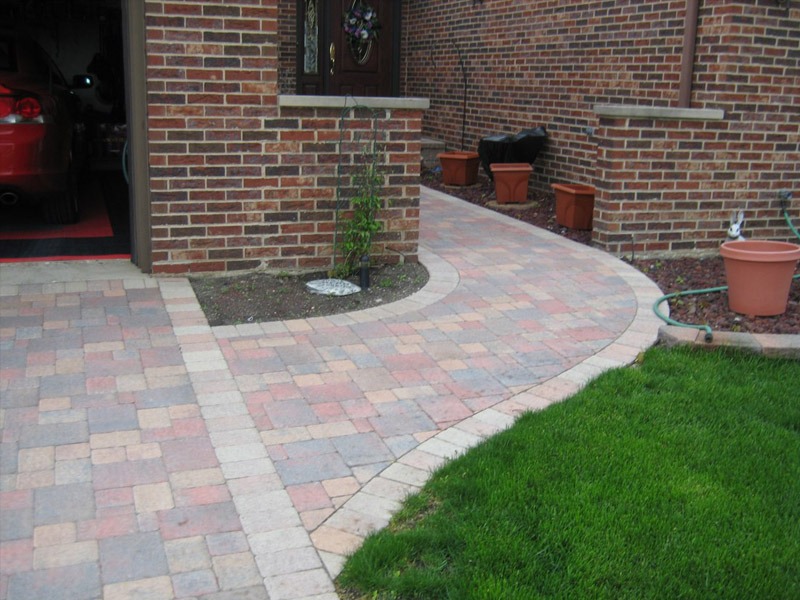
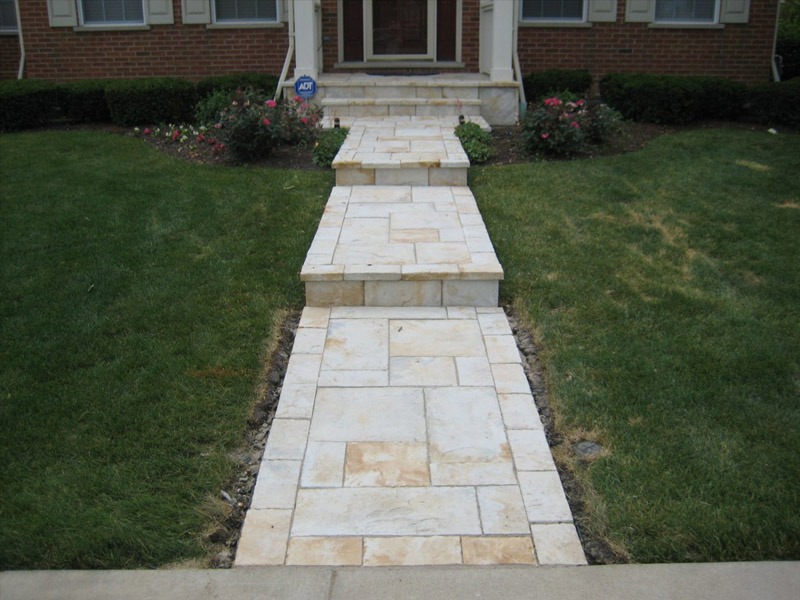
That range matters because the architecture changes street by street. North Shore homes often need a quieter, more formal walkway in clay brick or natural stone. Northwest suburbs like Arlington Heights, Buffalo Grove, Schaumburg, and Barrington often need paver walks that connect driveways, patios, side yards, and front stoops into one planned outdoor system.
The walkway should match the house before it tries to impress the street.
The Six-Step Installation Process
Excavate and Grade the Walkway Corridor
The crew removes the existing surface, organic material, unstable soil, and failed base material. Excavation depth depends on the walkway's use, soil condition, drainage requirement, and selected paver thickness. Grade matters as much as depth. A front walk has to shed water away from the house, stoop, garage, and foundation. Standing water becomes a slip hazard in winter and feeds freeze-thaw movement below the surface, so each walkway gets shaped to move water cleanly before the first layer of aggregate goes down.
Place Geotextile Where Soil Separation Is Needed
Clay soil can migrate into the aggregate base if the layers aren't separated. Once fines contaminate the stone base, drainage slows and settlement begins. Geotextile fabric separates the subgrade from the compacted aggregate. It keeps the base cleaner, reduces soil pumping, and helps the walkway hold its section through repeated wet and dry cycles.
Build a Machine-Compacted Aggregate Base
The aggregate base carries the system. For pedestrian paver walkways, the technical standard is a 4-to-6-inch compacted base, placed in controlled lifts and compacted with equipment until it forms a dense, stable layer. This step separates a professional installation from surface-level paver setting. Thin base layers, loose stone, and manual tamping create future settlement. A machine-compacted base spreads load, manages water, and gives the pavers a stable bearing plane to sit on.
Screed the Bedding Sand
A clean, even bedding sand layer sits above the compacted base, screeded to a consistent thickness so each paver can settle into plane during final compaction. The bedding layer isn't a correction layer for poor excavation. It should refine the surface, not hide base problems. If the base is wrong, the walkway will show it later, no matter how clean the sand layer looks on installation day.
Lay the Pavers to Match the Home
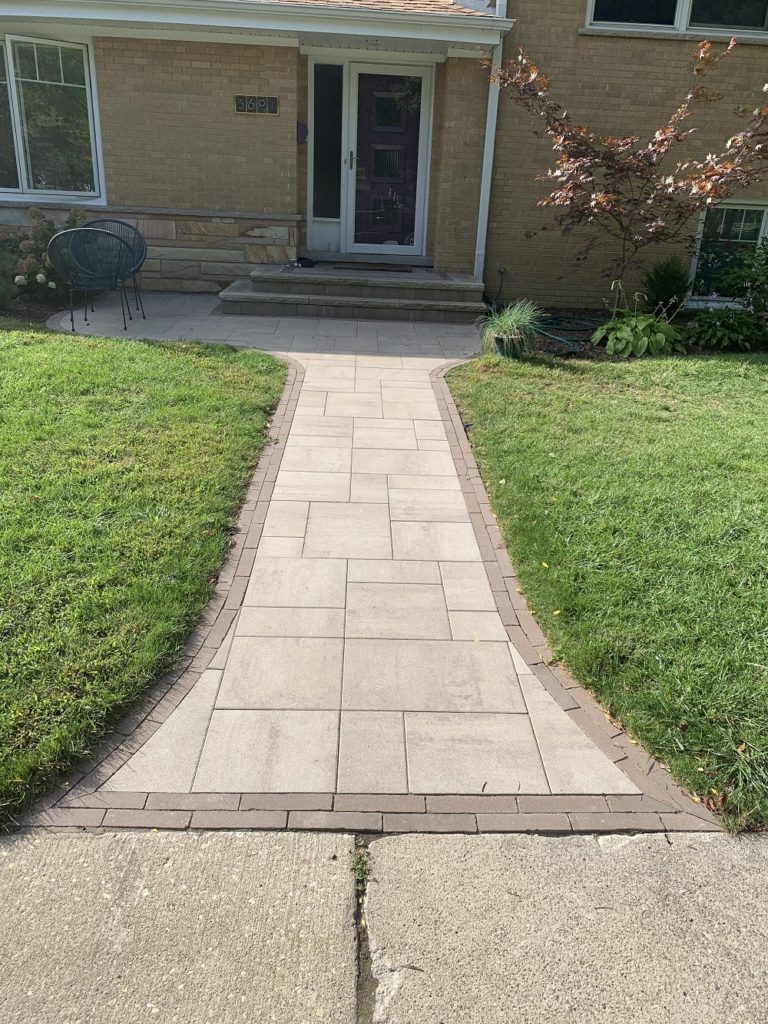
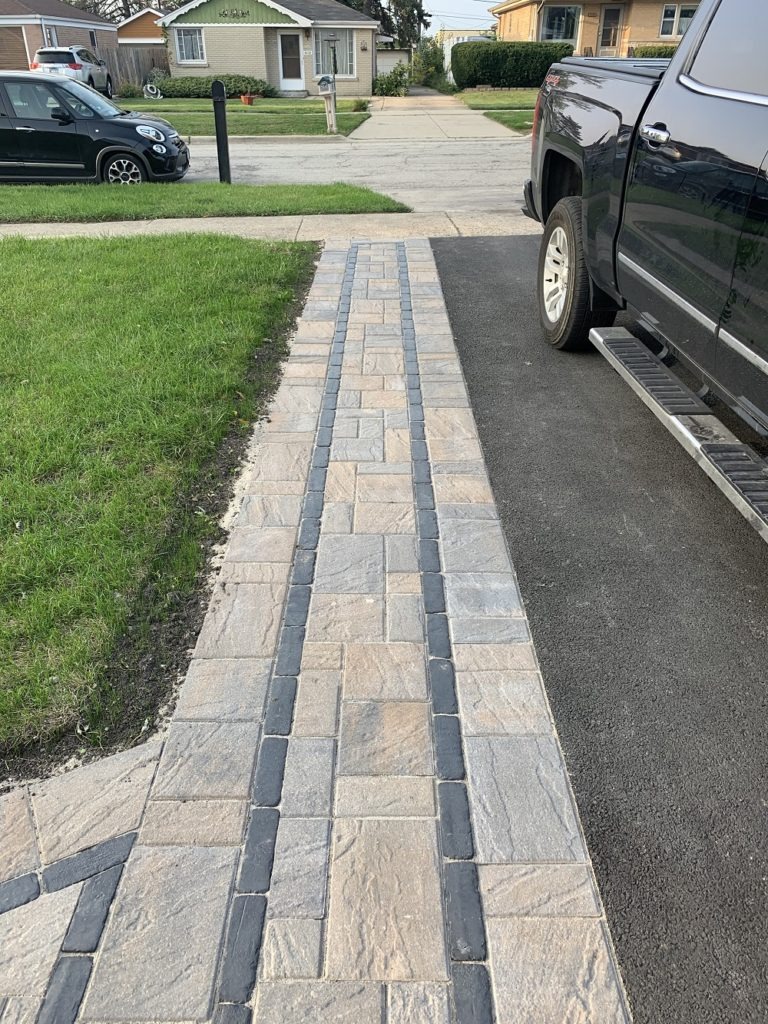
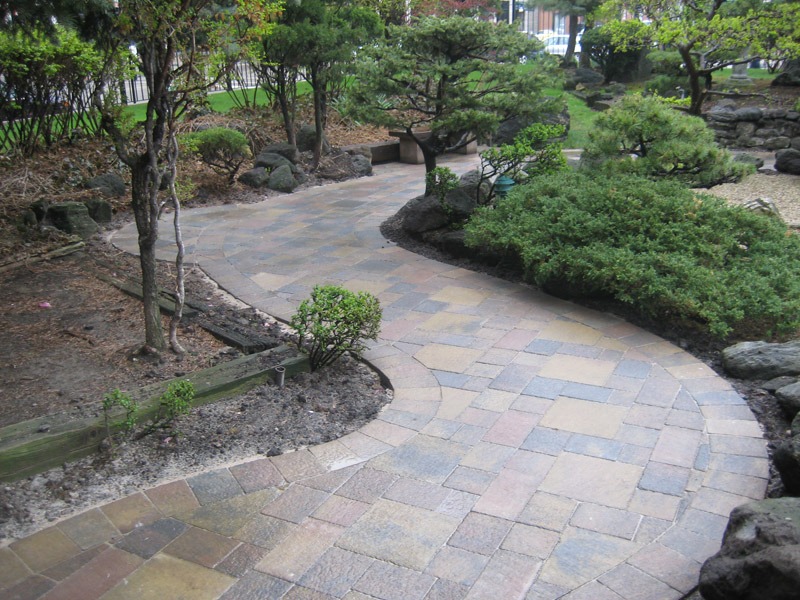
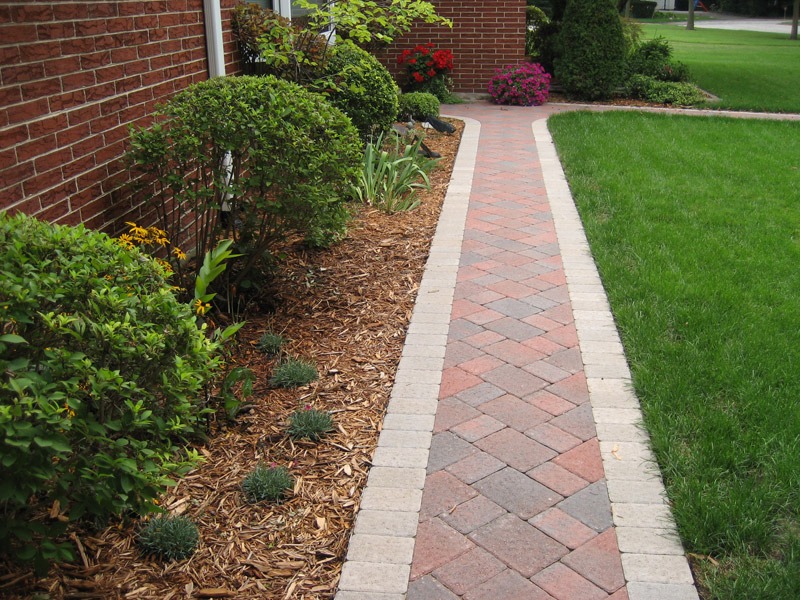
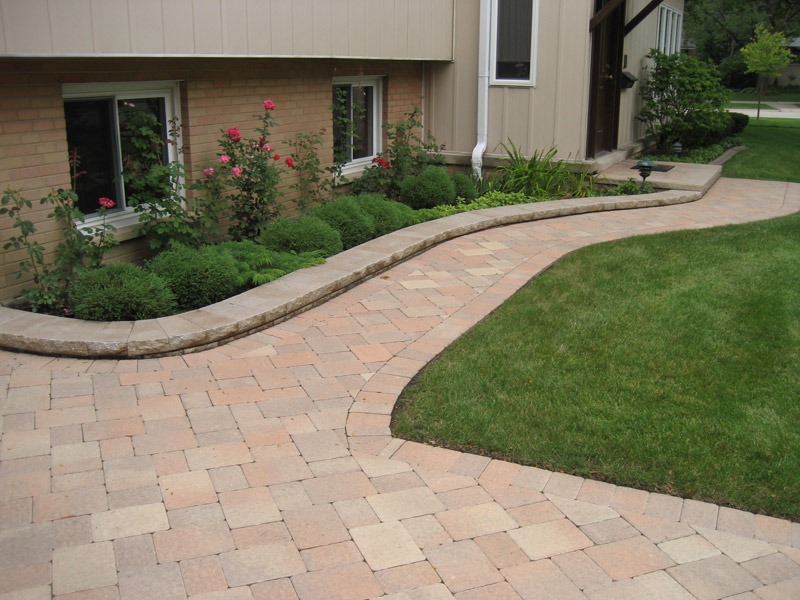
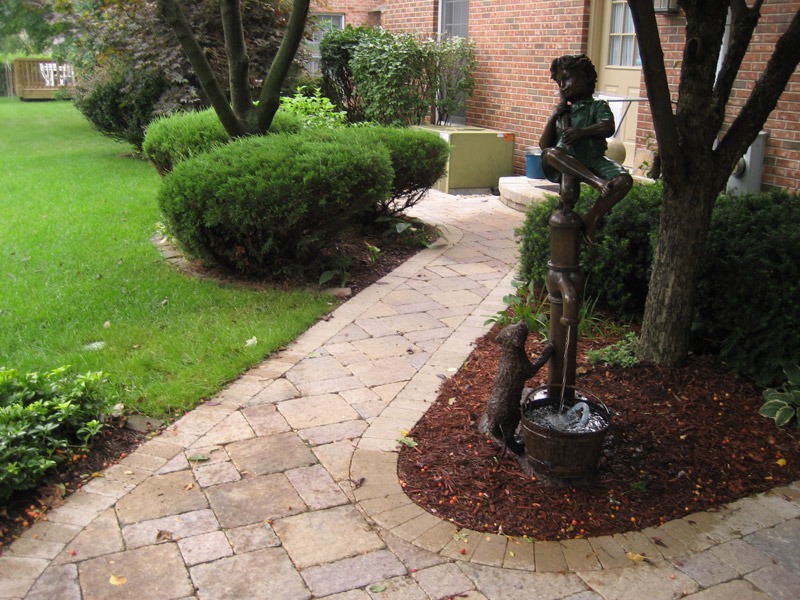
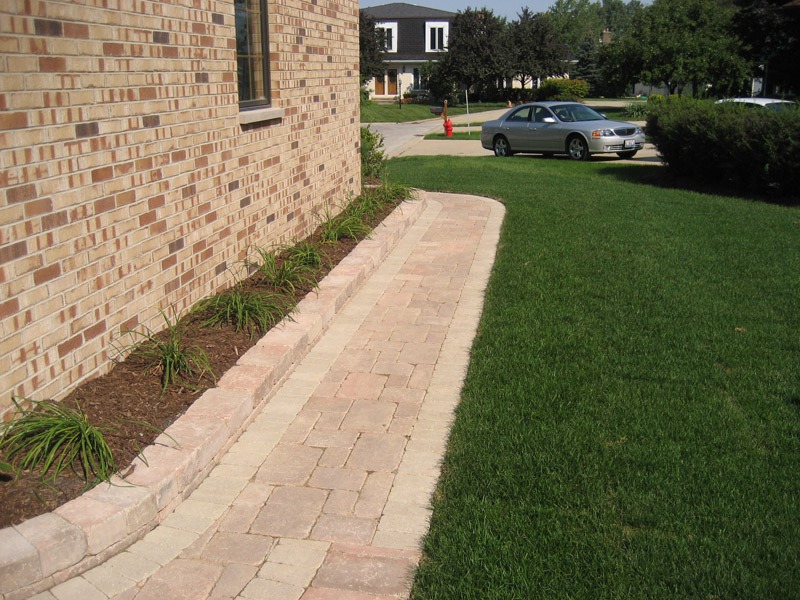
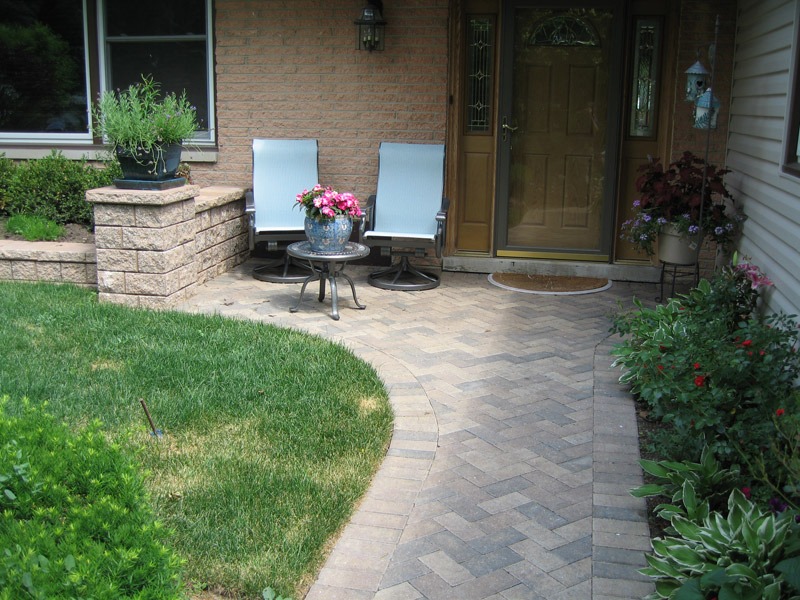
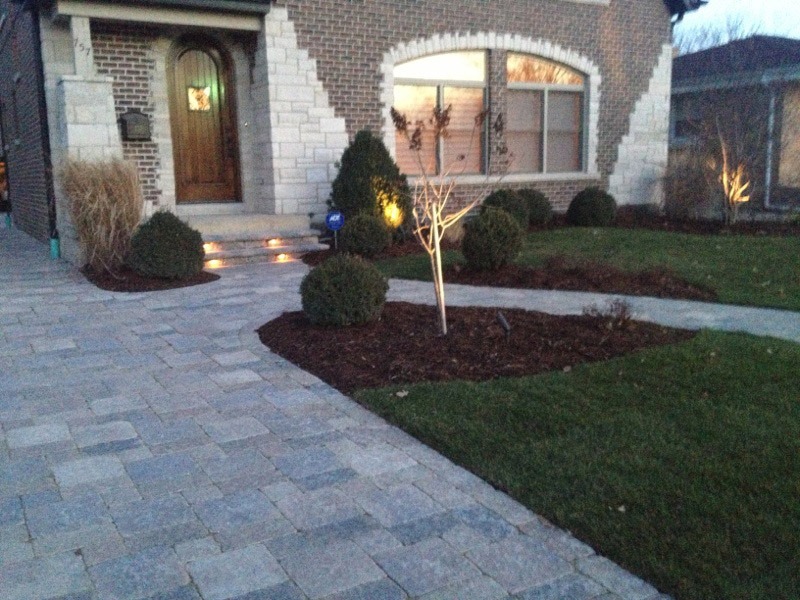
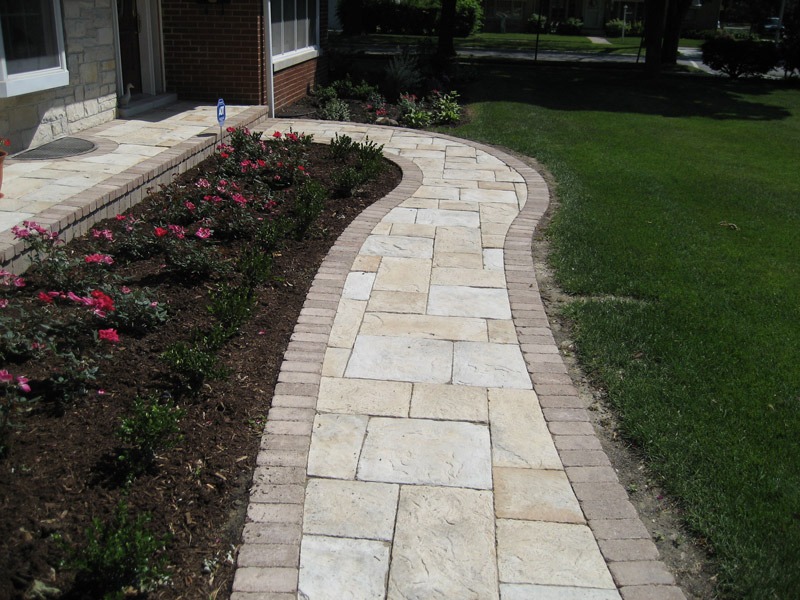
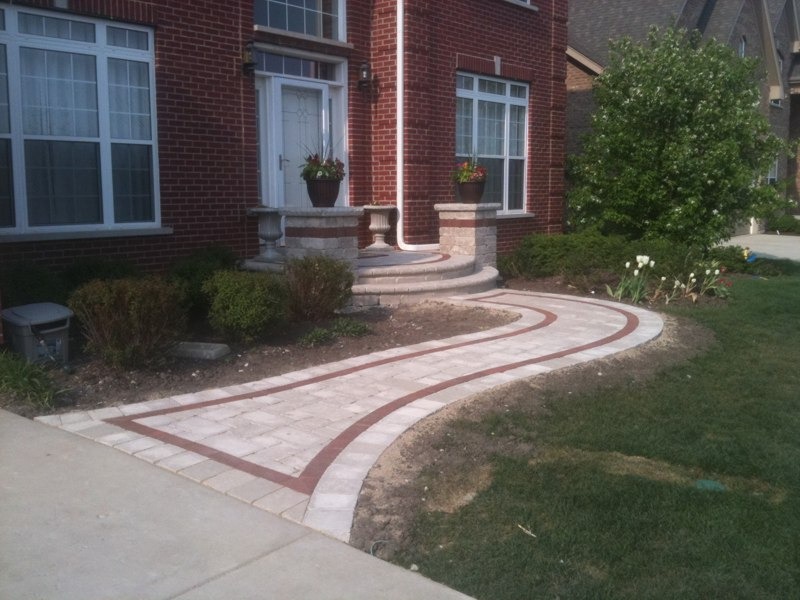
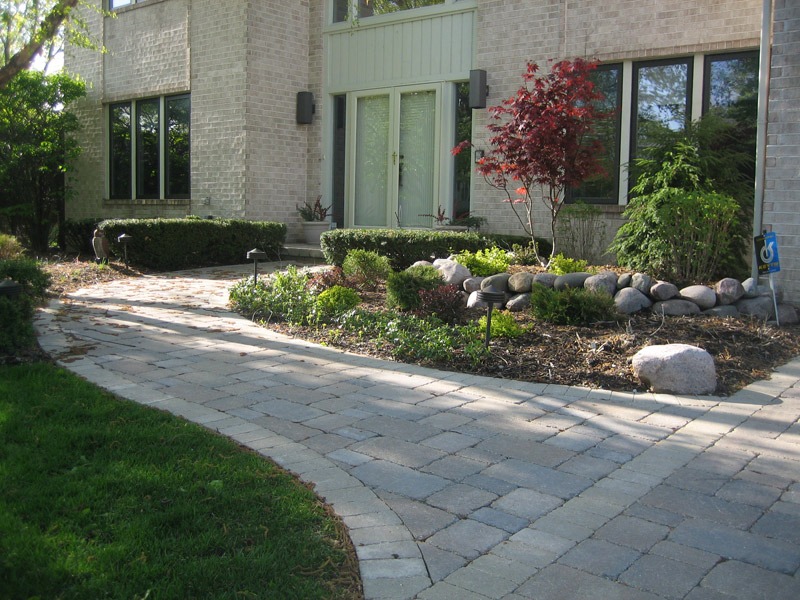
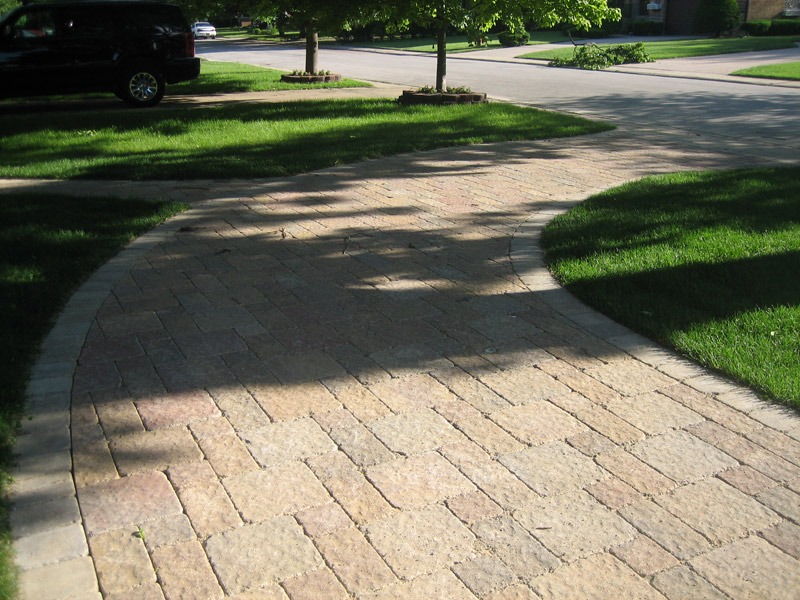
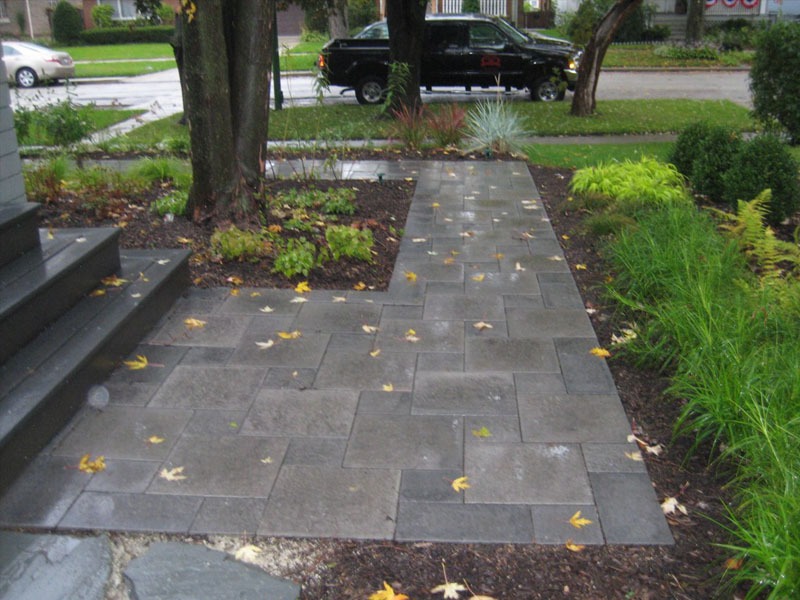
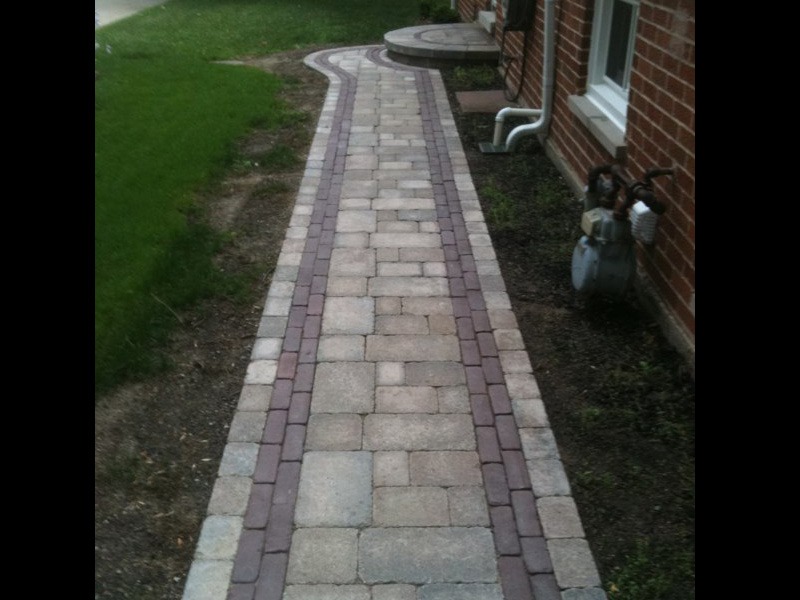
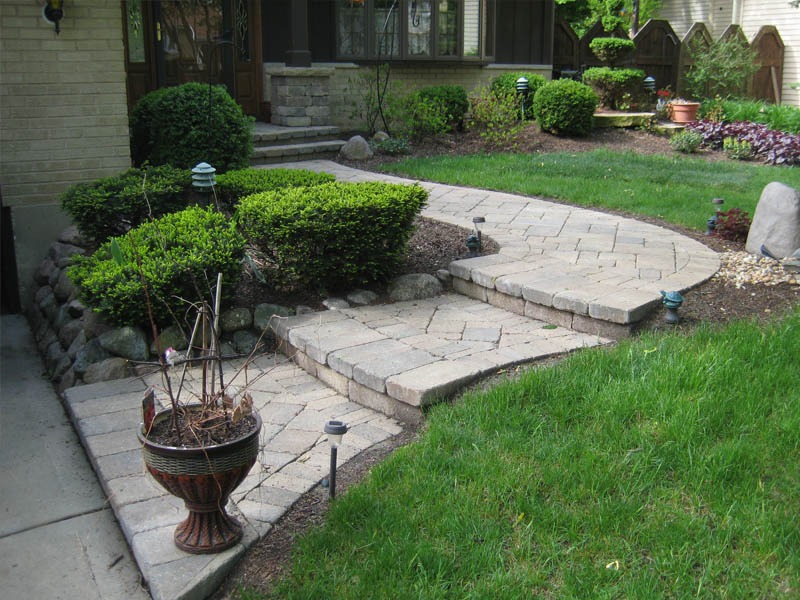
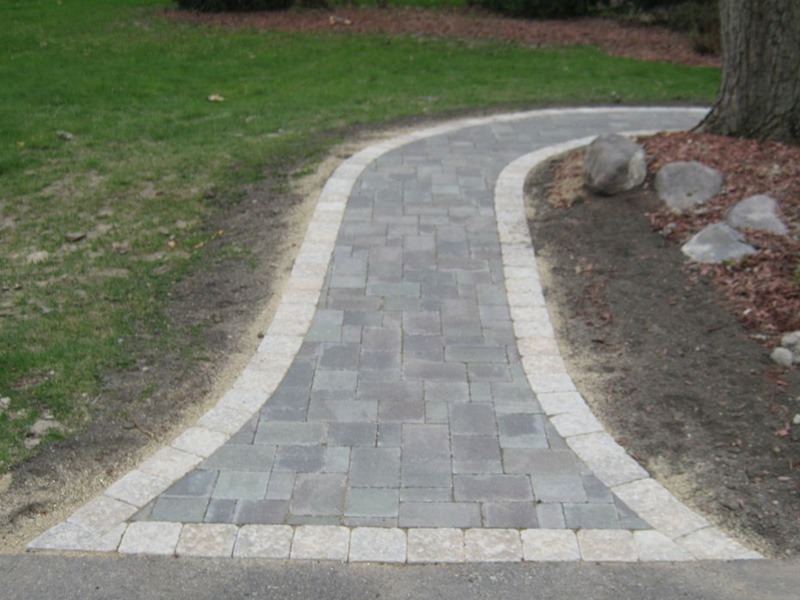
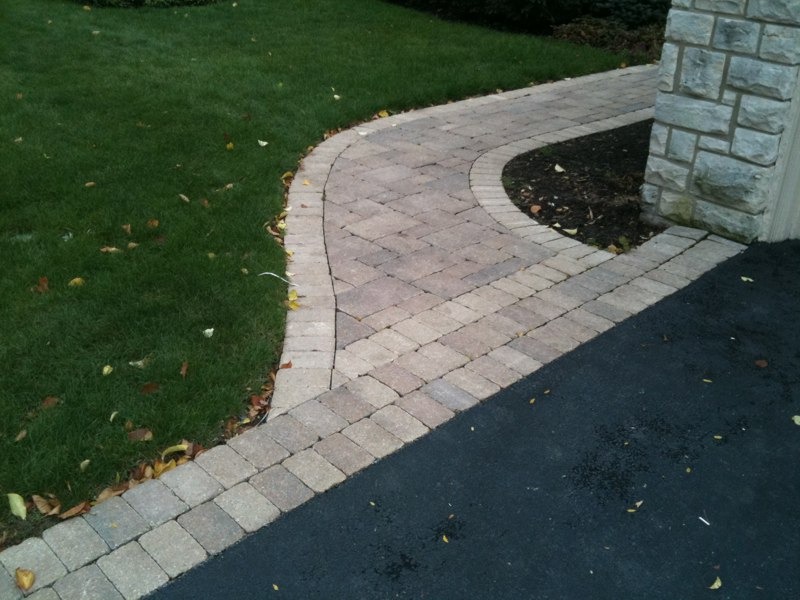
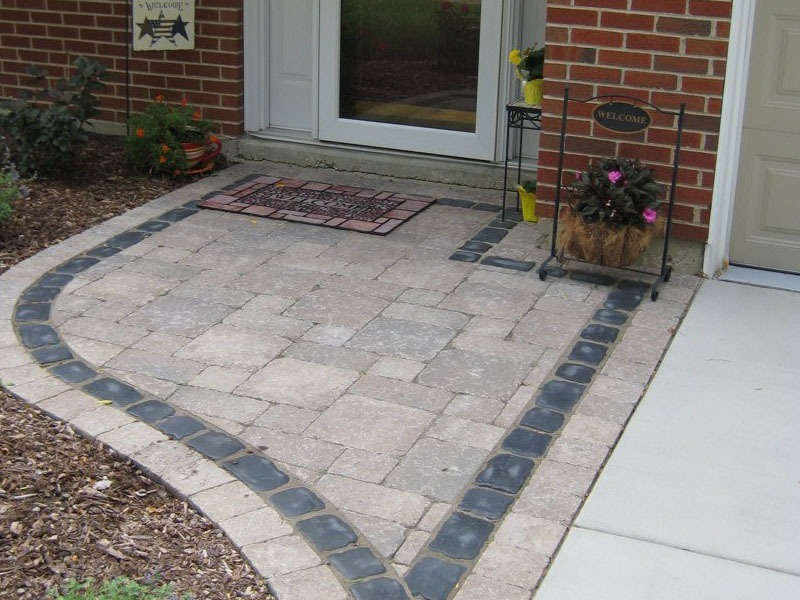
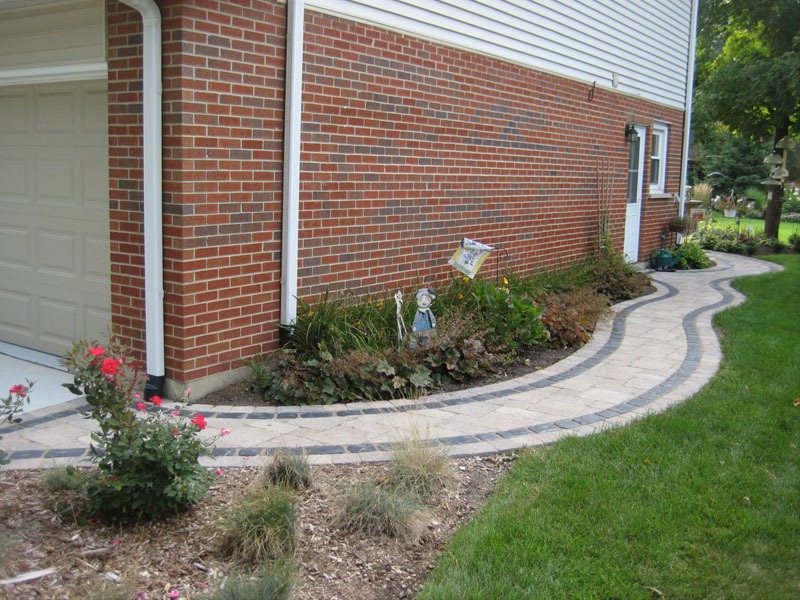
Pavers get placed by pattern, alignment, border detail, and architectural fit. A straight front walk may call for a clean running bond with soldier-course borders. A curved garden path may need smaller units or natural stone pieces sorted by hand. A larger entry walk can use contrasting borders, inlays, and blended color fields to tie into the driveway, patio, or stoop.
Lock the Joints With Polymeric Sand
Once the surface is laid, the joints get filled with polymeric sand. The paver field is compacted so the units seat into the bedding layer and the sand settles into the joints. Water activates the polymers, forming a flexible joint that resists erosion, weeds, and washout. The goal is controlled movement, not a rigid slab. The surface stays interlocked while still allowing small seasonal shifts without cracking the full walkway.
Lifecycle Cost Comparison
A paver walkway costs more upfront than asphalt or standard concrete. The reason is visible in the work itself: excavation, soil preparation, geotextile separation, aggregate base compaction, sand screeding, paver setting, edge restraint, joint sanding, and finish compaction.
Professionally installed interlocking paver walkways run roughly $10 to $25 per square foot, with a 150-square-foot residential sidewalk budgeting around $1,500 to $3,750. Asphalt starts lower, and poured concrete sits in the middle, but their repair mechanics change the long-term math.
| Surface | Initial Installed Cost | Expected Structural Life | Repair Logic |
|---|---|---|---|
| Asphalt Walkway | $3 to $7 per sq. ft. | 10 to 20 years | Sealcoat, crack fill, patch, overlay |
| Poured Concrete Slab | $4 to $10 per sq. ft. | 20 to 30 years | Saw-cut, remove, repour slab sections |
| Interlocking Paver Walkway | $10 to $25 per sq. ft. | 50+ years | Lift, reset, replace individual units |
Pavers win on repairability. If one unit stains, chips, settles, or needs access beneath it, the affected section can be lifted and reset. There’s no need to demolish the whole walkway, no patch scar, and no mismatched concrete rectangle sitting at the front entrance afterward.
That modular repair cycle matters for Chicago homes because utilities, tree roots, drainage corrections, and settlement issues don’t always happen evenly. A paver system gives the property owner a surface that can be serviced instead of destroyed.
A paver walkway costs more upfront than asphalt or standard concrete. The reason is visible in the work itself: excavation, soil preparation, geotextile separation, aggregate base compaction, sand screeding, paver setting, edge restraint, joint sanding, and finish compaction.
Professionally installed interlocking paver walkways run roughly $10 to $25 per square foot, with a 150-square-foot residential sidewalk budgeting around $1,500 to $3,750. Asphalt starts lower, and poured concrete sits in the middle, but their repair mechanics change the long-term math.
Surface Initial Installed Cost Expected Structural Life Repair Logic |
Surface Initial Installed Cost Expected Structural Life Repair Logic |
Surface Initial Installed Cost Expected Structural Life Repair Logic |
Pavers win on repairability. If one unit stains, chips, settles, or needs access beneath it, the affected section can be lifted and reset. There’s no need to demolish the whole walkway, no patch scar, and no mismatched concrete rectangle sitting at the front entrance afterward.
That modular repair cycle matters for Chicago homes because utilities, tree roots, drainage corrections, and settlement issues don’t always happen evenly. A paver system gives the property owner a surface that can be serviced instead of destroyed.
Contact 3D Brick Paving Co.
We serve Des Plaines, Unincorporated Maine Township, and surrounding northern Chicago suburbs. Consultations include a site visit, fire clearance and setback review, drainage assessment, and a 3D design rendering at no charge.