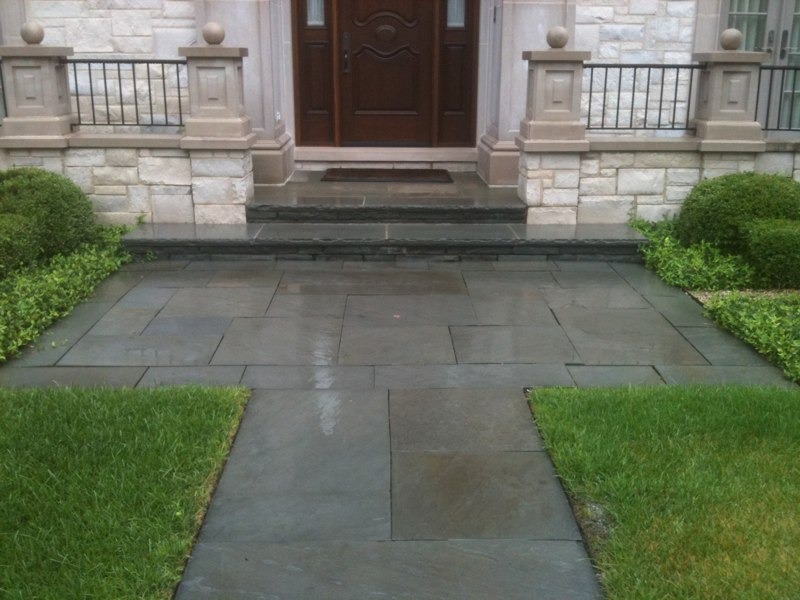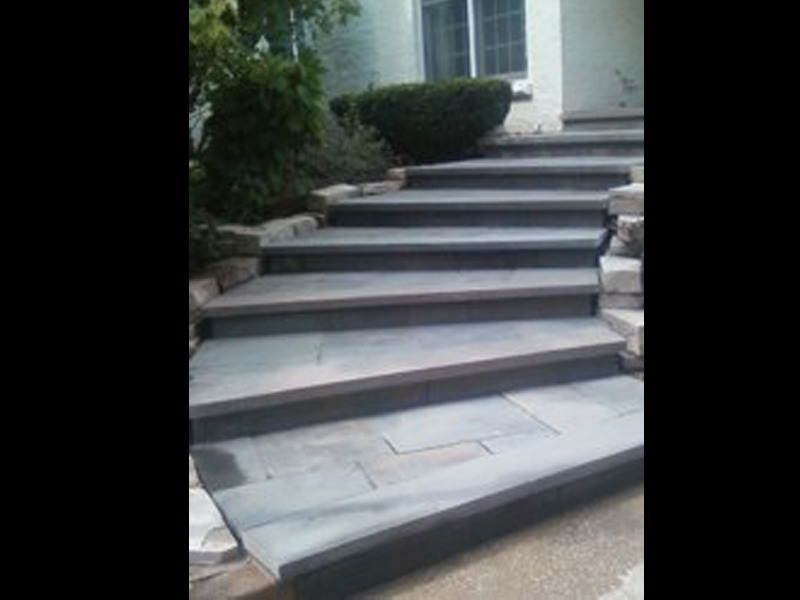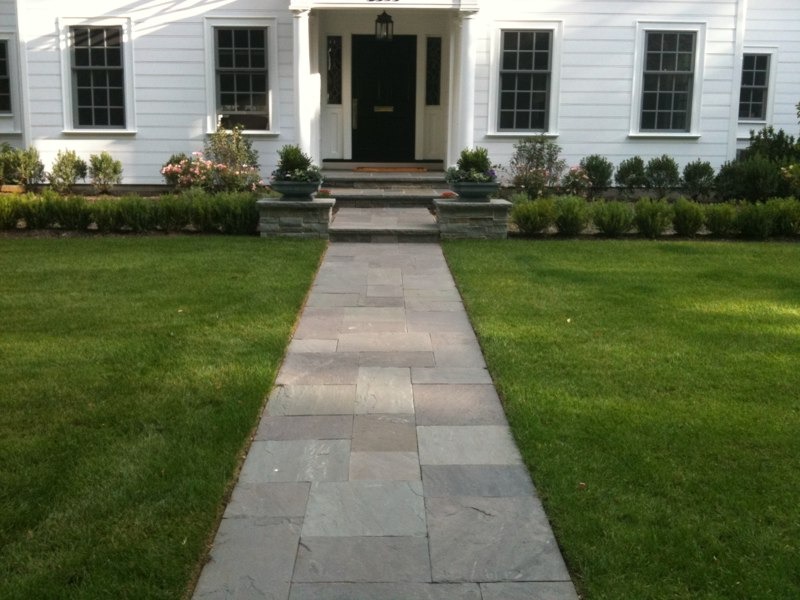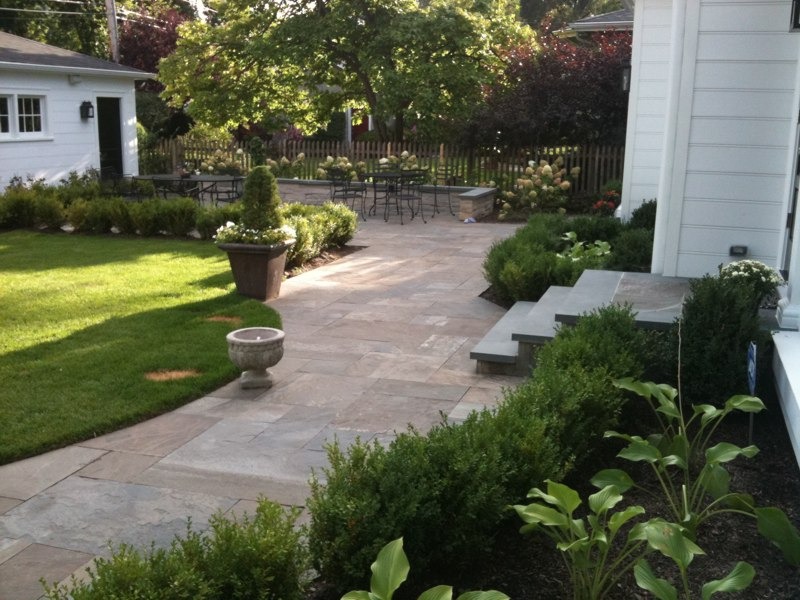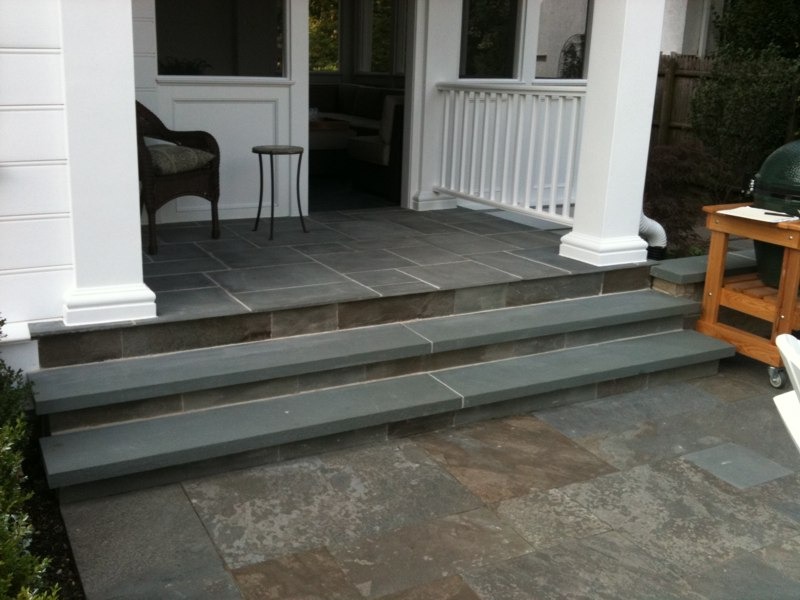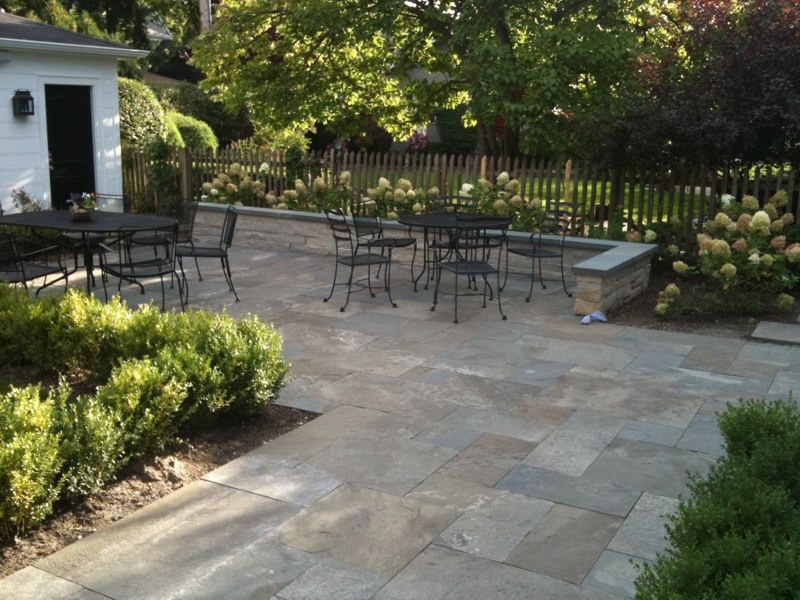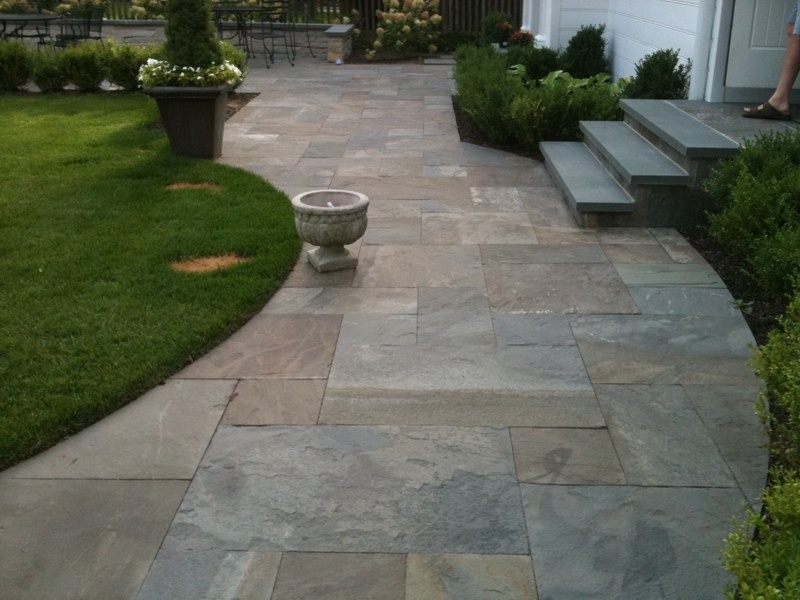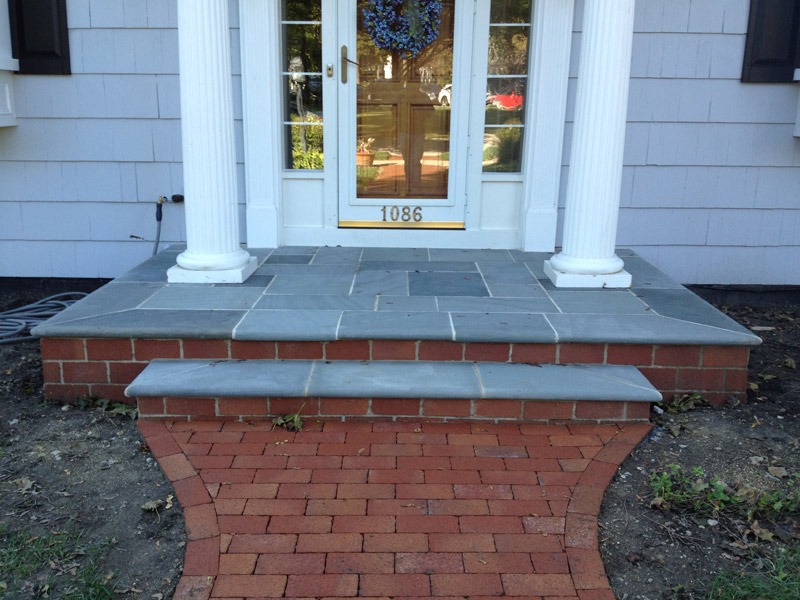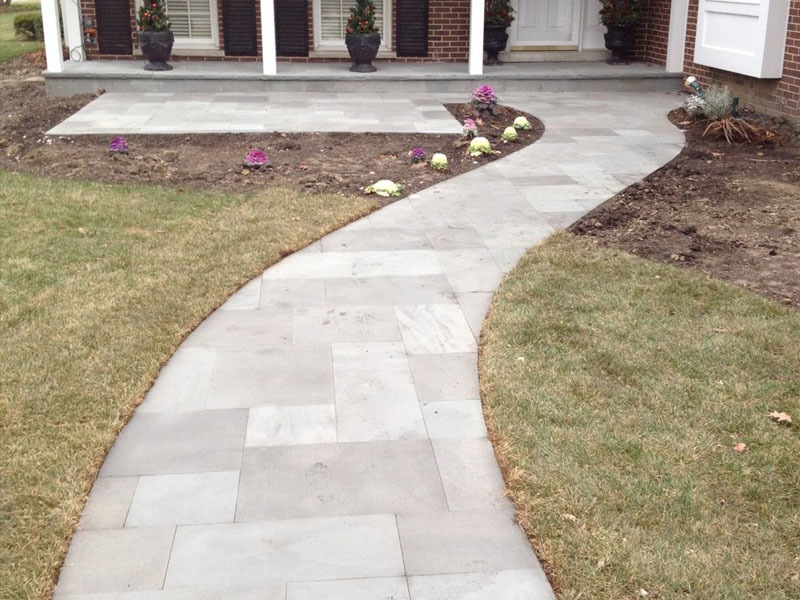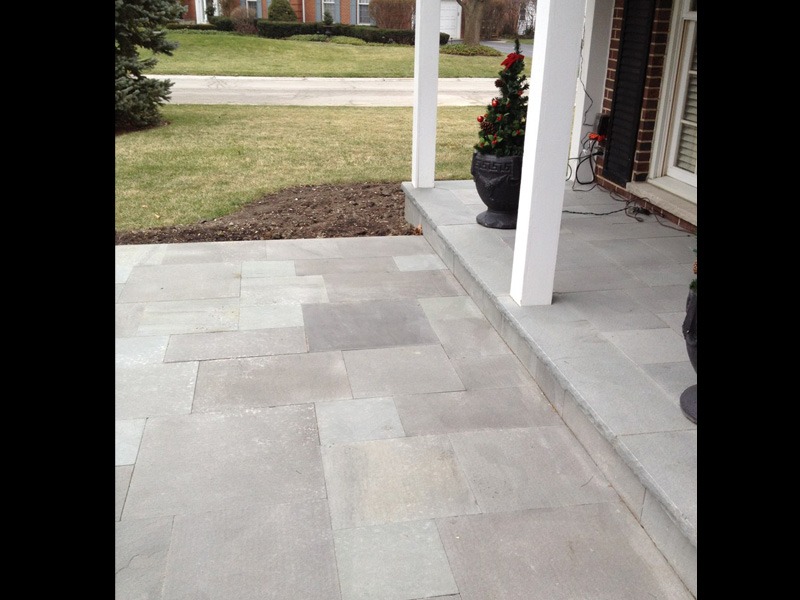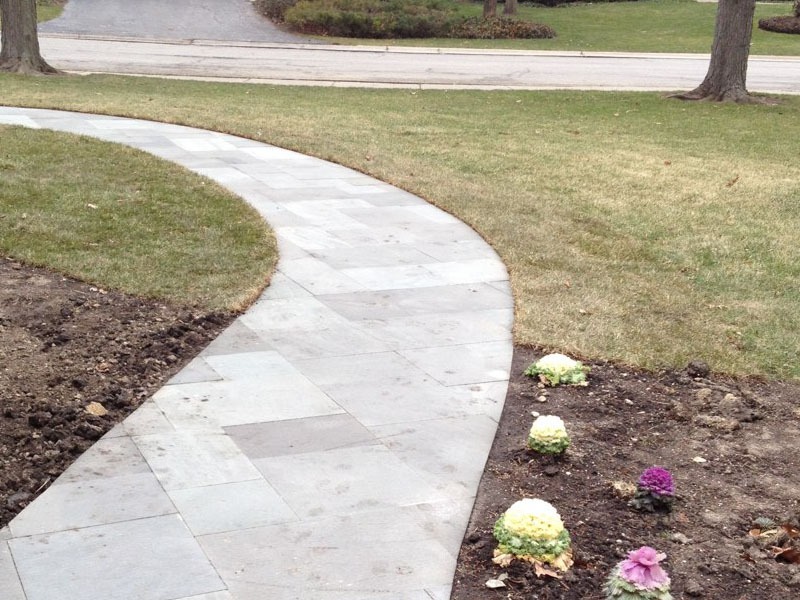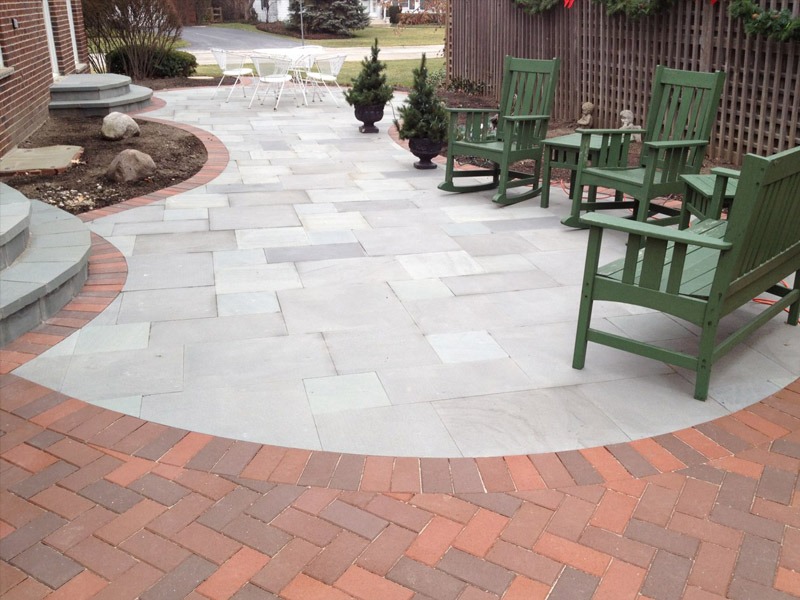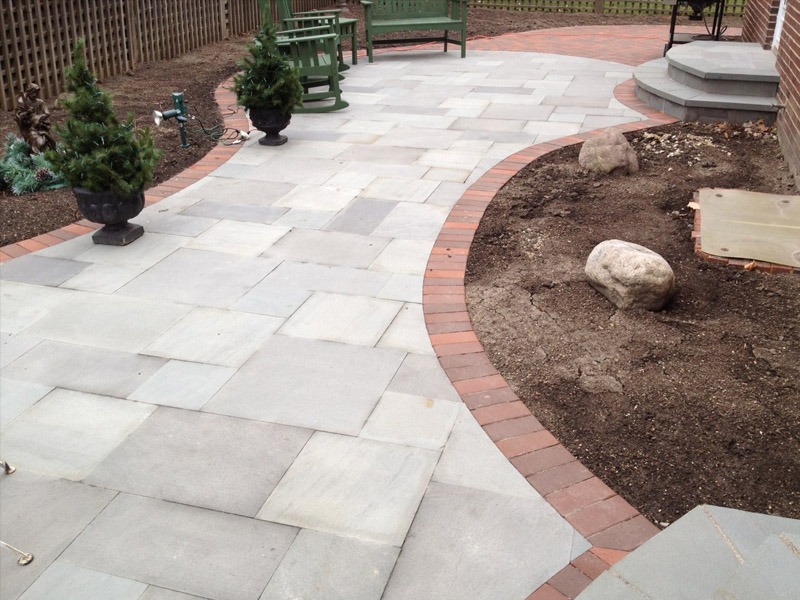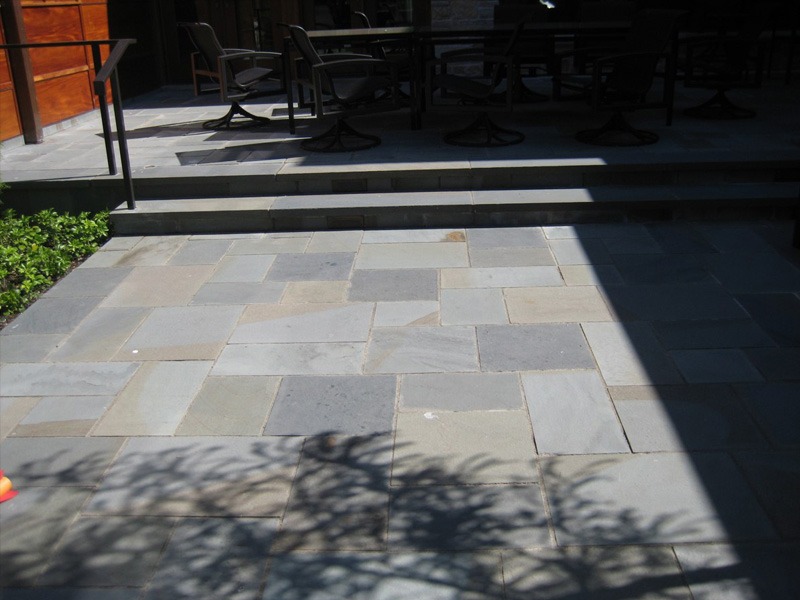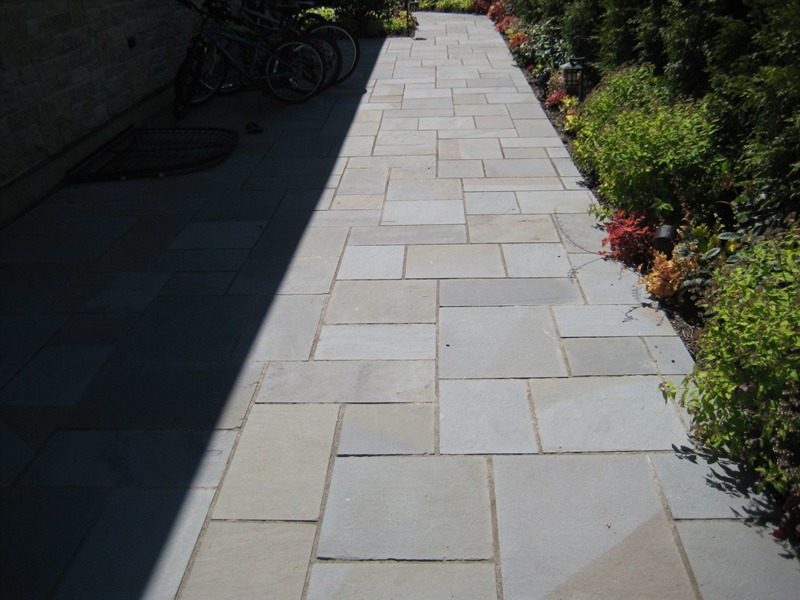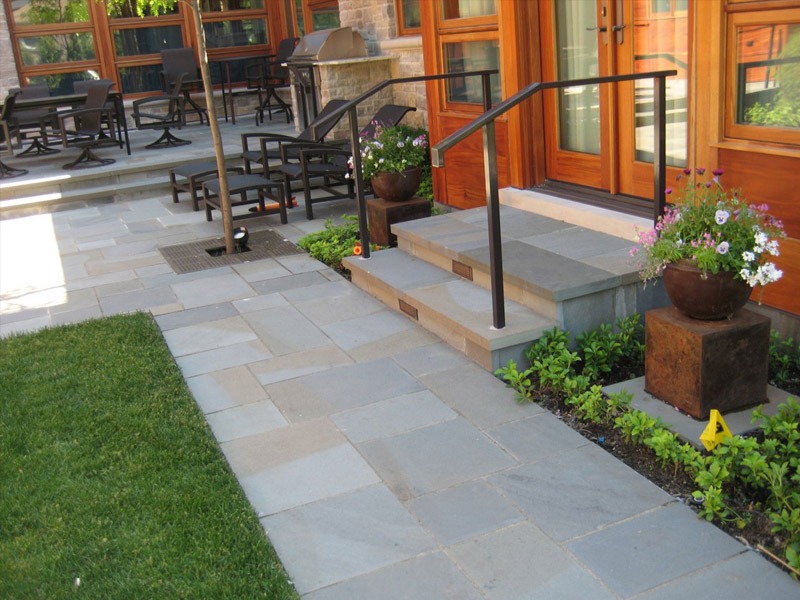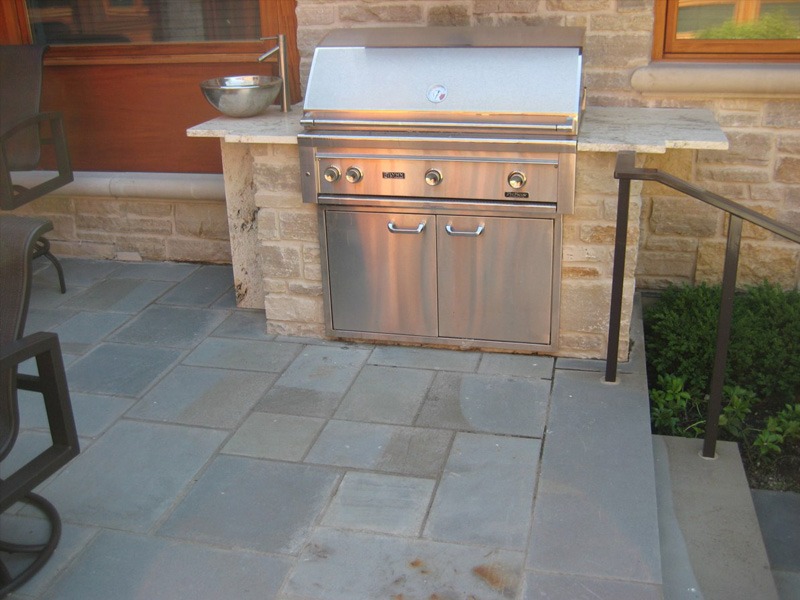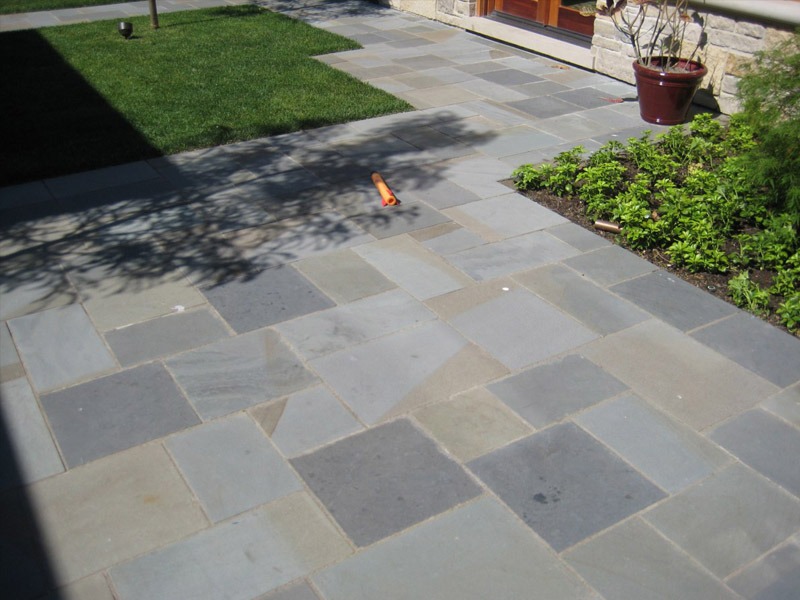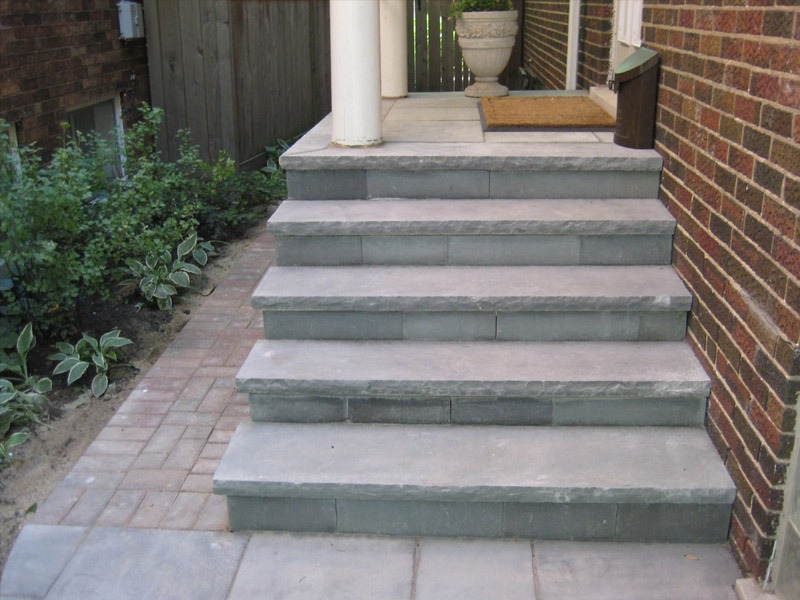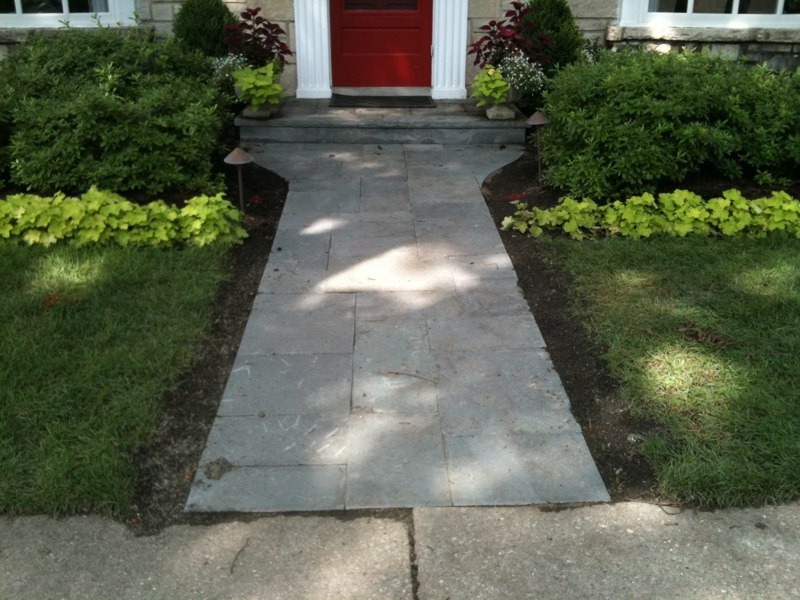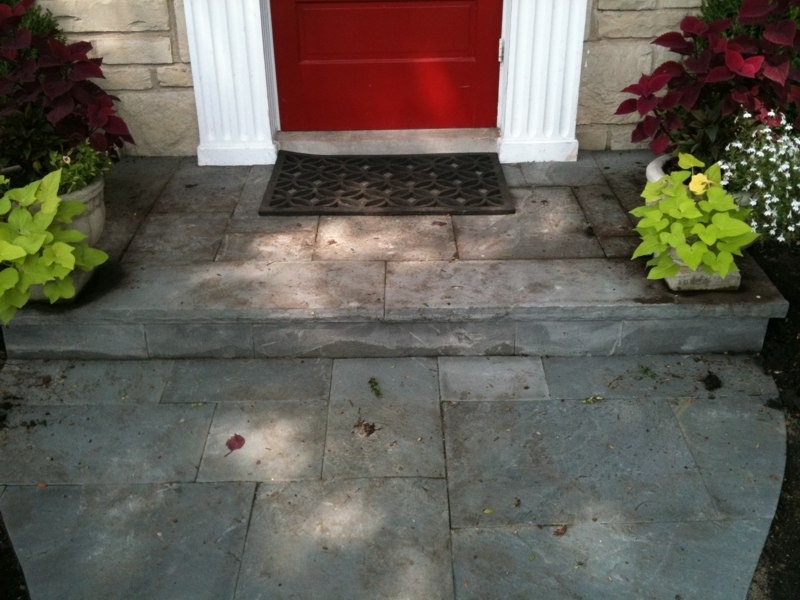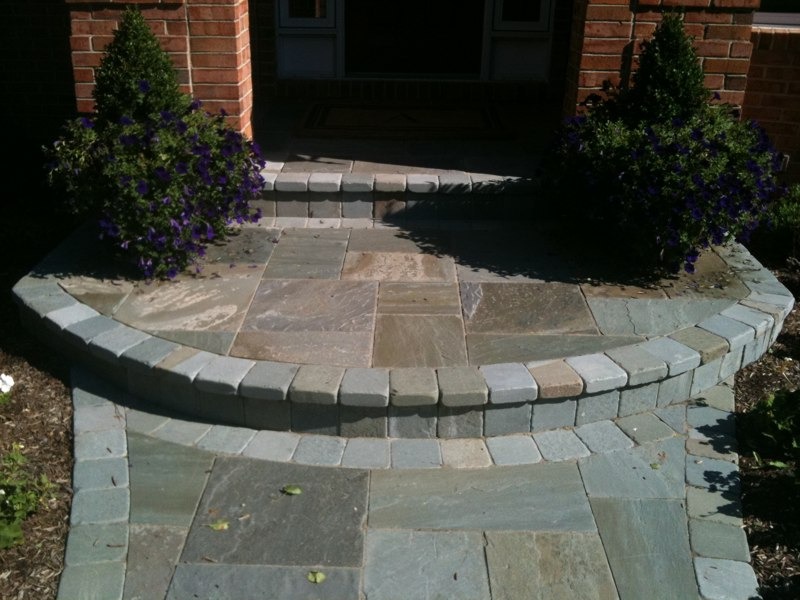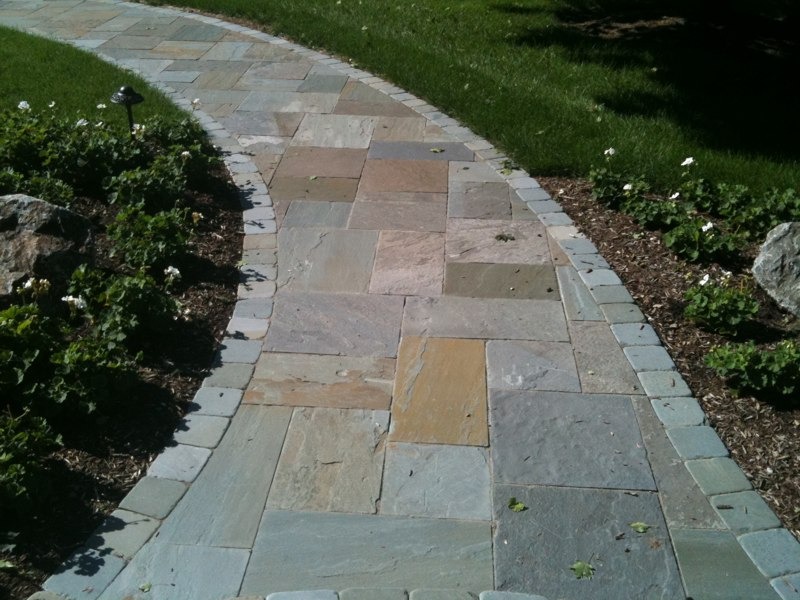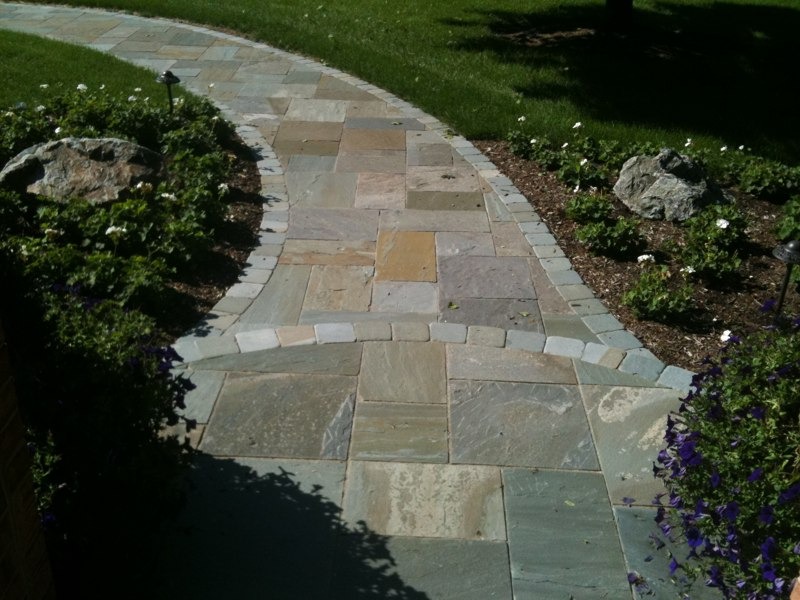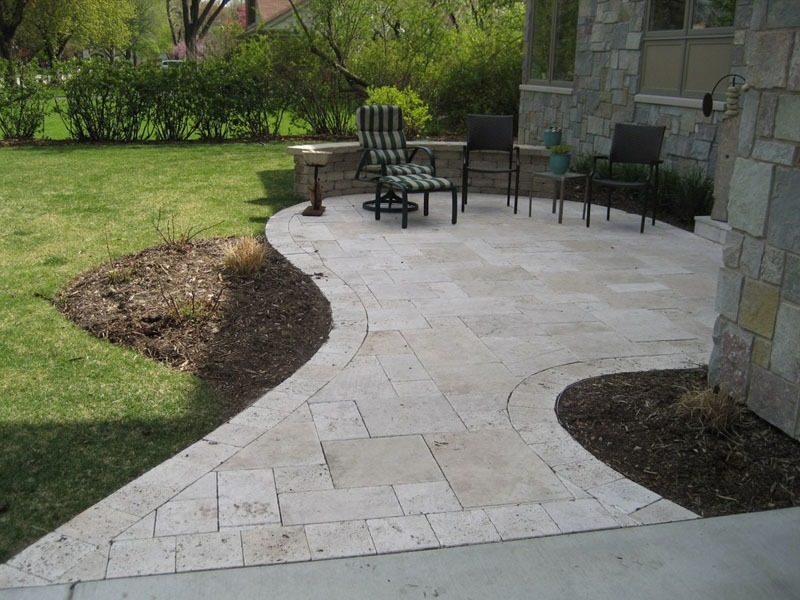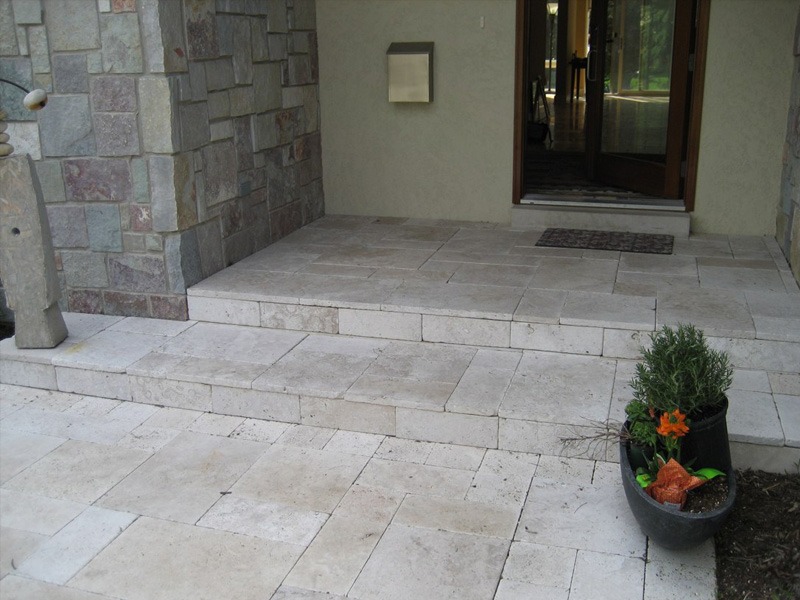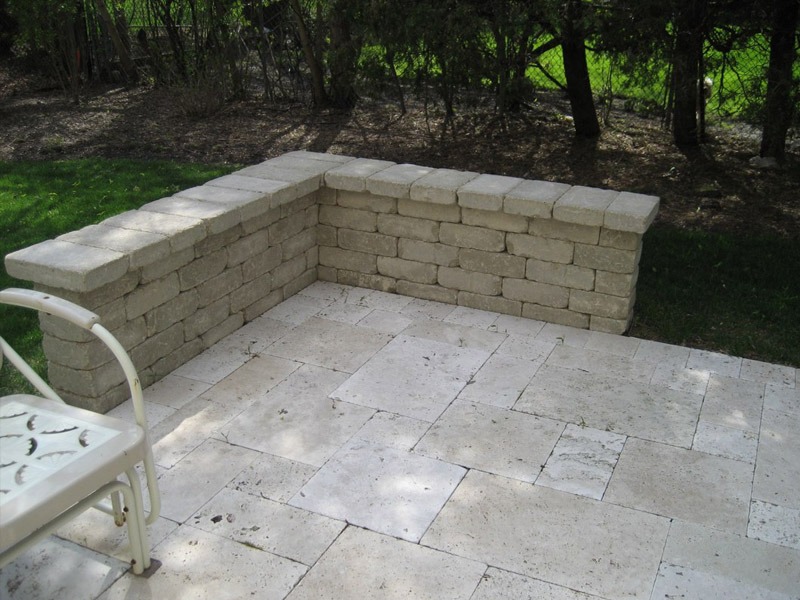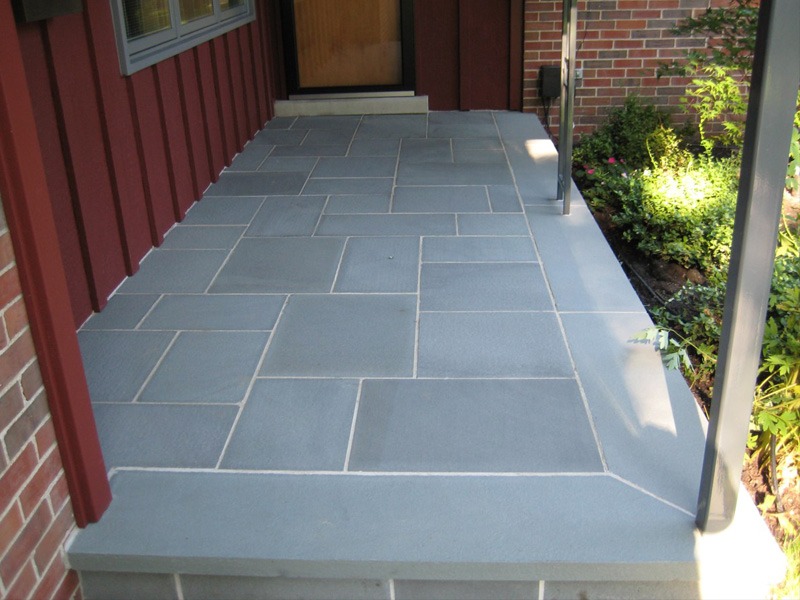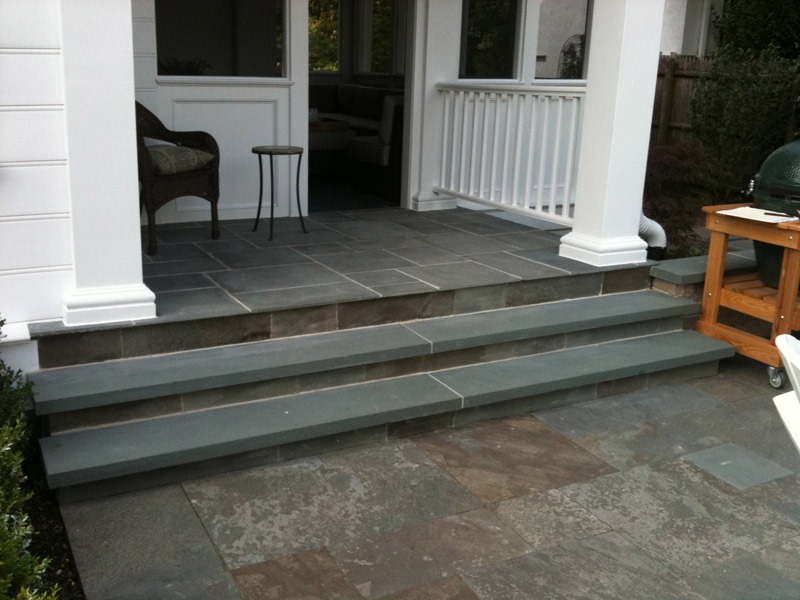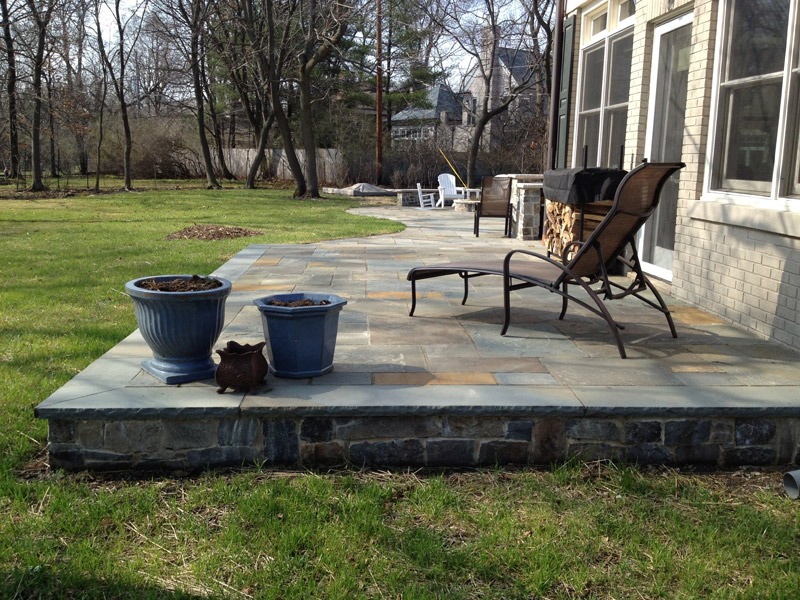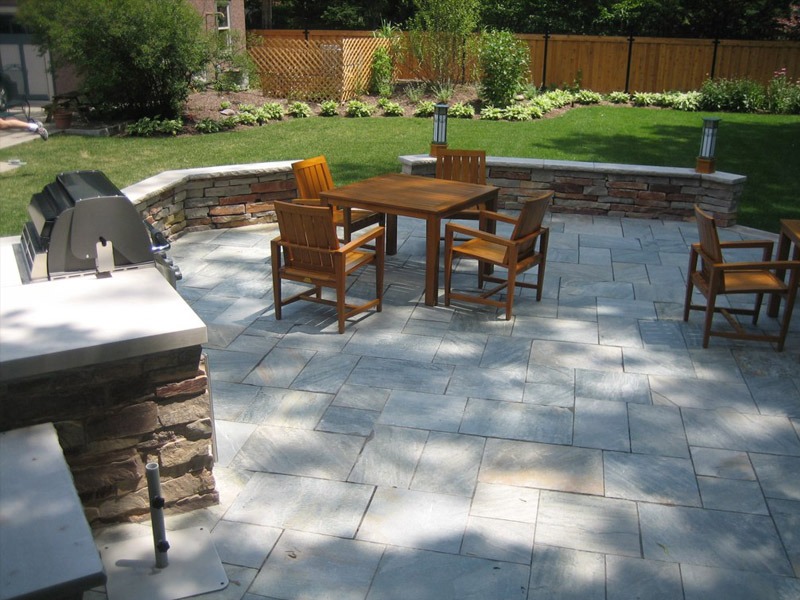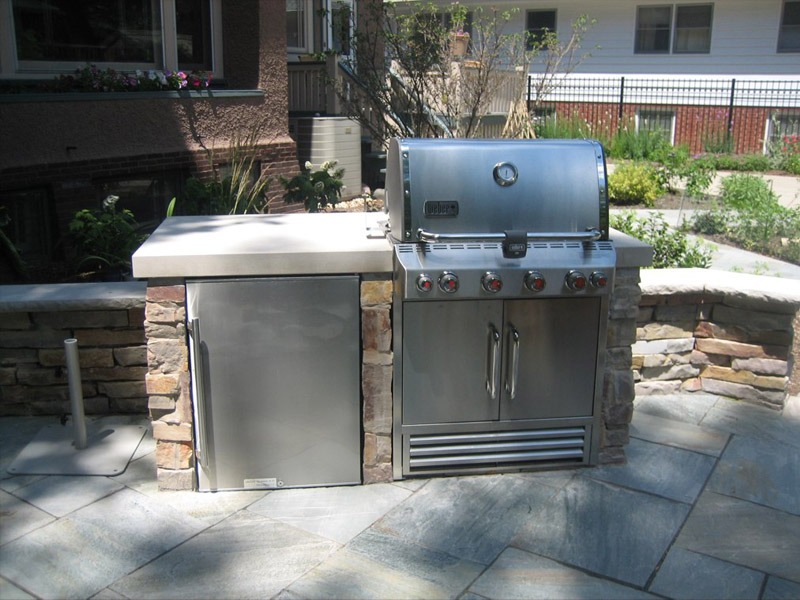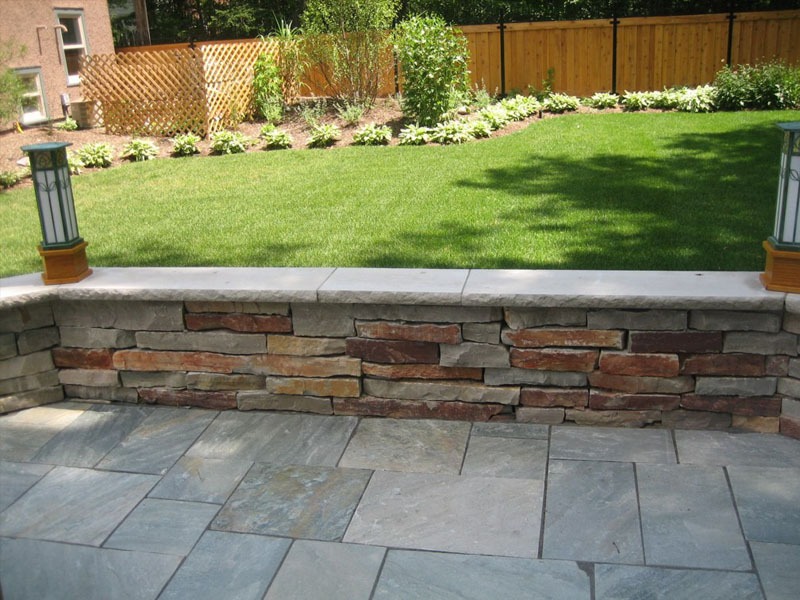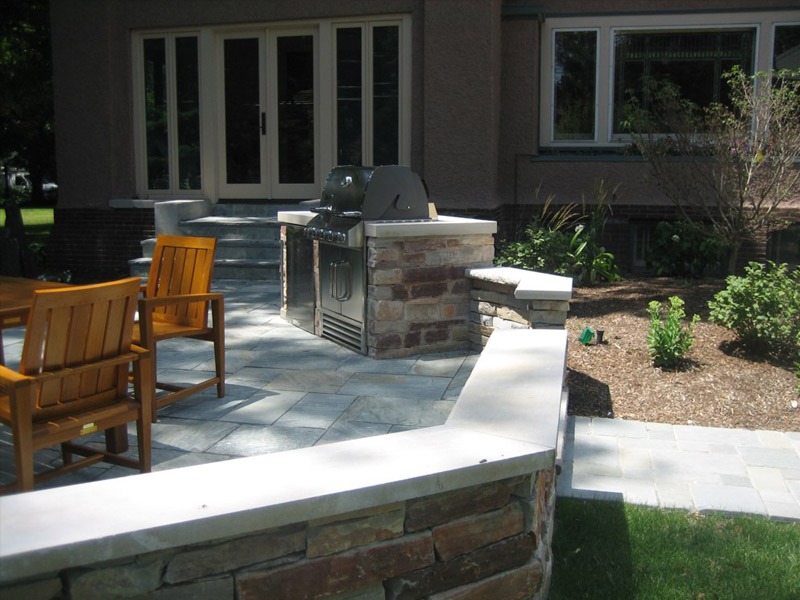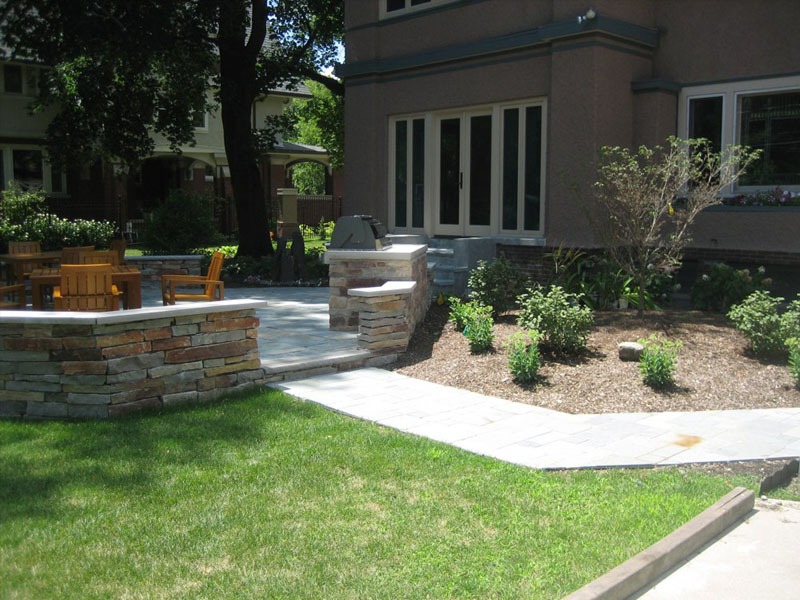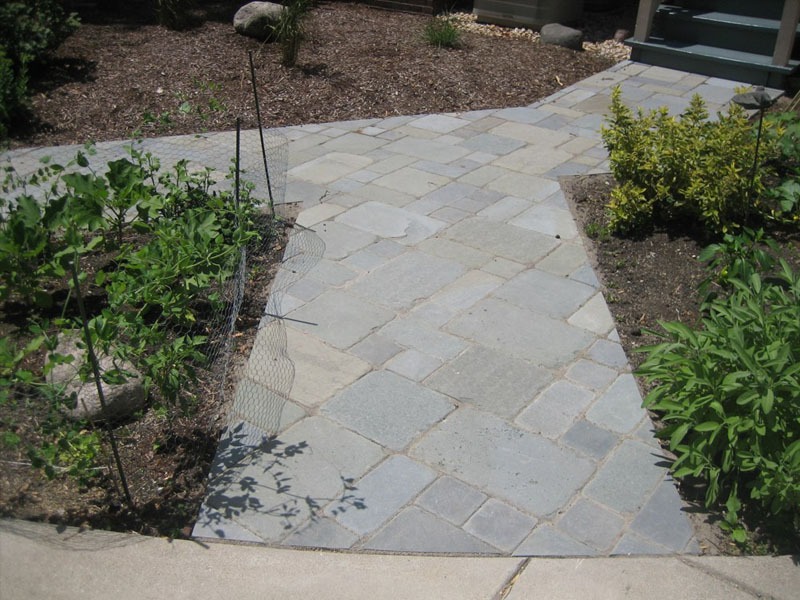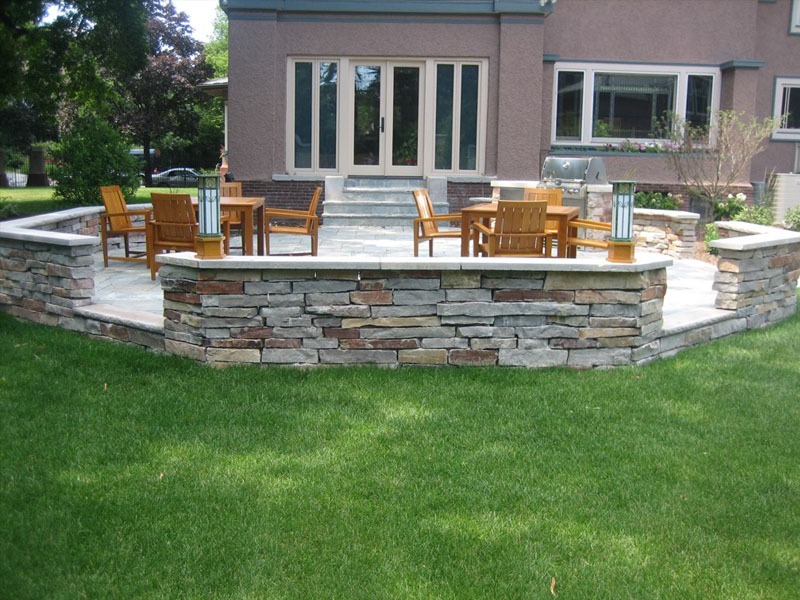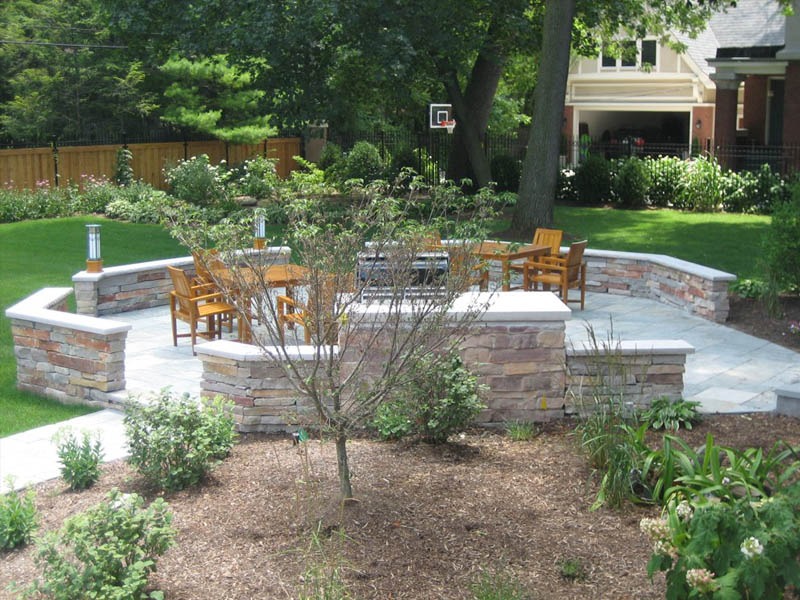

Natural Stone Hardscapes in Des Plaines, IL
3D Brick Paving Co. installs natural stone patios, retaining walls, steps, seating walls, caps, and integrated outdoor living surfaces built to Des Plaines clay conditions, municipal setback rules, drainage pitch requirements, and right-of-way codes. Founded by Gaetano D’Aiello in 1972 and operating from 1000 Lee Street, the company carries Unilock Authorized Contractor status, ICPI-certified staff, a lifetime manufacturer warranty on most products, and a 5-year unconditional labor guarantee.
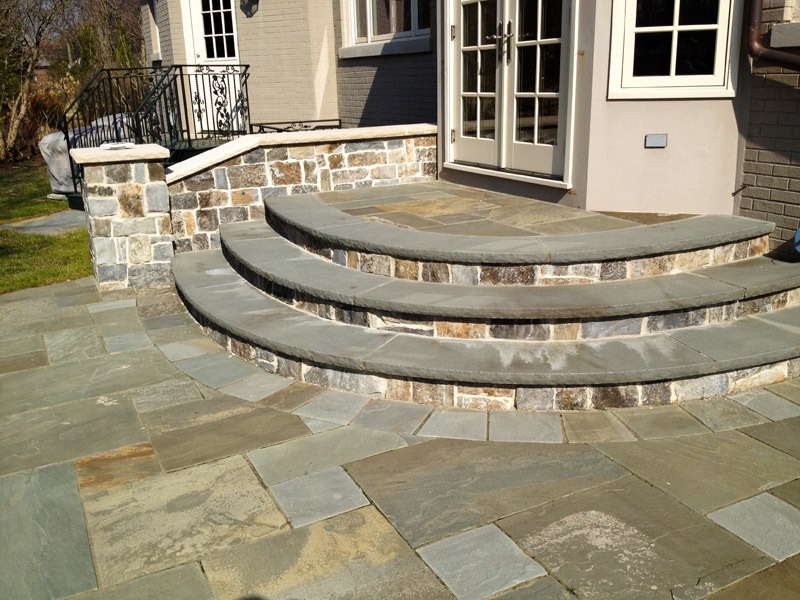
The Real Work Happens Below the Stone
Des Plaines sits in the low-lying Des Plaines River watershed with high water tables and clay-dominant soils that resist drainage. That soil profile makes frost heave a structural baseline condition, not an edge case. Water expands by roughly 9% when it freezes, but the larger failure mechanism is capillary movement: subsurface water migrates upward toward the freezing front, forms ice lenses, and lifts patios, steps, and walkways from below.
Natural Stone vs. Interlocking Pavers vs. Poured Concrete on Des Plaines Clay
Performance Factor | Natural Stone | Interlocking Pavers | Poured Concrete |
Behavior on clay subgrade | Performs well over a properly compacted aggregate base with drainage control. Poor base prep causes settlement under heavier stone pieces. | Segmented units distribute movement through sand-filled joints. Can be lifted, reset, and repaired in sections. | Acts as one rigid slab. Clay movement and ice lens growth concentrate stress into cracks. |
Freeze-thaw response | Durable when selected and installed correctly. Joints, caps, and wall faces still need water management to reduce spalling and displacement. | Joints allow small movement across the field, reducing full-surface cracking. | Vulnerable to slab cracking, scaling, and uneven panel lift under trapped moisture. |
Repairability | Individual caps, wall stones, or sections can often be reset, but matching stone and mortarless alignment requires skilled labor. | Individual pavers can be pulled, base-corrected, and reset without replacing the entire field. | Repairs leave visible patches or require full slab replacement. |
Drainage behavior | Depends on joint design, base material, pitch, wall backfill, and whether drainage stone or tile sits behind walls. | Standard paver fields shed water by pitch. Permeable systems route water through aggregate-filled joints. | Impervious surface pushes runoff across the slab. Can overload low spots if pitch is wrong. |
Best Des Plaines use case | Seat walls, retaining accents, steps, caps, raised features, and premium patio edge definition. | Patios, walkways, driveways, and pool decks over clay. | Limited-use flatwork where rigid slab behavior and replacement cost are acceptable. |
Main failure risk | Missing waterproofing, poor wall drainage, weak base, or no cap detail near freeze-thaw exposure. | Poor compaction, pea gravel, bad edge restraint, or clogged permeable joints. | Rigid cracking, scaling, heaving, and difficult repairs. |
Performance Factor Natural Stone Interlocking Pavers Poured Concrete |
Performance Factor Natural Stone Interlocking Pavers Poured Concrete |
Performance Factor Natural Stone Interlocking Pavers Poured Concrete |
Performance Factor Natural Stone Interlocking Pavers Poured Concrete |
Performance Factor Natural Stone Interlocking Pavers Poured Concrete |
Performance Factor Natural Stone Interlocking Pavers Poured Concrete |
Des Plaines Hard-Surface Rules for Natural Stone Projects
Rear-Yard and Spacing Requirements
- Patios are permitted in rear yards only
- Minimum 5 ft setback from all property lines
- Minimum 3 ft separation from driveways or parking areas
- R-1 rear yard coverage cannot exceed 60%
- A patio cannot connect directly to a driveway or other hard surface; any connection must run through a diverging walkway
- Front and side-yard walkways cannot exceed 4 ft in width
- Rear and corner-side-yard walkways cannot exceed 6 ft in width
- Private walkways must stay at least 1 ft from property lines
Base and Elevation Requirements
- Minimum 4-inch CA-6 compactable gravel base (pea gravel is explicitly prohibited)
- Hard surfaces must sit at least 4 inches below the top of the building foundation
- Minimum surface pitch of 1/4 inch per foot away from the building (Slope = Δh / L ≥ 1/4 in/ft)
- No runoff directed onto neighboring property
- Wire mesh is prohibited in right-of-way concrete replacement except where spanning utility trenches
Permits and Inspections
Natural Stone Retaining Walls and Lateral Earth Pressure
The governing equation for active lateral earth pressure is:
Where Pa is active earth pressure, Ka is the active earth pressure coefficient, γ is the unit weight of retained soil, and H is the wall height. Because pressure rises with H², doubling wall height doesn’t double the force; it raises it by a factor of four. A wall holding saturated Des Plaines clay at greater height carries significantly more load than the visual scale suggests.
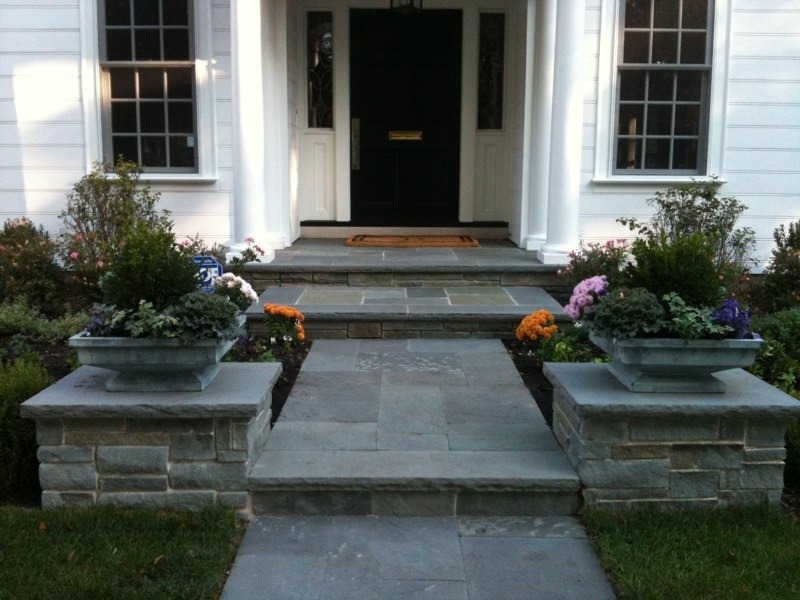
Installation Process
1. Site and jurisdiction review
We confirm whether the property falls inside incorporated Des Plaines, unincorporated Maine Township, or another municipality. That determines permits, setbacks, right-of-way rules, inspection timing, and drainage restrictions.
2. Plat, grade, and drainage check
We review the property survey, rear-yard coverage, walkway paths, foundation height, downspout discharge, swales, utility zones, and any floodplain exposure.
3. Excavation and subgrade correction
We remove soft material, organics, failed concrete, loose stone, clay pockets, and old base material that can't support the new hardscape.
4. CA-6 or engineered base placement
We use compacted CA-6 aggregate for standard hard surfaces (as required by Des Plaines code) or open-graded stone for permeable assemblies.
5. Wall drainage and waterproofing
Where stone walls, steps, or raised landings meet the home, we install vertical waterproofing and drainage separation. The $27,000 veneer failure case shows the cost of skipping that detail.
6. Natural stone setting
We set stone, caps, walls, borders, and steps to the approved layout, with clean transitions to pavers, pool decks, grill enclosures, or fire features.
7. Inspection and cleanup
We prepare for required city inspection points and remove all heavy demolition debris through proper hauling.
Neighborhood-Specific Site Risks in Des Plaines
Area | Site Risk | Design Response |
Craig Manor | Urban flooding pressure and stormwater storage sensitivity | Permeable infrastructure where suitable, controlled pitch, drain tile coordination, layouts that don’t push water toward neighboring lots |
Cumberland | Tight lots, older housing stock, foundation exposure, hard-surface spacing limits | Compact layouts, waterproof vertical interfaces, rear-yard setback checks, careful walkway divergence where patios meet other hard surfaces |
Downtown Core | Higher utility density, smaller yards, tighter work access | JULIE coordination before excavation, hand-digging buffers near marked utilities, careful R-1 rear yard coverage calculations |
North Des Plaines / Lake Park | River-adjacent floodplain exposure, soft subgrade risk | Deeper aggregate evaluation, grade verification, floodplain screening, drainage systems where hardscape expansion changes runoff |
South Des Plaines | Backyard turf pooling, shallow surface drainage problems | Preserved swale behavior, patios pitched away from the structure, drain tile or French drain planning where verified by site conditions |
Different parts of Des Plaines create different hardscape problems. The same wall detail doesn’t belong on every site.
Area Site Risk Design Response |
Area Site Risk Design Response |
Area Site Risk Design Response |
Area Site Risk Design Response |
Area Site Risk Design Response |
These are design prompts, not parcel diagnoses. The actual build plan comes from a site visit, survey, grade check, and jurisdiction review.
Floodplain and River-Adjacent Natural Stone Projects
Des Plaines allows maintenance and replacement of existing patios, driveways, side drives, and walkways in floodplain areas, provided the project doesn’t expand the original footprint. Floodway and floodplain work can trigger Title 14 review and Engineering department involvement.
For natural stone projects near the Des Plaines River corridor, Lake Opeka, Allison Woods, or other low-lying areas, the design review needs to confirm: whether the work expands the existing hard-surface footprint, whether drainage reaches neighboring land, whether the wall base depth is appropriate for the subgrade, and whether a topographic survey is needed before layout.
Permeable Systems for Drainage-Heavy Properties
Permeable paver systems can support stormwater control where the site needs water storage below the surface. A standard compaction base runs 7 to 8 inches total depth. A permeable base runs 21 inches deep: geotextile at subgrade, 17 inches of open-graded stone, and a 1-inch open-graded bedding layer.
JULIE Utility Coordination Before Excavation
3D Brick Paving coordinates JULIE 811 utility locating before excavation on every project.
Public Right-of-Way Stone and Paver Work
Unincorporated Maine Township Requirements
Project Scale: Portfolio Reference
Project | Features | Duration | Listed Cost |
Elmhurst Outdoor Living | Patio, grill enclosure, fire pit, Eden Natural Stone walls, Beacon Hill Flagstone pavers | 8 days | $45,000 |
Lincolnshire Outdoor Living | Patio, outdoor kitchen, pool deck, pergola, Eden Natural Stone walls with Bluestone caps, Techo-Bloc Para Greyed Nickel pavers, charcoal accent border | 20 days | $180,000 |
Large Outdoor Living / Pool Deck | Eden Natural Stone walls, Techo-Bloc Para pavers, Bluestone caps, pool deck | 15 days | $175,000 |
Project Features Duration Listed Cost |
Project Features Duration Listed Cost |
Project Features Duration Listed Cost |