

Evanston Brick Paving Built for Lakefront Clay, Historic Homes, and City Permit Approval
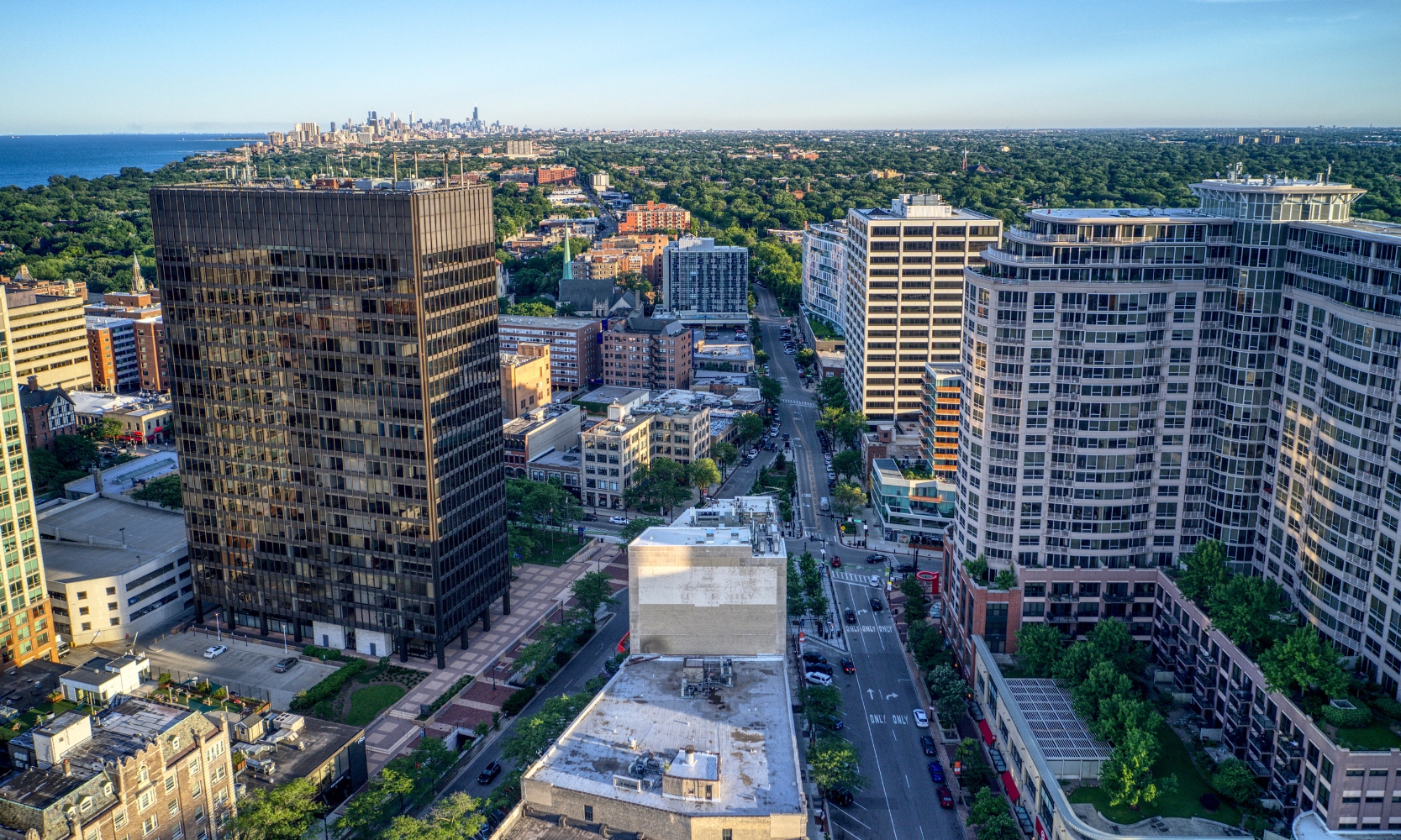
Evanston brick paving has to respect two realities at once: older North Shore architecture above grade and difficult Chicago-area subgrade conditions below it. Homes near Central Street, Ridge Avenue, Dempster, Main Street, Oakton, and the lakefront often sit on compacted urban soils, glacial clay, old drainage patterns, mature tree roots, tight driveways, and public right-of-way limits that affect every patio, walkway, stoop, and driveway design.
3D Brick Paving designs and installs custom brick paver patios, driveways, aprons, walkways, stoops, retaining walls, fire pits, grill enclosures, outdoor kitchens, and natural stone hardscapes for Evanston homeowners who want a refined finish backed by proper excavation, drainage control, permit handling, and inspection-ready construction.
We’re a family-owned company serving the area with brick patios, driveways, walkways, natural stone, and retaining wall systems. We’re a Unilock Authorized Contractor, an ICPI Certified Installer, and have operated since 1972 with a Complaint Free BBB history. 3D Brick Paving was founded by Gaetano D’Aiello in 1972 and later joined by Mike and Frank in 1981.
Climate-Resilient Hardscape Engineering in Evanston
Evanston’s soil and water behavior make shallow hardscape work risky. The Chicago area is shaped by glacial deposits, including mixtures of clay, silt, sand, gravel, and till left by Wisconsin-age glaciation. Local lakebed soils are also known for clayey subsoil and wet prairie origins, which explains why paved surfaces can struggle when drainage and base construction are treated casually.
Clay holds water inside fine pores. After rain, snowmelt, or lake-effect weather, that moisture doesn’t leave the subgrade quickly. During winter, water migrates toward the freezing front and forms ice lenses, which lift from below and create the same seasonal pressure that cracks poured concrete, tilts stoops, and opens joints in poorly built paver fields.
Concrete behaves as one rigid slab. Once the clay expands unevenly beneath it, the slab has limited ability to flex. Brick pavers perform differently when installed correctly: the interlocking paver field moves through sand-packed joints, while the compacted base carries load and reduces frost movement.
Why we use CA-6 instead of pea gravel
3D Brick Paving doesn’t build Evanston patios and driveways over loose pea gravel. Rounded stone rolls under load and doesn’t compact into a stable structural matrix. Our standard method starts with deep mechanical excavation, followed by non-woven geotextile separation fabric to keep clay fines out of the stone layer. The base is then built with compacted angular CA-6 crushed stone, selected because its fractured edges lock together under compaction.
For driveways and aprons, the base is built for vehicle loading. For patios, stoops, fire features, walkways, and outdoor kitchens, the base is matched to soil condition, drainage exposure, grade height, and finished surface use. Multi-level masonry steps, risers, and foundation junctions get waterproofing attention behind the masonry, where moisture could otherwise sit and accelerate brick deterioration. That’s the difference between a surface install and a hardscape system built for Evanston winters.
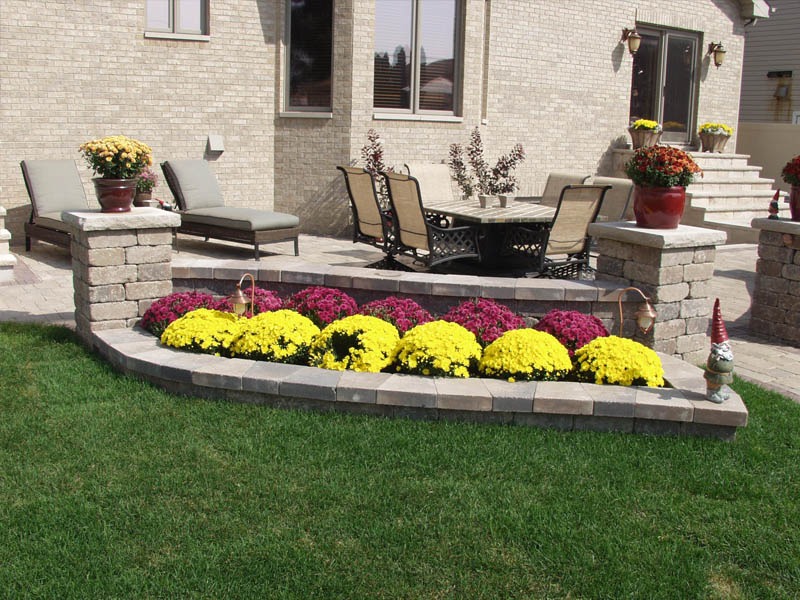
Complete Permitting and Right-of-Way Management
Evanston hardscape work needs the correct permit path before excavation starts. The City’s Permit Desk handles building permits, right-of-way permits, and water/sewer permits, and Evanston’s online Citizen Portal allows applicants to apply for and track select permits, including Building and Public Works permits.
For flat work, Evanston requires a building permit to remove and replace cracked driveway concrete, with a permit application that includes three copies of the Plat of Survey. Traffic Engineering also requires a permit for driveway areas being replaced on the public parkway.
3D Brick Paving builds the submittal around the survey, hardscape footprint, driveway or patio dimensions, drainage direction, public parkway impact, material selection, and inspection timing. That keeps the project aligned with the city before the first cut is made.
Driveway aprons, sidewalks, and public right-of-way
The driveway apron, public sidewalk, parkway, curb, and street edge aren’t simply private paving space. Evanston defines the right-of-way as public property, including streets, alleys, sidewalks, parkways, medians, utility poles, and curbs, and any above-ground or underground work inside the city-owned right-of-way requires a ROW permit. Typical ROW projects include sidewalk construction or repair, driveway apron construction or repair, utility work, parkway obstruction, alley obstruction, sidewalk obstruction, and dumpsters placed in the right-of-way.
A ROW permit application may require a completed application, site plan, traffic control plan, certificate of insurance naming the city as additional insured, bond for private development or larger projects when applicable, notification letters when applicable, and related documentation. Concrete, sewer, and water work may need inspection before pour or cover, and street restorations require a pre-pour inspection by the Streets Division.
That’s why we separate private-property paving from public-edge work during the design phase. A matching brick paver apron may look simple on a rendering, but the permit, sidewalk crossing, parkway trees, utility zones, curb edge, and pedestrian path all need city-ready documentation.
Construction hours
Evanston allows construction Monday through Friday from 7:00 AM to 7:00 PM and Saturday from 8:00 AM to 5:00 PM, with no work permitted on Sundays. Our crews schedule excavation, compaction, cutting, hauling, and cleanup inside those hours.
Space Planning, Drainage, and Setback Compliance
Evanston patio and driveway planning should begin with the Plat of Survey, not the paver catalog. The survey tells us where the property lines, public way, building footprint, driveway, walkways, and existing hard surfaces sit. It also lets us review impervious surface exposure before proposing an expanded patio, driveway, or outdoor living layout.
Evanston’s permit guidance for flat work points homeowners to Title 6, Chapter 8 residential district rules and the impervious surface section. Evanston’s zoning code also gives credit toward impervious surface calculations for paver blocks or permeable paving systems that maintain a demonstrable level of porosity, which creates a practical design path for homeowners who want more usable outdoor space without overwhelming the lot with runoff. A permeable paver patio or walkway can help manage surface water more intelligently than a solid slab when the base, bedding layer, joints, and edge restraints are installed correctly.
Grading and drainage standard
For grading, we treat water movement as a structural requirement. The finished paver surface should move water away from the home, away from basement walls, and away from neighboring yards. As a foundation protection standard, we model patio and walkway pitch at a minimum slope of 1/4 inch of fall per foot of run, which works out to about 2.08%. That means a 12-foot patio run needs about 3 inches of fall away from the house where site conditions allow, and a 20-foot run needs about 5 inches. On clay-heavy lots, those inches protect the base and reduce water pressure against the foundation.
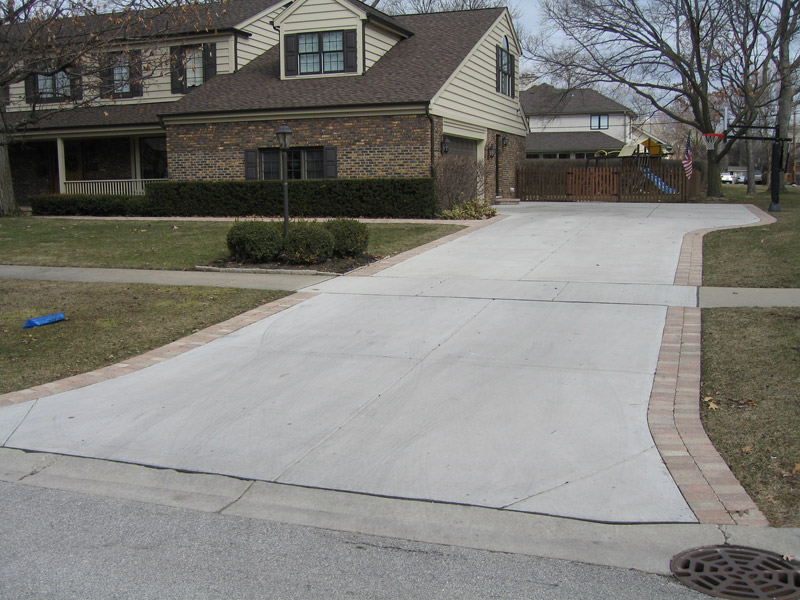
Clean Site Restoration and Debris Hauling
A proper Evanston paver installation creates heavy debris: clay, old concrete, failed pavers, stone base, asphalt, brick, masonry, and soil. The city doesn’t collect construction debris through special pickup or bulk collection, and residents must hire a private disposal firm for those materials. Construction debris roll-off services should be arranged with the city’s franchise hauler, and dumpsters placed in the right-of-way require a ROW permit.
3D Brick Paving handles demolition cleanup, hauling, and disposal planning as part of the job. We don’t leave broken concrete, pavers, clay, or stone at the curb. Where clean construction and demolition debris rules apply, Illinois EPA identifies LPC-662 for Source Site Certification by an owner or operator and LPC-663 for Uncontaminated Soil Certification by a licensed professional engineer or geologist.
The result is a clean work area, no rejected curb piles, controlled dumpster placement, and a property ready for final inspection.
Frequently Asked Questions
Yes. Evanston requires a building permit for flat work, including driveway replacement, and the application requires a Plat of Survey. If the work affects the public parkway portion of the driveway, Traffic Engineering also requires a permit. For work in the public right-of-way, including sidewalk or driveway apron construction, Evanston requires a ROW permit.
Possibly, but the apron and sidewalk crossing sit inside the public right-of-way, so the work needs ROW review. Evanston requires a ROW permit for work in city-owned streets, alleys, parkways, sidewalks, and curbs. The ROW application may require a site plan, traffic control plan, certificate of insurance, bond for larger private development projects when applicable, and inspections before pour or cover.
Evanston’s clay-heavy, glacially influenced soils hold water and move during freeze-thaw cycles. A shallow base or loose pea gravel can shift because rounded stone rolls under load. Angular CA-6 crushed stone compacts into a tighter load-bearing matrix, while non-woven geotextile fabric keeps clay fines from contaminating the base. That pairing helps protect patios, walkways, and driveways from settling, rutting, and frost movement.
Evanston’s zoning code gives credit toward impervious surface calculations for paver blocks or permeable paving systems that maintain a demonstrable level of porosity. That can help homeowners design larger outdoor living areas with better stormwater behavior than conventional hard surfaces, though the exact credit applied to a given project depends on the city’s review.
3D Brick Paving removes it through private hauling. Evanston doesn’t collect construction debris through normal bulk or special pickup, and dumpsters placed in the right-of-way require a ROW permit. Clean debris and soil are routed according to applicable CCDD procedures, including LPC-662 or LPC-663 documentation when required by the receiving facility.
Construction is allowed Monday through Friday from 7:00 AM to 7:00 PM and Saturday from 8:00 AM to 5:00 PM, with no work permitted on Sundays. We schedule excavation, compaction, cutting, and hauling inside those hours to avoid neighbor complaints and enforcement issues.
We use a minimum grading standard of 1/4 inch of fall per foot of run, about 2.08%. A 12-foot patio run needs roughly 3 inches of fall away from the home, and a 20-foot run needs roughly 5 inches, where site conditions allow that much grade change.
It might, if the work is visible from the public way and the property falls under preservation authority. Evanston requires a Certificate of Appropriateness for exterior projects visible from a city street, alley, public sidewalk, or other public space, and that approval has to happen before the building permit is issued. Walks, at-grade patios, exterior stairs, and masonry changes are all work types that may need staff or Commission review.
The apron sits inside the public right-of-way, not on private property, so it falls under Evanston’s ROW permit process rather than a standard building permit alone. That process can require a site plan, traffic control plan, certificate of insurance, and inspection before pour or cover, which is a different documentation path than a private patio or walkway.
We handle demolition cleanup and hauling through private disposal rather than leaving material at the curb, since the city doesn’t collect construction debris through bulk or special pickup. Clean concrete and uncontaminated soil get routed through CCDD procedures, with LPC-662 or LPC-663 documentation completed when the receiving facility requires it.
Schedule an Evanston Brick Paving Consultation
Build your Evanston brick paver patio, driveway, apron, walkway, stoop, retaining wall, fire pit, or outdoor kitchen with a contractor who understands clay soil movement, CA-6 base construction, geotextile separation, Evanston permits, right-of-way boundaries, historic review, construction-hour limits, and clean debris hauling before excavation begins.
Call 3D Brick Paving at 847-297-7966 to schedule a free Evanston brick paving estimate.