

Niles Brick Paving Built for Clay Soil, Drainage Control, and Permit Approval
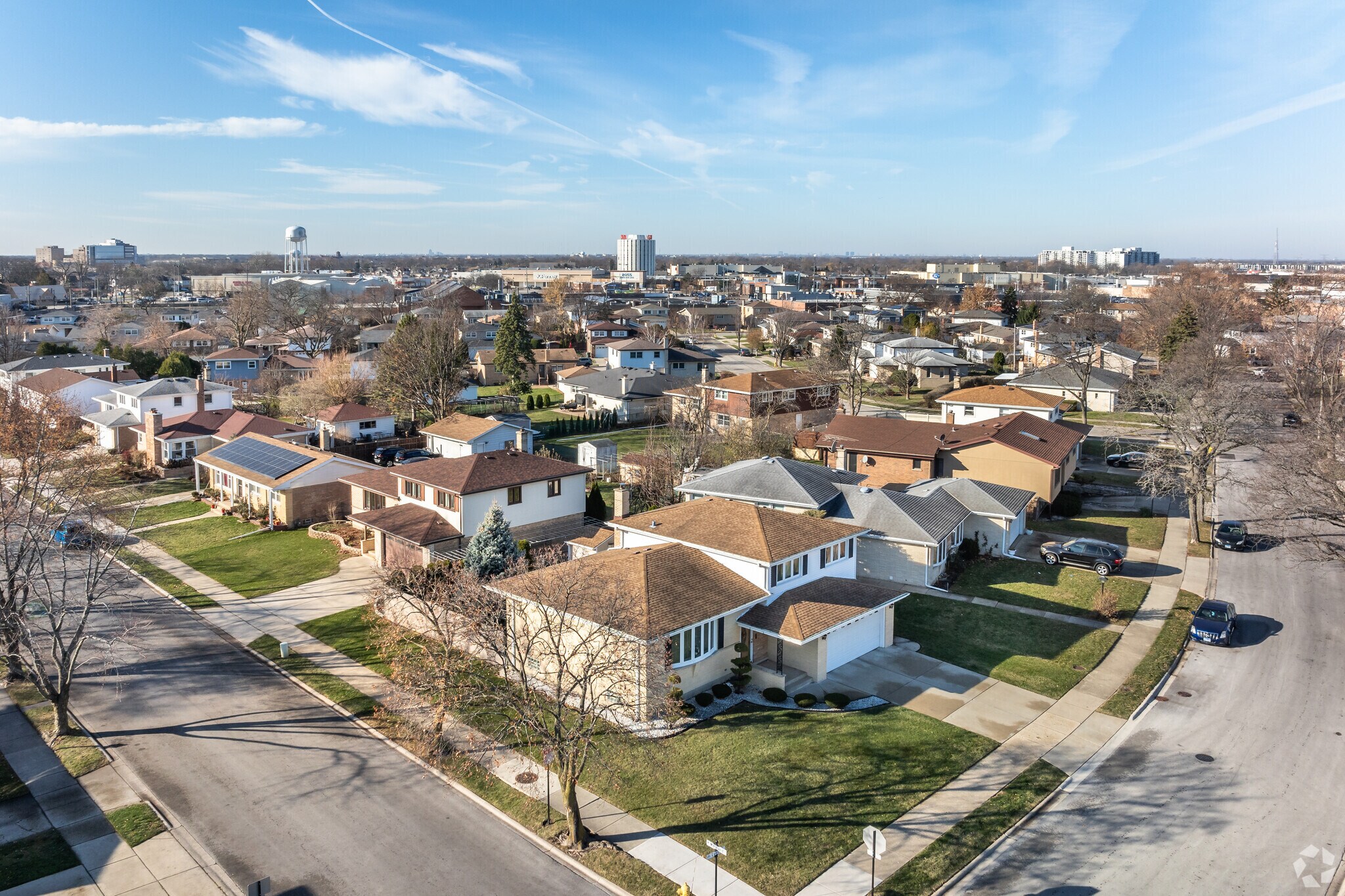
Excavate the weak clay. Compact the CA-6. Set the slope. Protect the foundation before the first paver is laid.
That’s the difference between a brick paver patio that looks finished on installation day and a hardscape that stays level through northern Cook County winters. Niles and Des Plaines both sit over dense prairie clay and glacial till. These soils retain water, drain slowly, and move under winter freeze-thaw pressure. The visible failure starts later: sunken corners, rocking pavers, washed-out joints, moss growth, foundation pooling, and wavy driveway edges. The structural mistake happens below grade.
3D Brick Paving Co. has served Chicagoland since 1972, founded by Gaetano D’Aiello and later joined by Mike and Frank in 1981. The company’s history confirms Unilock Authorized Contractor status, ICPI-certified staff, lifetime manufacturer warranties on most products, and a 5-year labor guarantee.
For Niles homeowners, that experience matters because the Village permits pavers directly to the lot line, but places full responsibility on the property owner for boundary accuracy, easement risk, and water control. For Des Plaines homeowners, the rules are tighter: rear-yard patio placement, 5-foot setbacks, 60% R-1 rear-yard coverage, diverging walkways, CA-6 base requirements, and required inspections through the city’s CSS process.
Call 847-297-7966 for a Niles brick paving estimate built around soil, drainage, permits, and long-term surface stability.
Climate-Engineered Paving for Northern Cook County Soil Dynamics
Standard 4-to-6-inch sub-bases fail across the Northwest suburbs when installers treat local clay like free-draining soil. Prairie clay and dense till hold moisture under the patio or driveway. During winter, that moisture expands by about 9% as it freezes. Capillary water can migrate toward the freezing front and form subsurface ice lenses, lifting parts of the paved field unevenly across the 42-inch frost depth typical of the area.
A weak base lets that movement telegraph straight through the finished surface. Pavers start rocking. Joint sand opens. Low sections trap water. Driveway edges settle under vehicle loads.
3D Brick Paving counters that with deep subgrade excavation, removal of unstable organic material, geotextile separation where site conditions call for it, and a mechanically compacted aggregate base. Des Plaines requires a minimum 4-inch CA-6 compactable gravel base for residential hard surfaces and explicitly states “NO PEA GRAVEL.”
Pea gravel fails because the particles are round and smooth. They lack internal friction angles, so they roll under load instead of locking together. CA-6 uses angular aggregate and fines that bind under compaction, creating a denser load-bearing platform under patios, driveways, walks, and masonry features.
For pedestrian patios, the base must resist water retention and frost lift. For driveways, it must also resist vehicle rutting, turning forces, and differential settlement. The finished paver pattern matters, but the base determines whether the surface survives.
Applied Hydraulics and Foundation Protection
Water control starts with math, not guesswork.
The finished brick paver surface must move water away from the home, away from neighboring lots, and toward an approved drainage path. The slope, the change in height divided by the run length, must come in at 2.08% or steeper. In practical field terms, the fall needed is the run length multiplied by 0.25 inches per foot. A 12-foot patio run needs at least 3 inches of fall. A 20-foot run needs at least 5 inches of fall. The surface should also sit at least 4 inches below the top of the home’s concrete foundation line, matching the Des Plaines hard-surface rule.
This protects against basement water infiltration, hydrostatic pressure against foundation walls, sill plate moisture, siding decay, and winter ice sheets at the door threshold.
Municipal Code Bifurcation: Des Plaines vs. Niles Standards
Des Plaines: CSS Permits, R-1 Coverage, Fire Clearances, and Inspections
Des Plaines requires residential hard-surface permits for patios, paver bricks, walkways, and slabs on grade. The city directs applicants to use its Customer Self Service Portal, upload a current Plat of Survey with the proposed work marked, show distances from property lines, and upload a signed contractor agreement when a contractor performs the work. Contractors must also be added to the application and registered with the city.
Des Plaines layout rules are exact:
- Patios must be in the rear yard.
- Patios must stay at least 5 feet from the property line.
- Patios must stay at least 3 feet from a driveway or parking area.
- Walkways must stay at least 1 foot from the property line.
- R-1 properties cannot exceed 60% rear-yard coverage, including patios, walkways, and other rear-yard hard surfaces.
- A patio cannot connect directly to a driveway or another hard surface; it must connect through a walkway that diverges from both surfaces.
Des Plaines also requires concrete and hard-surface work to sit at least 4 inches below the top of the building foundation and pitch away from the building at 1/4 inch per foot. Drainage cannot be directed onto neighboring properties. The same handout requires at least two inspections: a Pre-Pour Inspection and a Final Inspection.
For fire features, 3D Brick Paving’s own Des Plaines fire-feature page states a 15-foot clearance from buildings, property lines, and combustible materials, along with a ban on below-grade DIY fire pits. It also connects fire pit layouts to the same rear-yard placement, 5-foot setback, 3-foot driveway separation, 60% R-1 coverage, CA-6 base, and inspection requirements.
Niles: Flatwork Permits, Lot-Line Flexibility, Curb Rules, and Groot Dumpsters
Niles uses a Flatwork Permit process through the Community Development Department. The official flatwork document says applicants must submit a completed permit application with two copies of the Plat of Survey, clearly detailing the location of the proposed driveway, apron, or sidewalk work, and showing where water will flow.
Niles differs sharply from Des Plaines on property-line placement. The Village states that concrete, asphalt, and pavers can be built up to and on the property line, but it also says the Village does not determine legal boundaries for property disputes. That responsibility stays with the owner and their survey.
Drainage creates the real limit. If paving is within 2 feet of a property line, Niles requires a curb or valley contour to channel water to the front or rear of the applicant’s property. Water cannot drain toward adjoining properties.
Niles also restricts front-yard driveway expansion. A residential lot with less than 65 feet of street frontage is allowed only one driveway approach, and the driveway width in the front yard may not exceed 20 feet.
Niles also carries a 35% total lot building coverage limit and requires that jobsite dumpsters come from Groot. The official flatwork PDF states that all jobsite dumpsters must be Groot and that Pre-Pour and Final inspections are required.
Risk Mitigation, Site Logistics, and Environmental Stewardship
Brand Authority and Field Accountability
3D Brick Paving’s proof is not a slogan. The company history confirms the 1972 founding, Mike and Frank joining in 1981, Unilock Authorized Contractor status, ICPI-certified staff, manufacturer warranties on most products, and a 5-year labor guarantee.
That matters because Niles and Des Plaines hardscape work is administrative, structural, and environmental at the same time. The contractor has to read a survey, protect utility paths, set drainage, prepare the base, handle inspections, and remove debris through the right channels.
JULIE 811 and Private-Line Protection
Before excavation, 3D Brick Paving pre-marks the work area in white and coordinates JULIE 811 utility locating within the required notice window, a 3-to-10-business-day window with an 18-inch tolerance zone around marked public utilities. Inside that zone, hand-digging or vacuum excavation protects gas, electric, telecom, water, and sewer lines.
Public locators do not mark every private line. Lawn sprinklers, landscape lighting, secondary electric feeds to detached garages, private pool lines, and owner-installed drain lines may not appear in public locate markings. Those lines need field review and careful excavation planning.
Debris Removal, Groot Rules, and Commercial Hauling
Old hardscape demolition creates material that standard curbside pickup isn’t built to handle. Heavy construction waste such as old concrete slabs, asphalt, bricks, blocks, and sod is barred from standard residential bins in Northbrook and Des Plaines. Northbrook’s LRS franchise charges special collection by cubic yard, at $20.74 per yard.
3D Brick Paving manages removal, sorting, and haul-off as part of the project. Old concrete, brick, asphalt, and stone can be routed to regional recycling facilities such as Greenway Recycles in Chicago or Des Plaines Materials, where clean material is crushed into reusable aggregate.
Debris Removal, Groot Rules, and Commercial Hauling
Niles does not allow loose staging of materials in the public way. The flatwork handout says excavated soil, materials, and building materials must be removed immediately after construction, and prohibits staging material on the public street, parkway, sidewalk, or alley, with violations subject to fines up to $500 per day.
Des Plaines limits curbside construction disposal and excludes heavy masonry from standard pickup. Old concrete, brick, stone, dirt, and heavy paver debris require commercial hauling to approved recycling or reclamation locations such as Vulcan Materials in Elk Grove.
3D Brick Paving plans demolition and removal as part of the work scope. The homeowner is not left with a rejected curbside pile, a dumpster violation, or material stored illegally in the public way.
Frequently Asked Questions
Yes. Niles uses a Flatwork Permit process for driveway, apron, sidewalk, and related flatwork. The official Village handout requires a completed permit application and two copies of the Plat of Survey showing the proposed work location. The survey also has to show drainage direction.
Yes. Des Plaines requires a Residential Hard Surfaces Permit for patios, paver bricks, walkways, and slabs on grade. The application is filed online through the Customer Self Service Portal, and the Plat of Survey must show location, dimensions, and distances from property lines.
Yes, Niles allows concrete, asphalt, and pavers up to and on the property line. The owner remains responsible for the correct boundary, and the Village does not resolve property line disputes. If the paved surface is within 2 feet of the property line, it must include a curb or valley contour to direct water to the front or rear of the property.
Prairie clay and dense till retain water. During freezing, that water expands by roughly 9% and can form subsurface ice lenses that lift the surface unevenly. During thaw, voids form below the base. A shallow base or pea gravel layer allows settlement, rocking pavers, joint failure, and pooling. A compacted CA-6 base reduces that failure pattern.
Des Plaines patios must sit in the rear yard, at least 5 feet from the property line and at least 3 feet from a driveway or parking area. R-1 properties cannot exceed 60% rear-yard coverage, including patios, walkways, and other rear-yard hard surfaces.
3D Brick Paving’s Des Plaines fire-feature guidance states that residential fire pits and outdoor fireplaces require 15 feet of clearance from buildings, property lines, and combustible materials. Below-grade DIY fire pits are prohibited.
Niles requires Pre-Pour and Final inspections for flatwork. Des Plaines also requires at least two inspections for residential hard surfaces: a Pre-Pour Inspection and a Final Inspection.
No. Niles prohibits staging excavated soil, materials, or building materials on the public street, parkway, sidewalk, or alley. Violations may be fined up to $500 per day.
Not for a full hardscape tear-out. Des Plaines excludes heavy masonry from curbside service through its LRS hauler, and Niles requires Groot dumpsters for jobsite material. Full demolition debris should be hauled commercially to suitable reclamation facilities.
Get a Niles Brick Paving Estimate
Build the patio, driveway, walkway, fire feature, or restored paver surface for the soil and code it has to survive.
3D Brick Paving Co. installs Niles and Des Plaines brick paving with CA-6 base preparation, clay-aware excavation, survey-based layout, drainage pitch control, JULIE-safe digging, permit-ready documentation, commercial debris hauling, and restoration chemistry matched to Northern Illinois moisture conditions.
Call 847-297-7966 for a Niles brick paving estimate.